The Format of Ledger Account typically consists of two main columns labeled as Debit and Credit, arranged under the account title at the top. This structured layout helps record and track financial transactions, ensuring clarity and accuracy in accounting. Each entry is accompanied by a date and description to maintain detailed records.
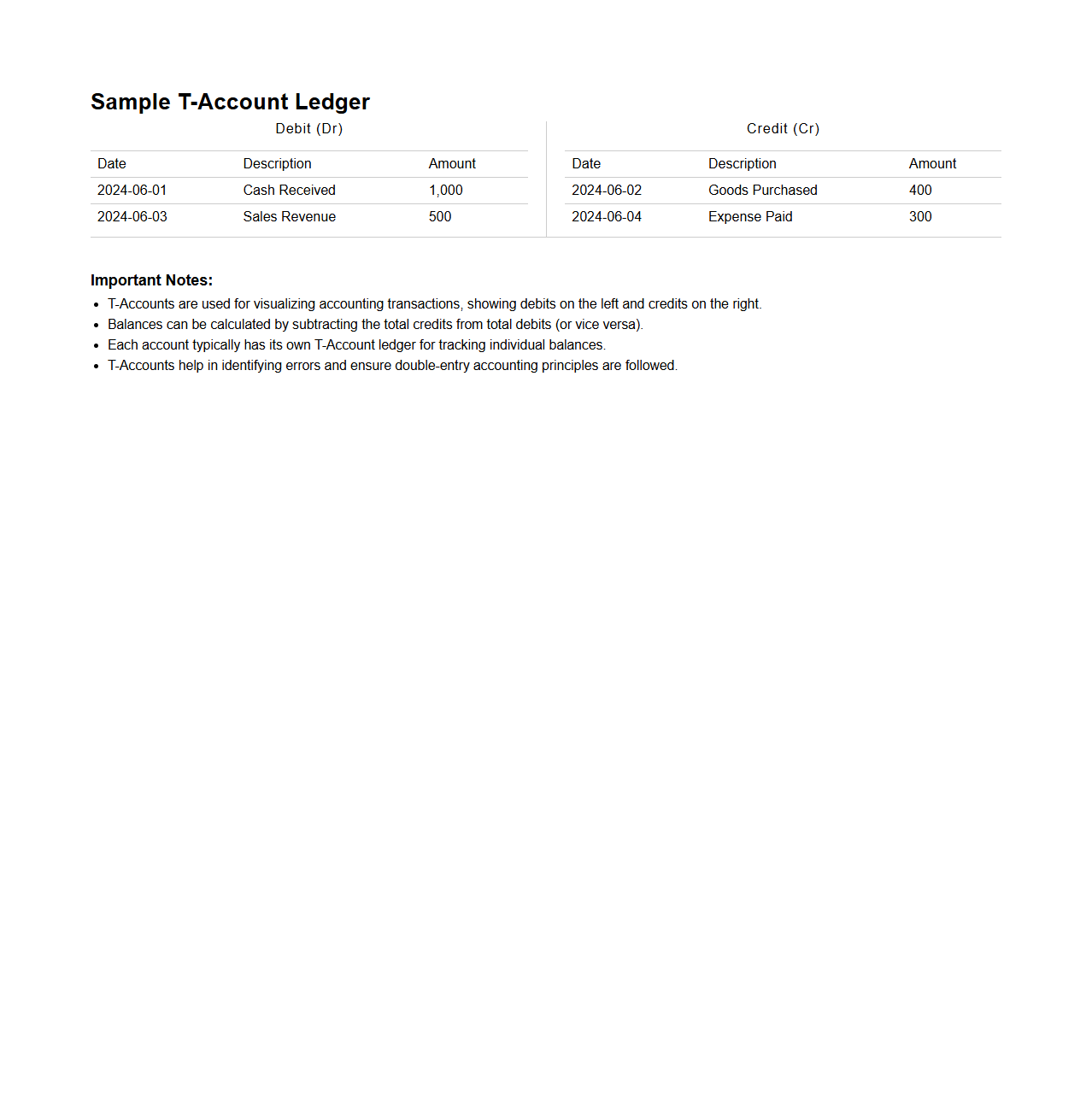
Simple T-Account Ledger Format
A
Simple T-Account Ledger Format document is a visual accounting tool used to record and track financial transactions in a structured manner. It features a "T" shape with debits on the left side and credits on the right, allowing for clear organization of account balances and transaction details. This format aids in maintaining accuracy and simplifying the process of financial analysis and reconciliation.
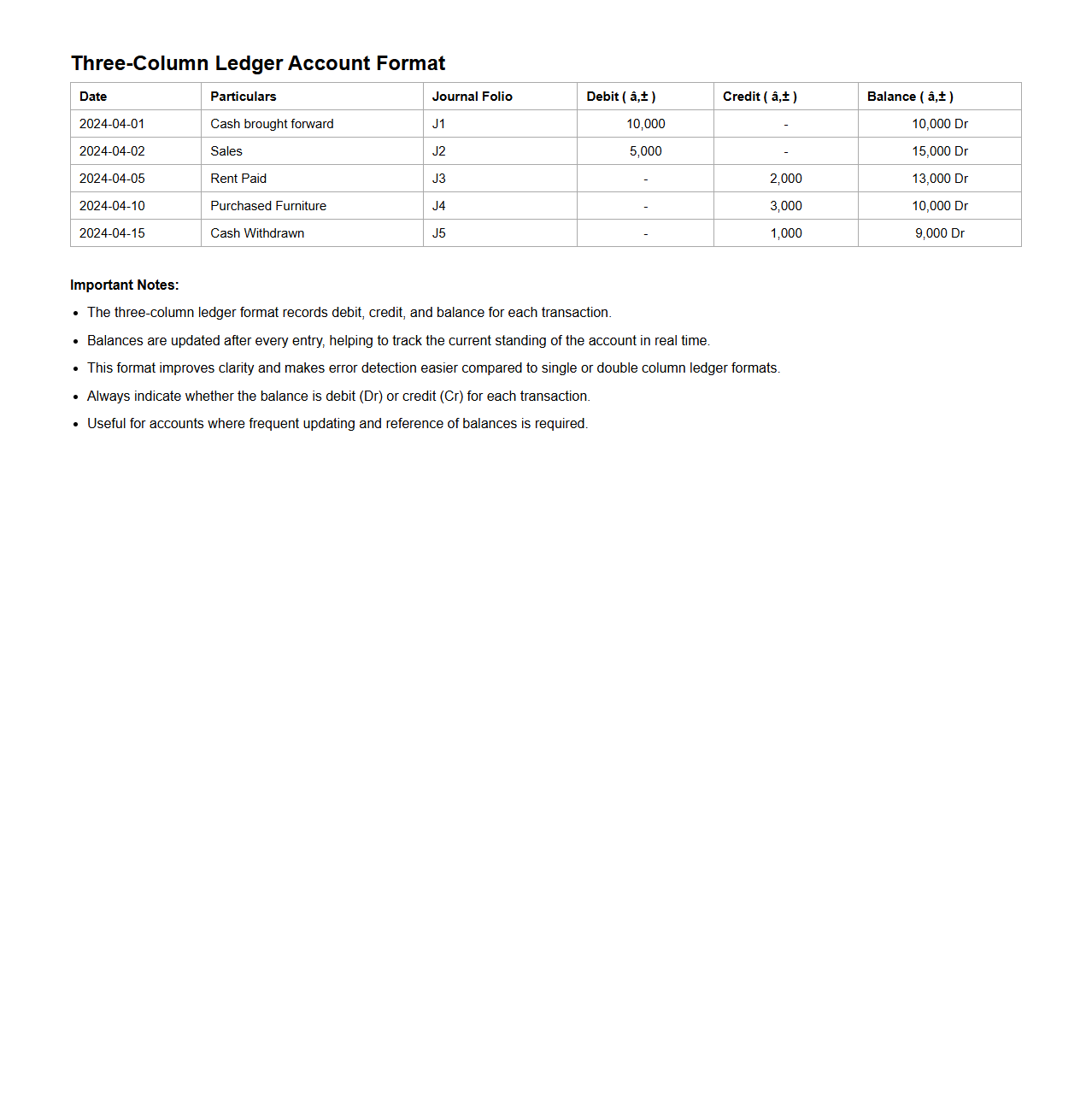
Three-Column Ledger Account Format
The
Three-Column Ledger Account Format is a bookkeeping tool that organizes financial transactions into three essential columns: Debit, Credit, and Balance. This format allows accountants to track increases and decreases in account balances efficiently while maintaining clear visibility of the current financial standing. It is widely used in financial accounting to ensure accuracy and streamline the process of balancing accounts.
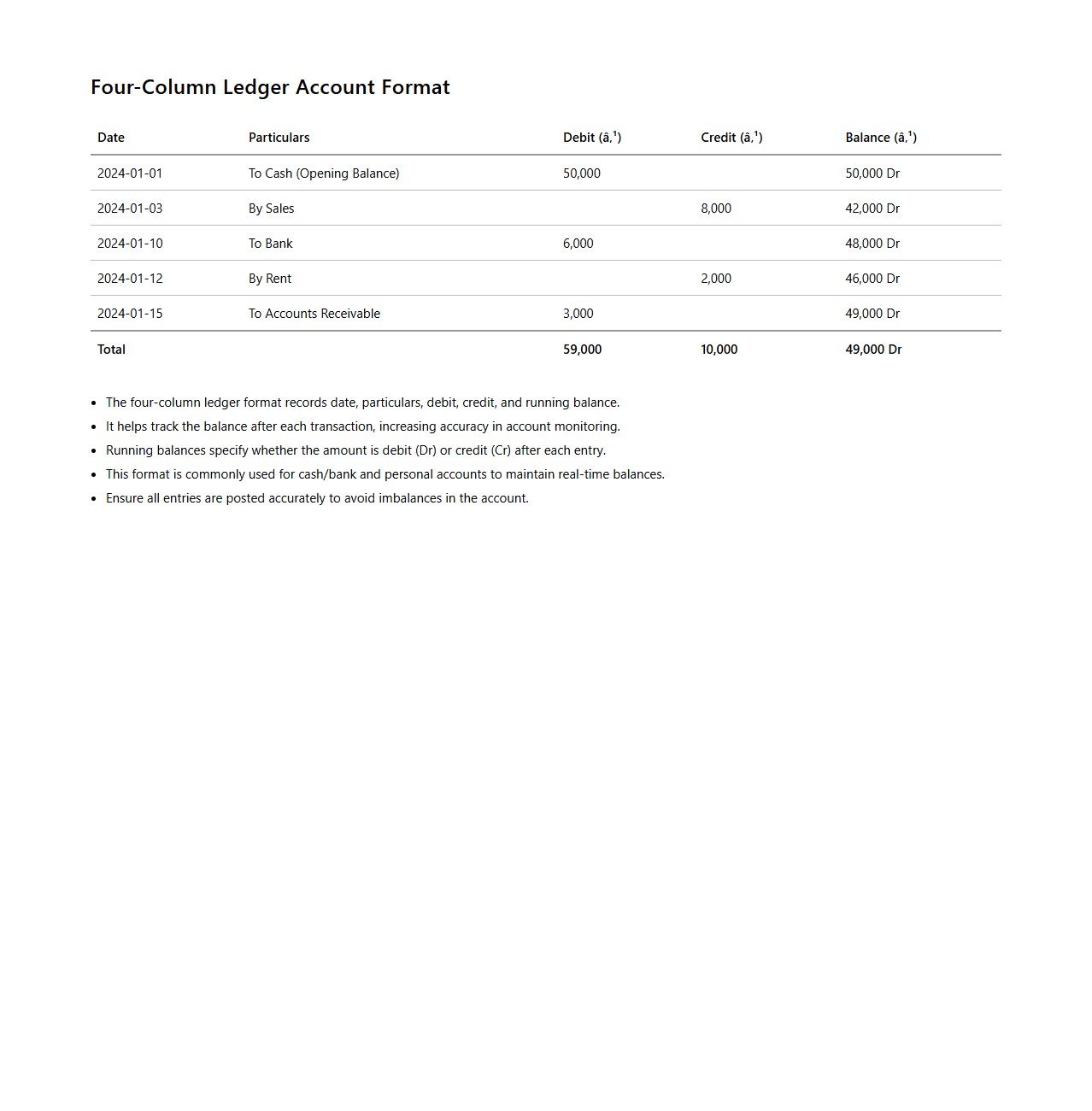
Four-Column Ledger Account Format
The
Four-Column Ledger Account Format is an accounting tool designed to record detailed financial transactions with separate columns for debit, credit, debit balance, and credit balance. This format enhances clarity by allowing accountants to track both the amounts entered and the running balances in a single ledger account. It is commonly used for accurate bookkeeping and ensures efficient financial analysis and reconciliation processes.
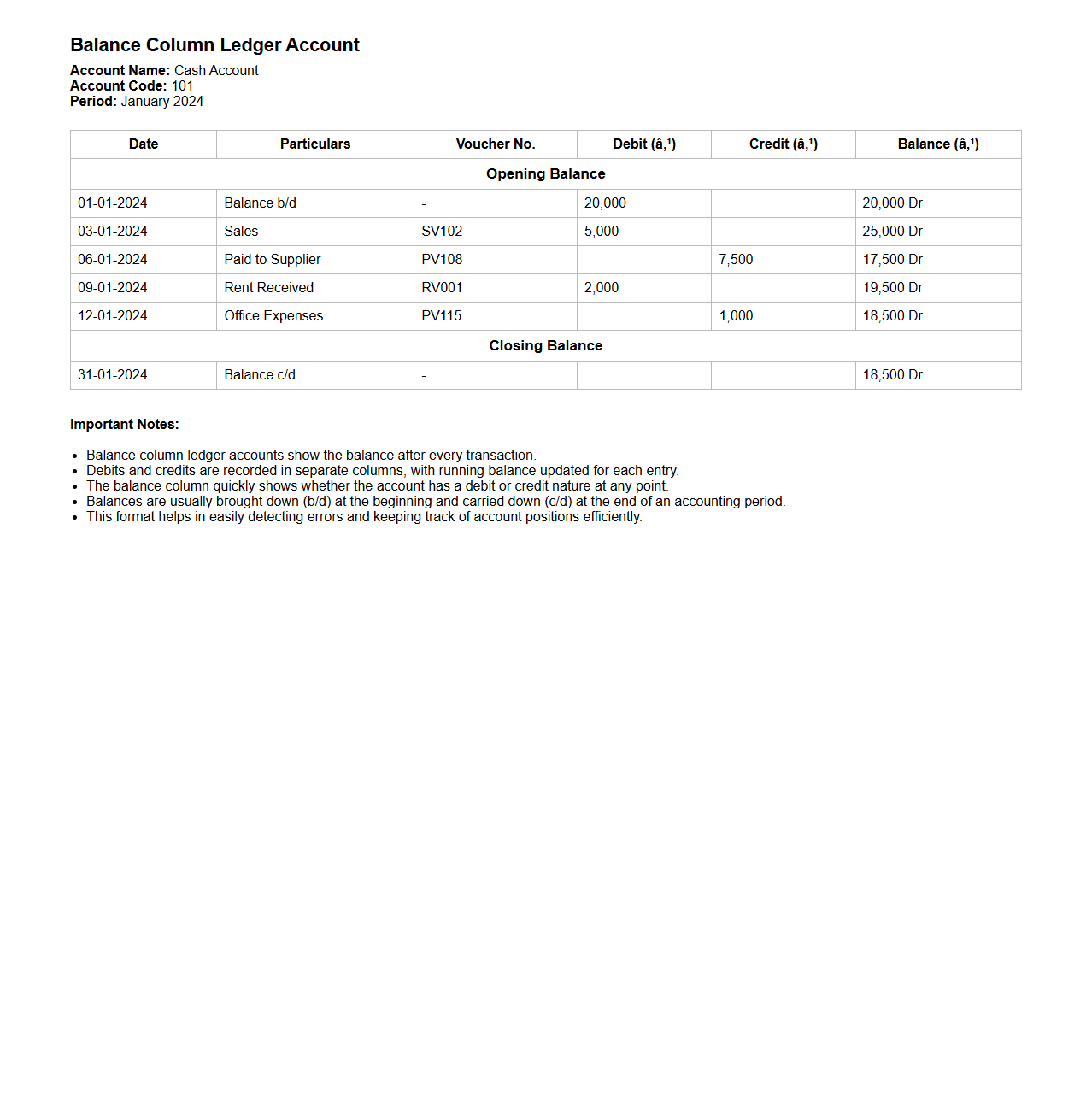
Balance Column Ledger Account Format
A
Balance Column Ledger Account Format document is a structured financial record used to track and summarize all debit and credit transactions within an account, displaying the current balance after each entry. This format typically includes columns for the date, description, reference, debit, credit, and running balance, enabling clear and organized monitoring of account activity. It is essential for accurate bookkeeping, financial analysis, and auditing processes.
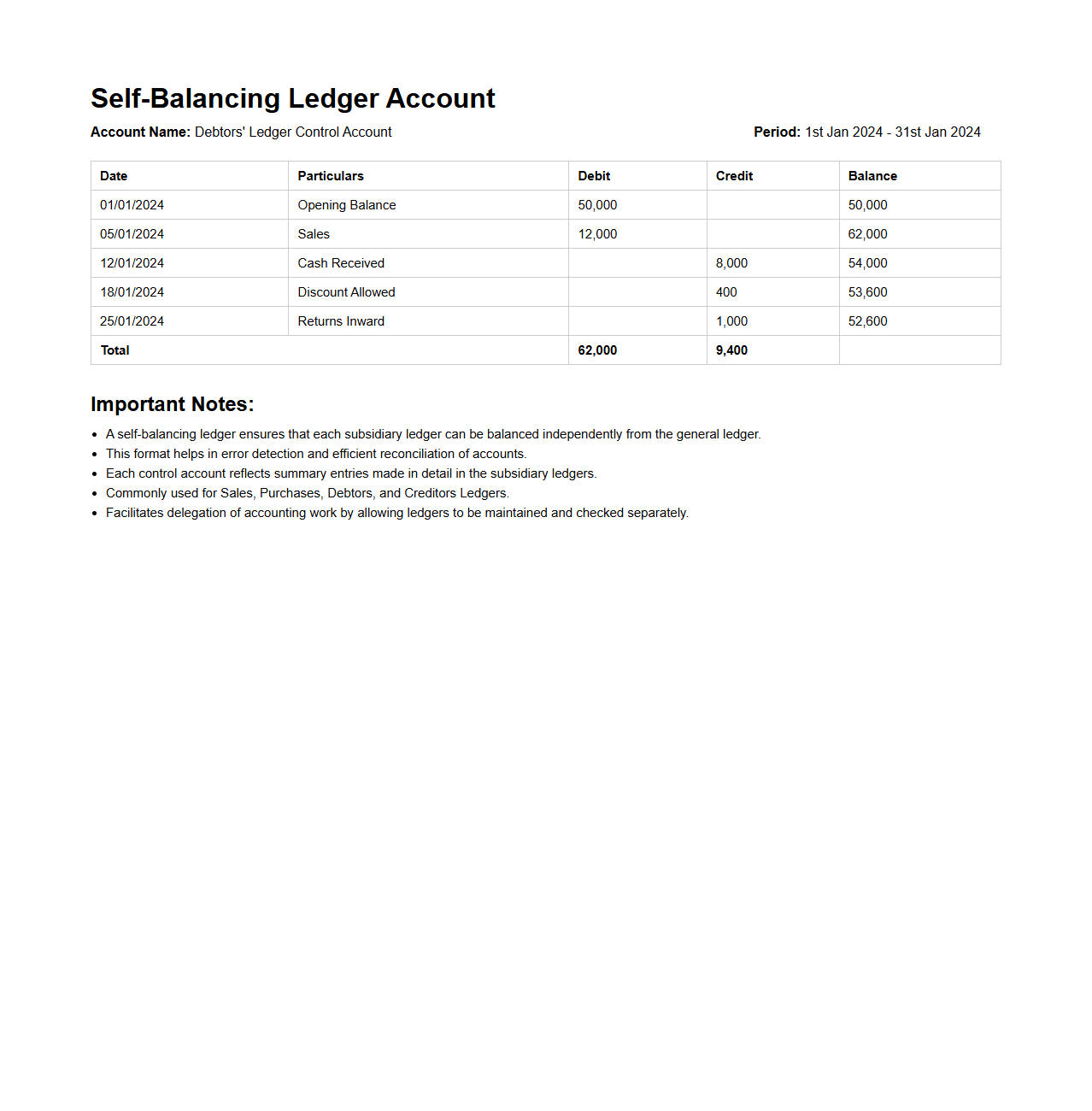
Self-Balancing Ledger Account Format
A
Self-Balancing Ledger Account Format document systematically organizes financial transactions to ensure each ledger account maintains internal balance by matching debit and credit totals. This format facilitates error detection and simplifies reconciliation processes by segregating accounts into distinct sections for debits and credits with continuous balancing. It enhances accounting accuracy and efficiency, proving essential for maintaining comprehensive and reliable financial records.
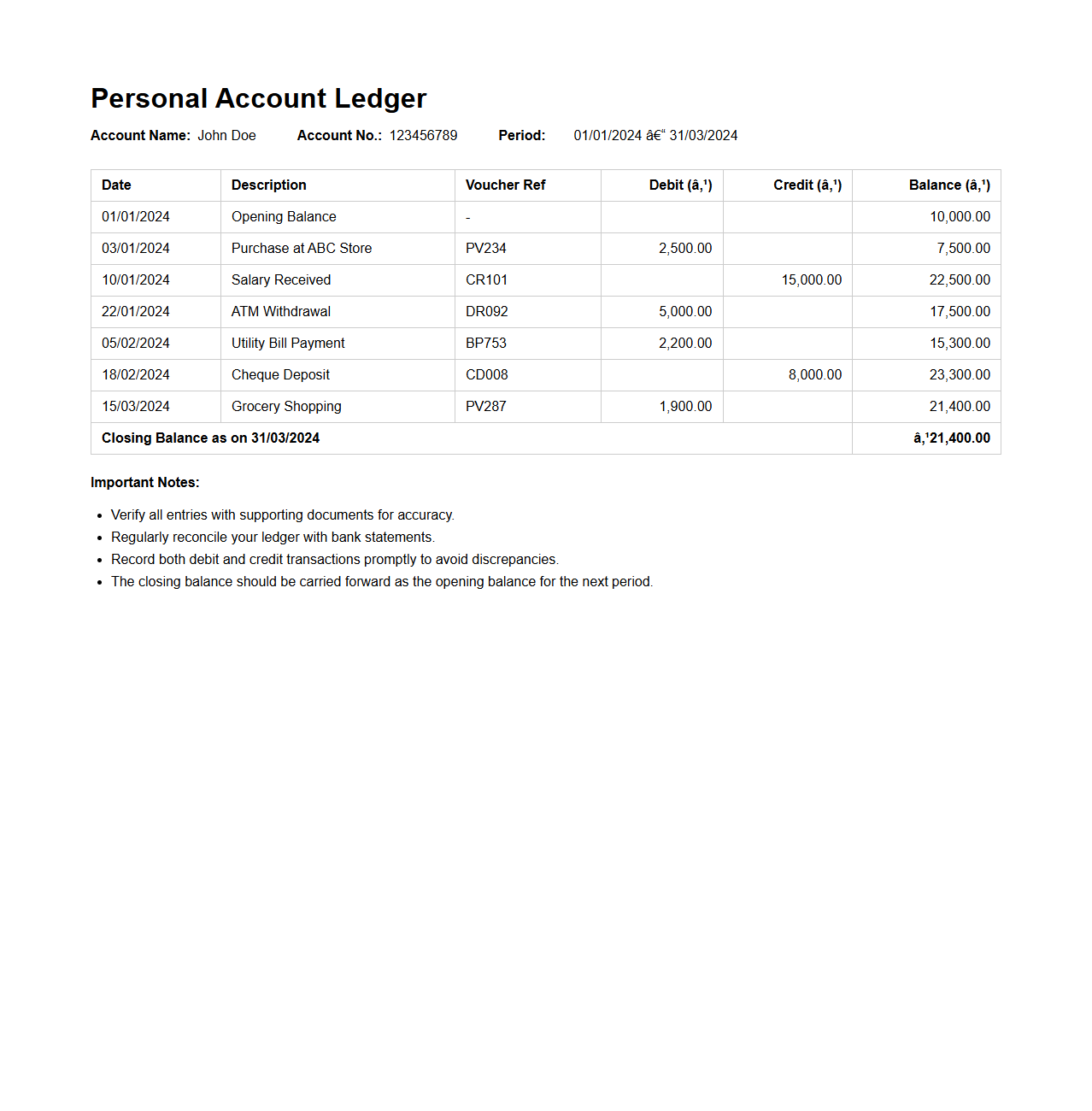
Personal Account Ledger Format
A
Personal Account Ledger Format document is a structured record used to track individual financial transactions such as debits, credits, and balances over time. It helps in maintaining a clear overview of personal or business accounts for effective money management and accurate bookkeeping. This format typically includes columns for date, description, transaction details, and running balance, ensuring transparency and ease of reference.
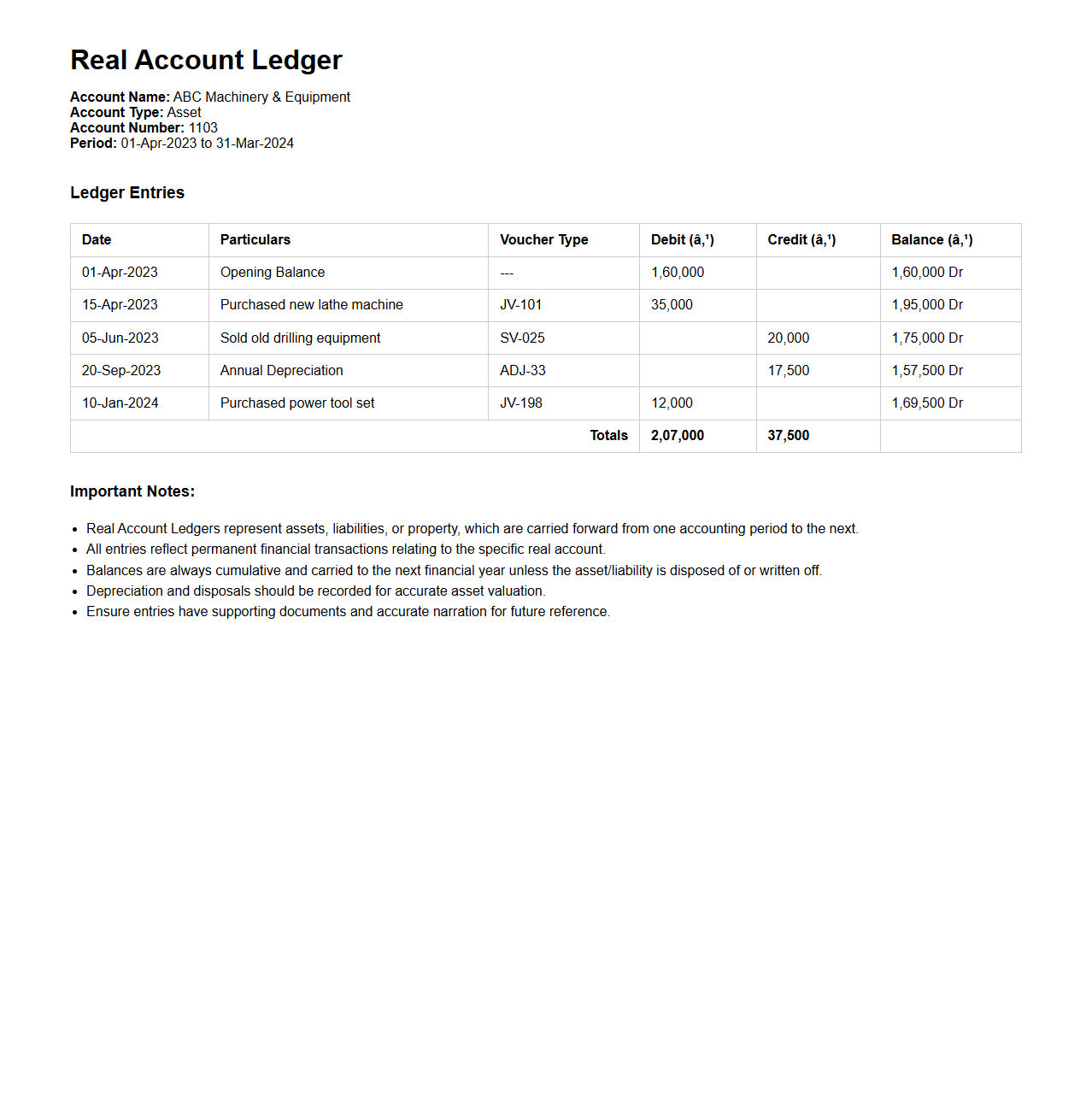
Real Account Ledger Format
The
Real Account Ledger Format document is a structured financial record used to track and organize all transactions related to real accounts, which represent tangible assets such as land, buildings, and machinery. It provides a clear framework for recording debits and credits, enabling accurate tracking of asset values and changes over time. This document is essential for maintaining transparency and facilitating effective asset management in accounting practices.
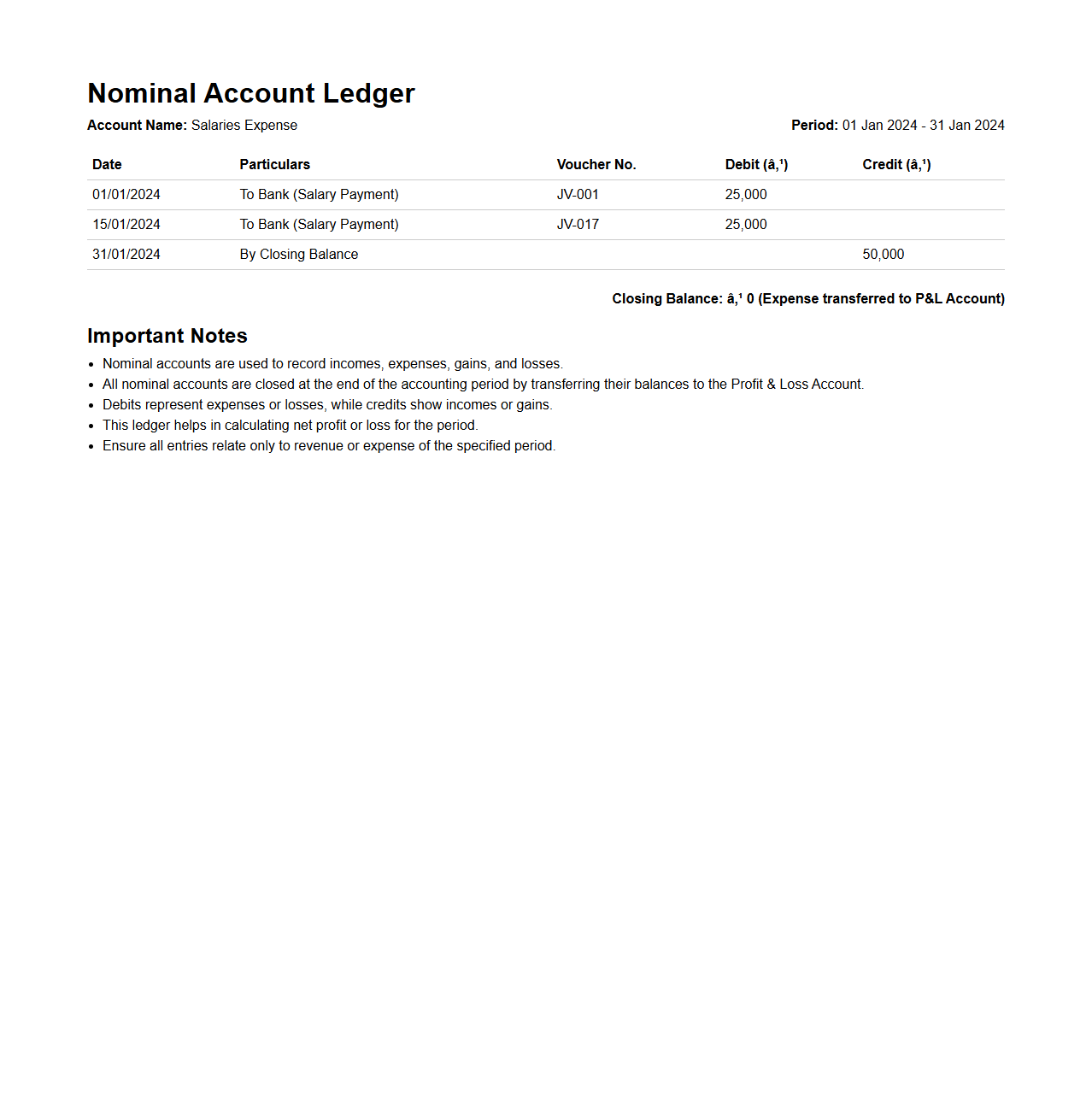
Nominal Account Ledger Format
A
Nominal Account Ledger Format document is a structured financial record used to systematically record and classify income, expenses, gains, and losses for a business. This format organizes transactions into distinct nominal accounts, enabling accurate tracking of financial performance and facilitating the preparation of financial statements. It is essential for maintaining precise bookkeeping and ensuring compliance with accounting standards.
Running Balance Ledger Account Format
A
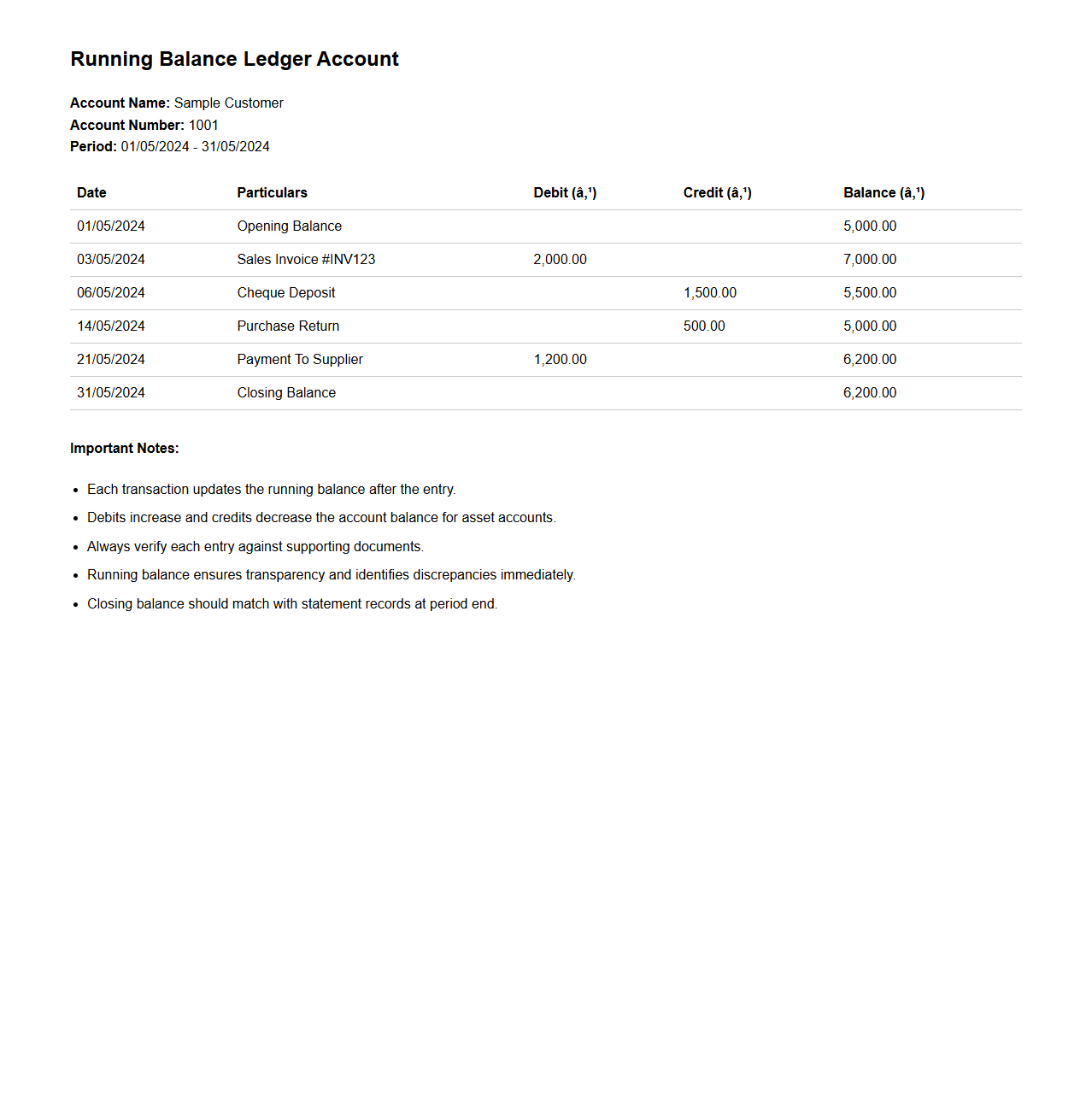
Running Balance Ledger Account Format document is a financial record-keeping tool that continuously updates the balance after each transaction, showing both the debit and credit entries in real-time. This format allows businesses and individuals to monitor account activity accurately, ensuring transparency and efficient tracking of funds. It is essential for maintaining up-to-date financial statements and facilitating quick reconciliation of accounts.
Computerized Ledger Account Format
A
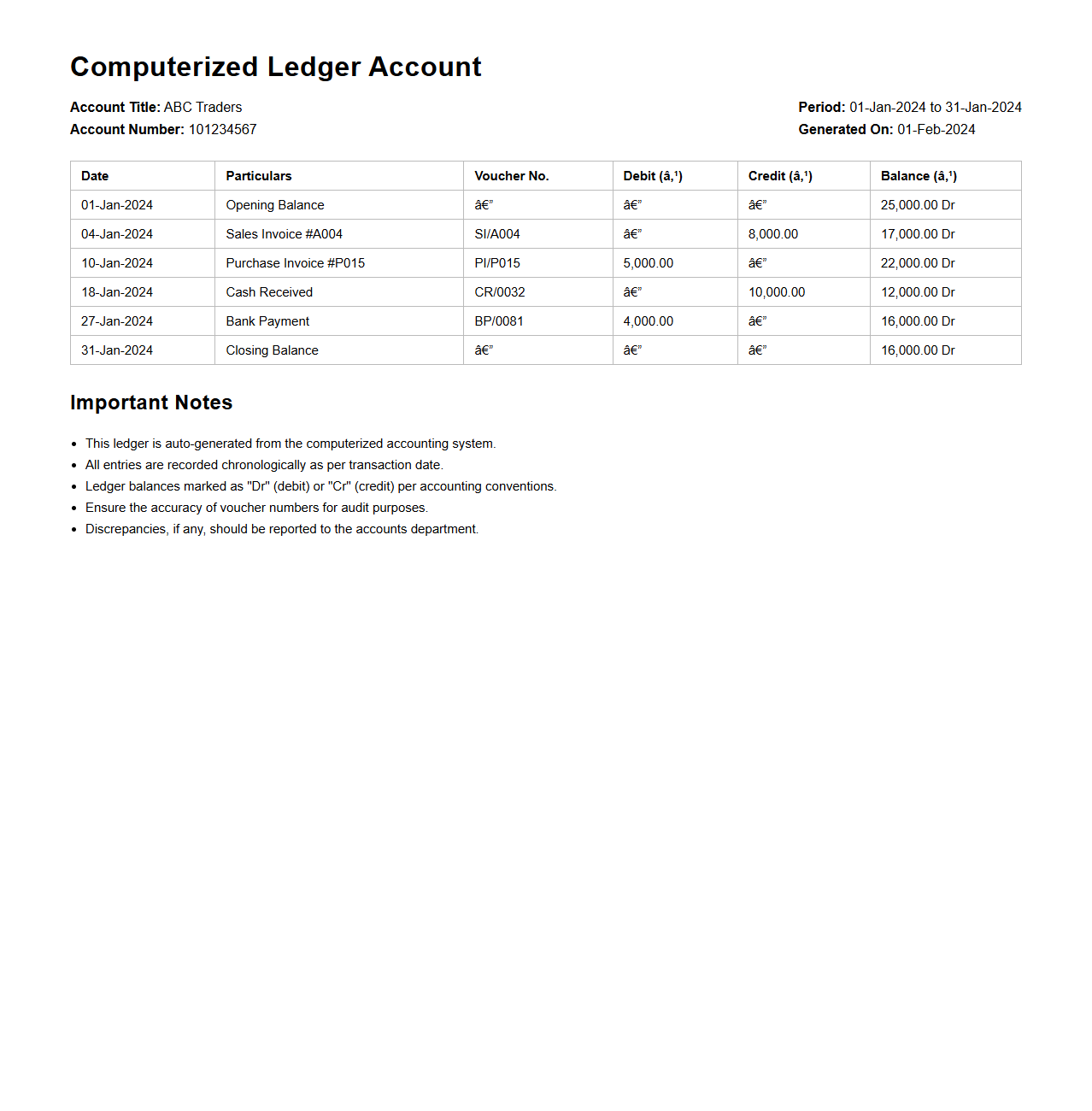
Computerized Ledger Account Format document is a structured digital template used for recording and organizing financial transactions within accounting software. It ensures accuracy, consistency, and efficient data retrieval by automatically categorizing entries into relevant accounts. This format is essential for maintaining transparent financial records and supporting audit processes.
What is the standard header format for a ledger account in official documents?
The standard header format in a ledger account typically includes the account name and the relevant period or date range. It should be centered at the top of the document for clarity and formal presentation. This header ensures easy identification and proper classification of transactions.
How should debit and credit columns be structured in a ledger account letter?
The debit and credit columns should be clearly labeled and aligned side by side for easy comparison of entries. Each column must have a heading such as "Debit" and "Credit" with space for dates and narration to detail each transaction. Proper column structure maintains organized and transparent financial records.
Which line spacing is optimal for legibility in a ledger account document?
An optimal line spacing of 1.15 to 1.5 ensures readability without wasting space in ledger documents. Adequate spacing between entries prevents visual clutter and helps in quick reference checking. This balance improves legibility while maintaining a compact format.
What footnotes or references should be included in a formal ledger letter format?
Footnotes and references should clarify any unusual transactions, adjustments, or important accounting policies relevant to the ledger entries. Including these notes enhances transparency and provides context for auditors and reviewers. They help in maintaining accuracy and compliance with accounting standards.
How to indicate account balances and carry-forward figures in a ledger letter?
Account balances and carry-forward figures should be distinctly highlighted, often using bold text or separate rows at period-end. Carry-forward amounts must be clearly marked as opening balances for the next period to ensure continuity. This practice supports accurate tracking of financial positions over time.