The Format of Compliance Assessment Report for Internal Review typically includes sections such as an executive summary, scope of the assessment, findings, and recommendations. Each section is structured to clearly document compliance status, highlight any deviations, and propose corrective actions. The format ensures consistency, transparency, and thoroughness in evaluating adherence to regulatory and organizational standards.
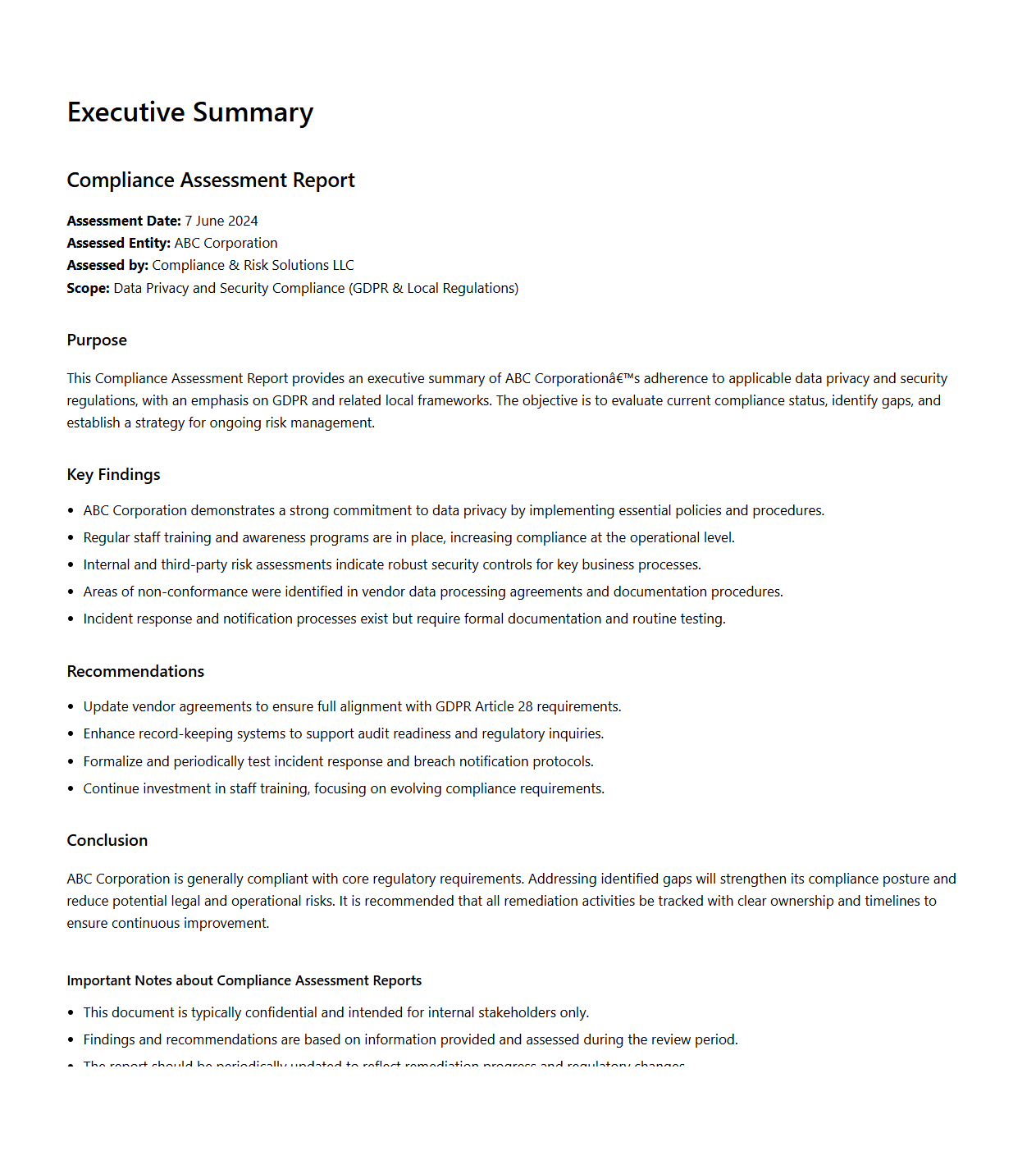
Executive Summary of Compliance Assessment Report
An
Executive Summary of a Compliance Assessment Report provides a concise overview of the key findings, compliance status, and risk areas identified during the evaluation process. It highlights critical compliance gaps, regulatory adherence levels, and recommendations for corrective actions to ensure organizational alignment with applicable laws and standards. This section serves as a strategic briefing for stakeholders, enabling informed decision-making without requiring a review of the full report.
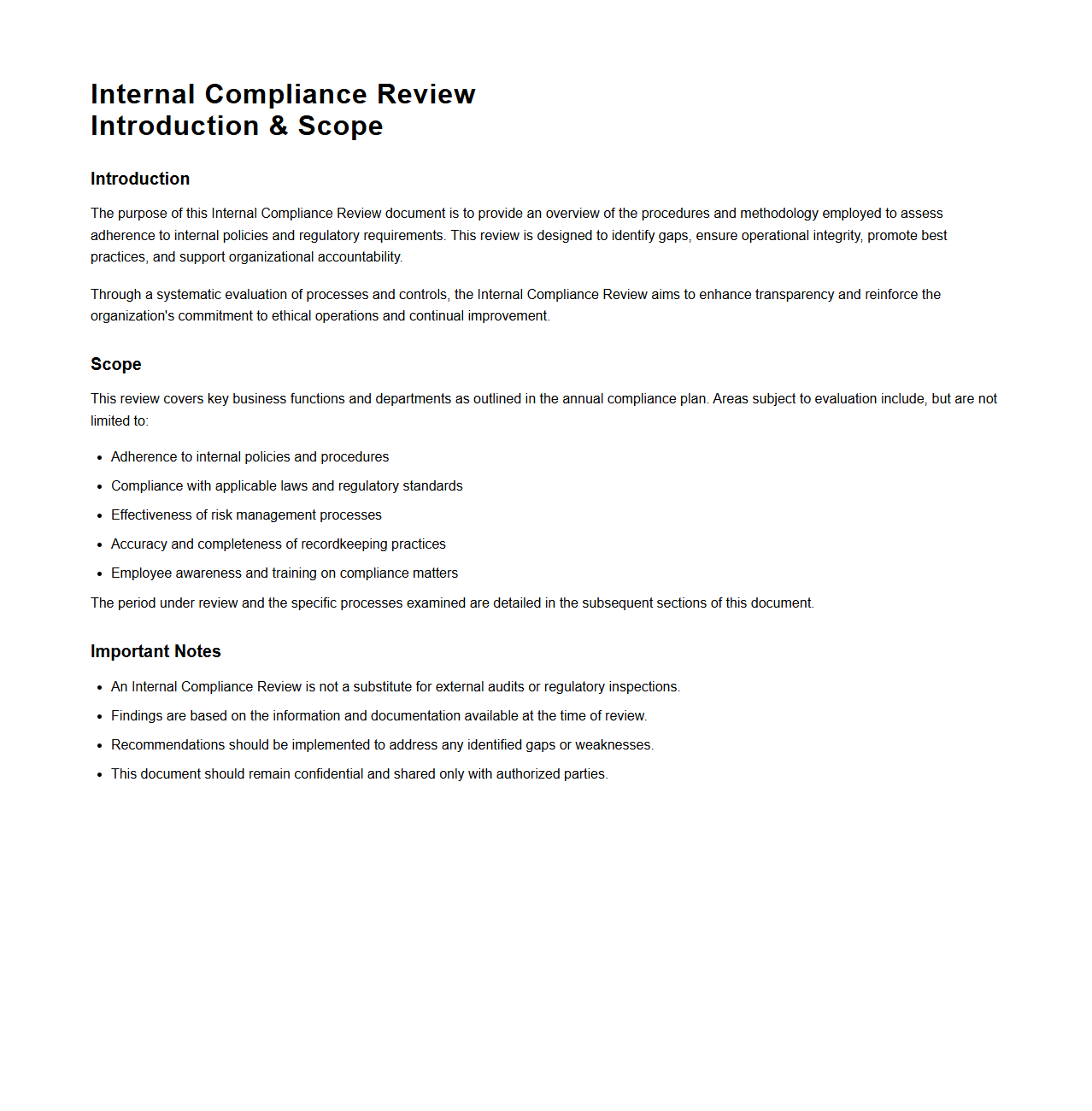
Introduction and Scope of Internal Compliance Review
The
Introduction and Scope of Internal Compliance Review document outlines the purpose, objectives, and boundaries of the compliance review process within an organization. It defines the specific areas, departments, and regulatory requirements subject to evaluation, ensuring clarity on what will be assessed to maintain adherence to internal policies and external laws. This document serves as a foundational guide to streamline compliance efforts and mitigate risks effectively.
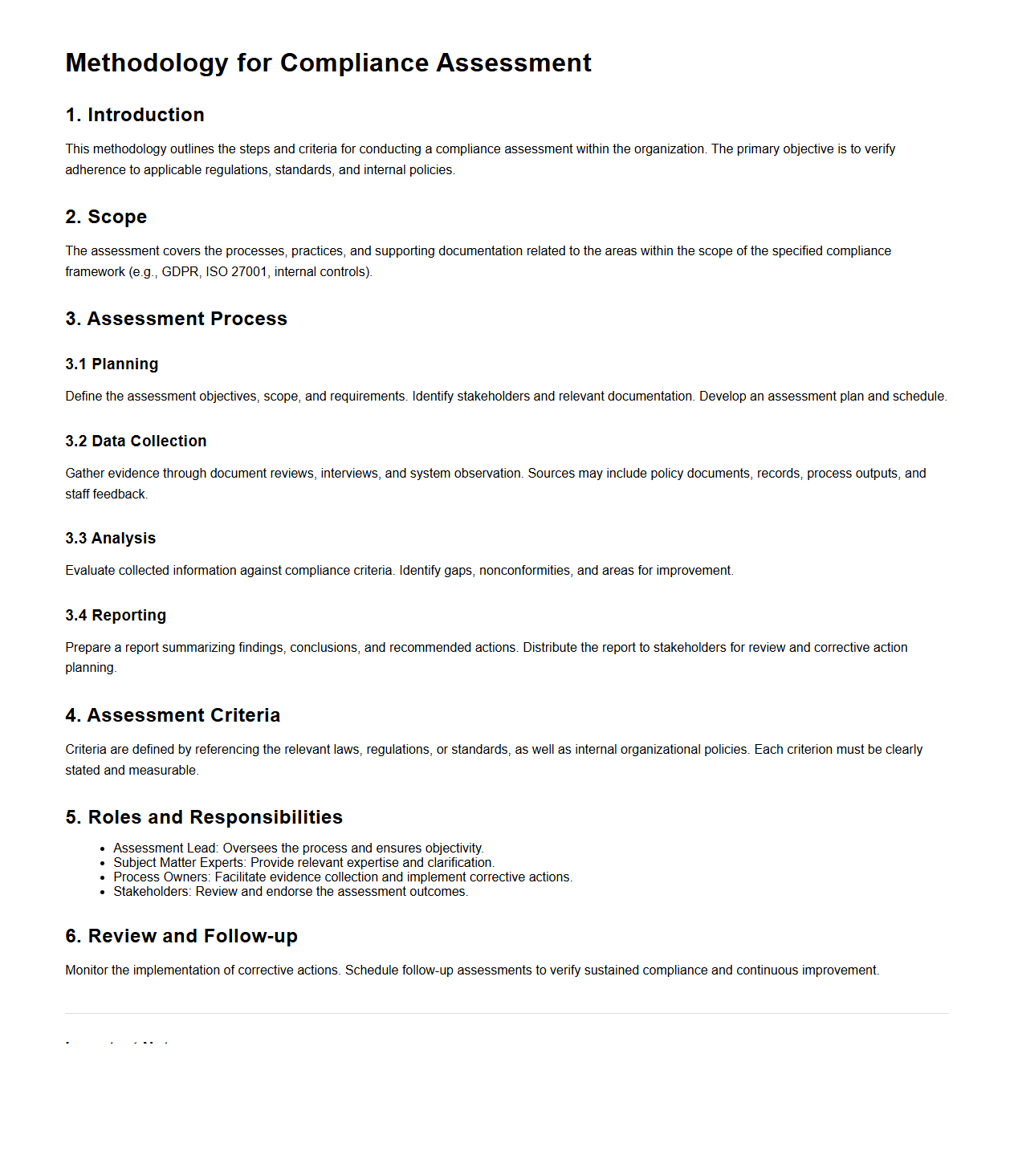
Methodology for Compliance Assessment
The
Methodology for Compliance Assessment document outlines a structured approach for evaluating an organization's adherence to regulatory requirements and industry standards. It details specific criteria, assessment techniques, and evaluation procedures to ensure consistent and accurate compliance verification. This document serves as a critical guide for auditors and compliance officers to systematically identify gaps and implement corrective actions.
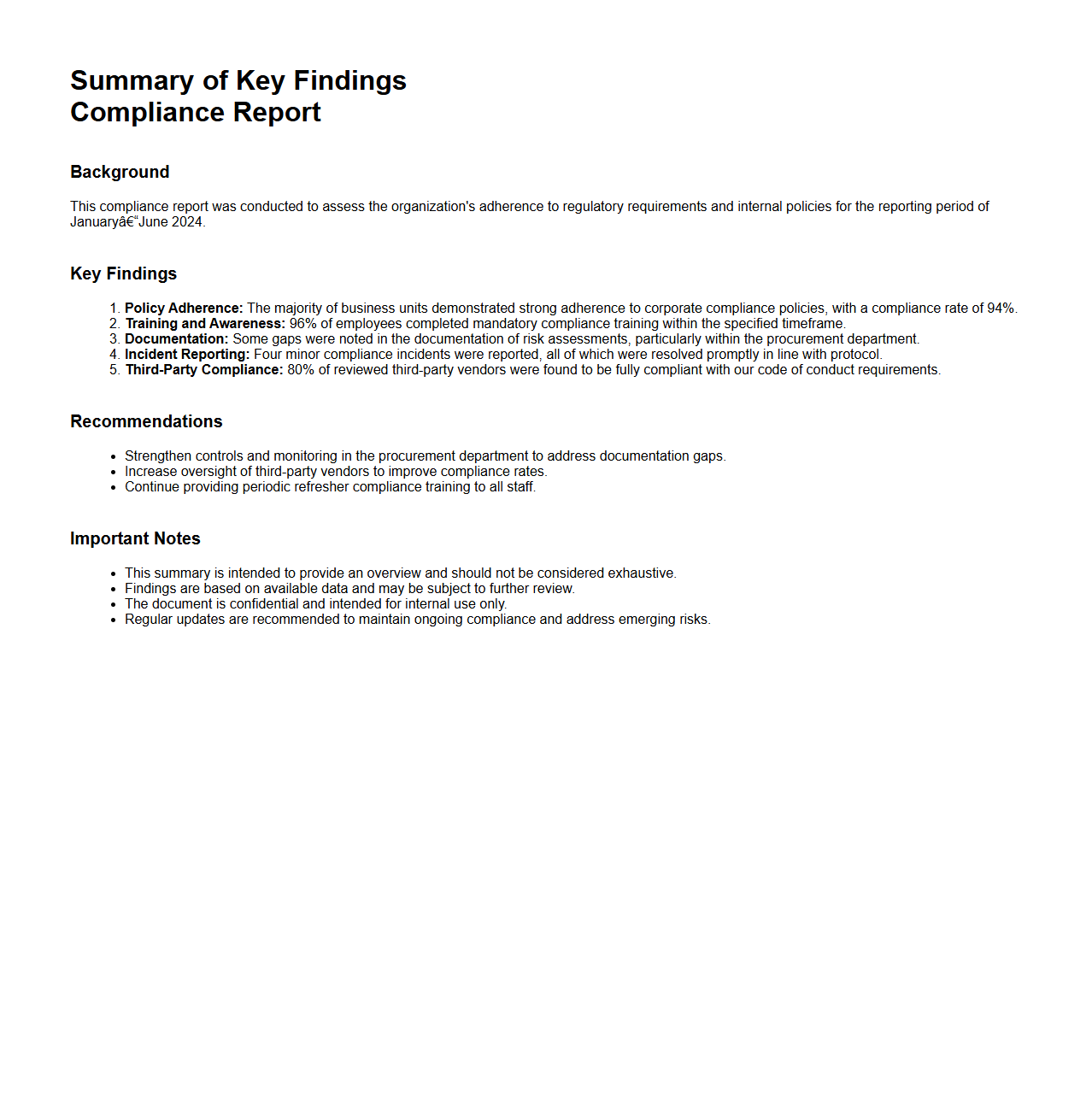
Summary of Key Findings in Compliance Report
The
Summary of Key Findings in a Compliance Report document highlights the most critical observations and results from the compliance audit or assessment. It provides a concise overview of compliance status, identifying areas of non-compliance, risks, and recommendations for corrective actions. This section serves as a quick reference for stakeholders to understand essential compliance issues and ensure regulatory standards are met.
Detailed Compliance Assessment Results
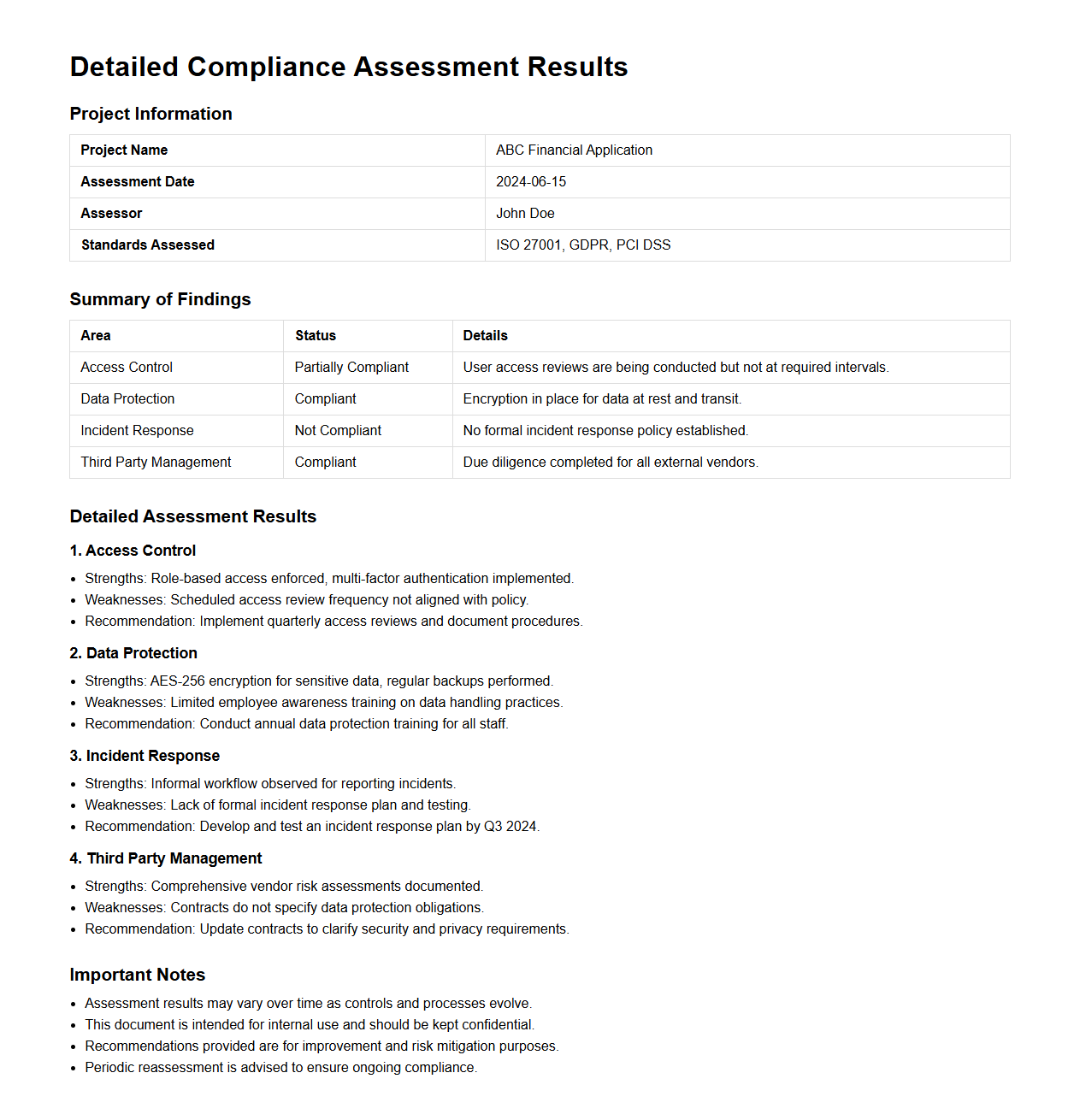
The
Detailed Compliance Assessment Results document provides a comprehensive analysis of an organization's adherence to regulatory standards and internal policies. It outlines specific findings, identifies areas of non-compliance, and offers actionable recommendations to mitigate risks. This report serves as a crucial tool for auditors, compliance officers, and management to ensure continuous improvement and regulatory alignment.
Identified Non-Compliance Issues and Risks
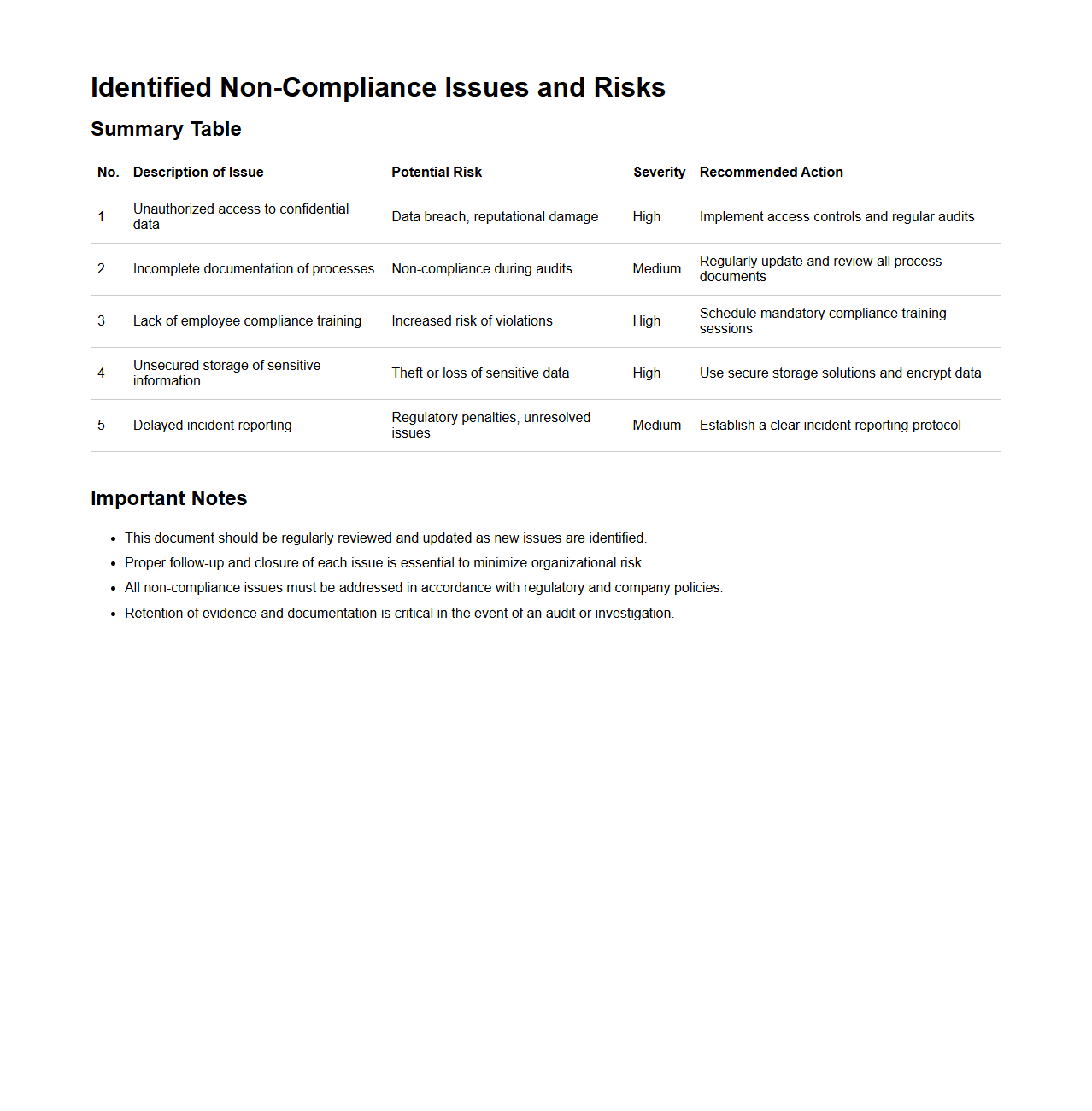
The
Identified Non-Compliance Issues and Risks document systematically records instances where regulations, standards, or internal policies have not been met, highlighting potential legal, financial, and operational consequences. It serves as a critical tool for compliance officers and management to assess exposure and prioritize corrective actions. This document supports risk mitigation by providing clear evidence for audits, regulatory reviews, and continuous improvement initiatives.
Corrective Actions and Recommendations
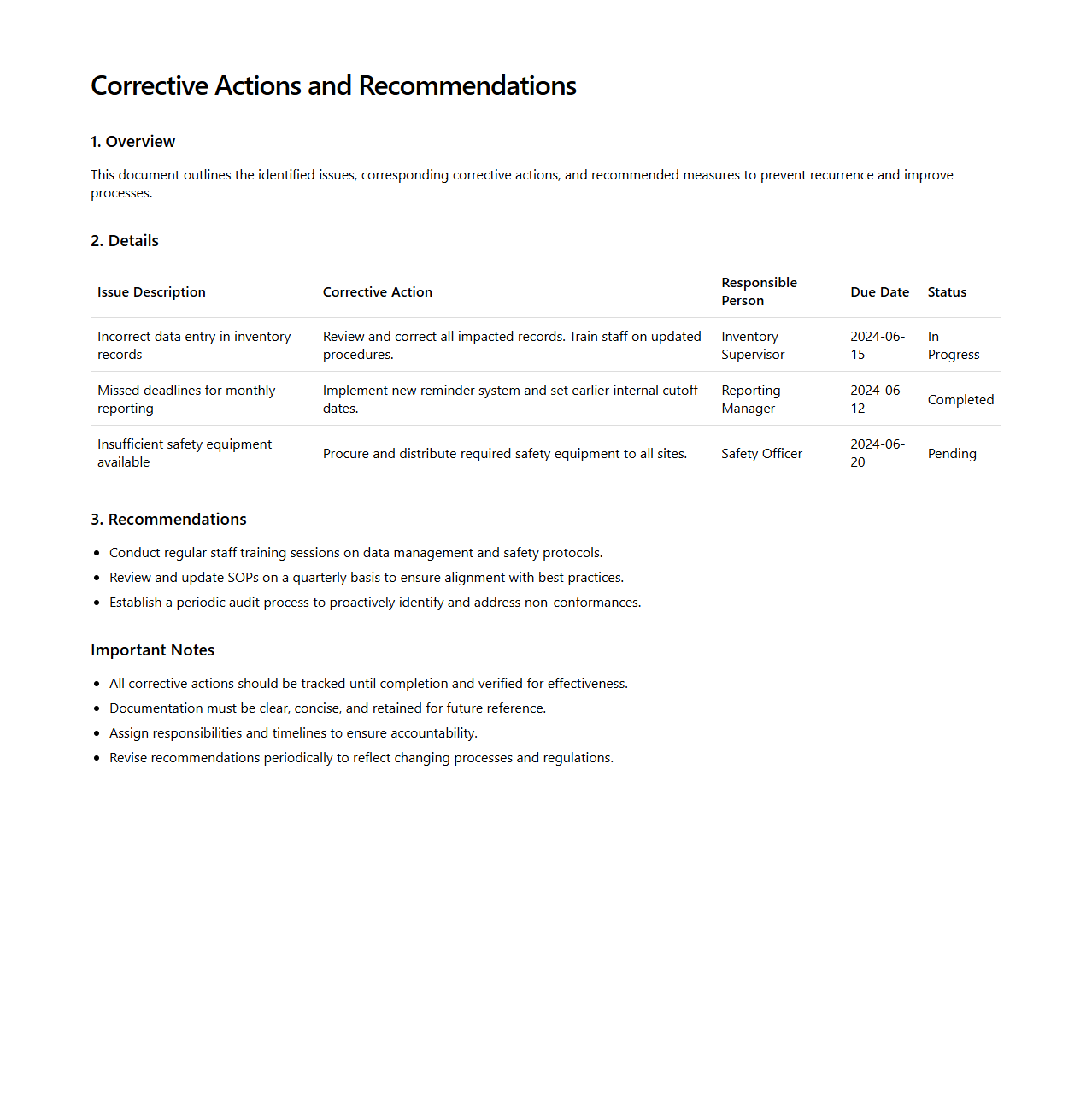
The
Corrective Actions and Recommendations document outlines specific steps to address identified issues and prevent their recurrence, ensuring continuous improvement within an organization. It provides detailed analysis of problems, proposed solutions, responsible parties, and deadlines for implementation to enhance operational efficiency and compliance. This document serves as a critical tool for tracking progress and verifying the effectiveness of corrective measures.
Compliance Assessment Supporting Evidence
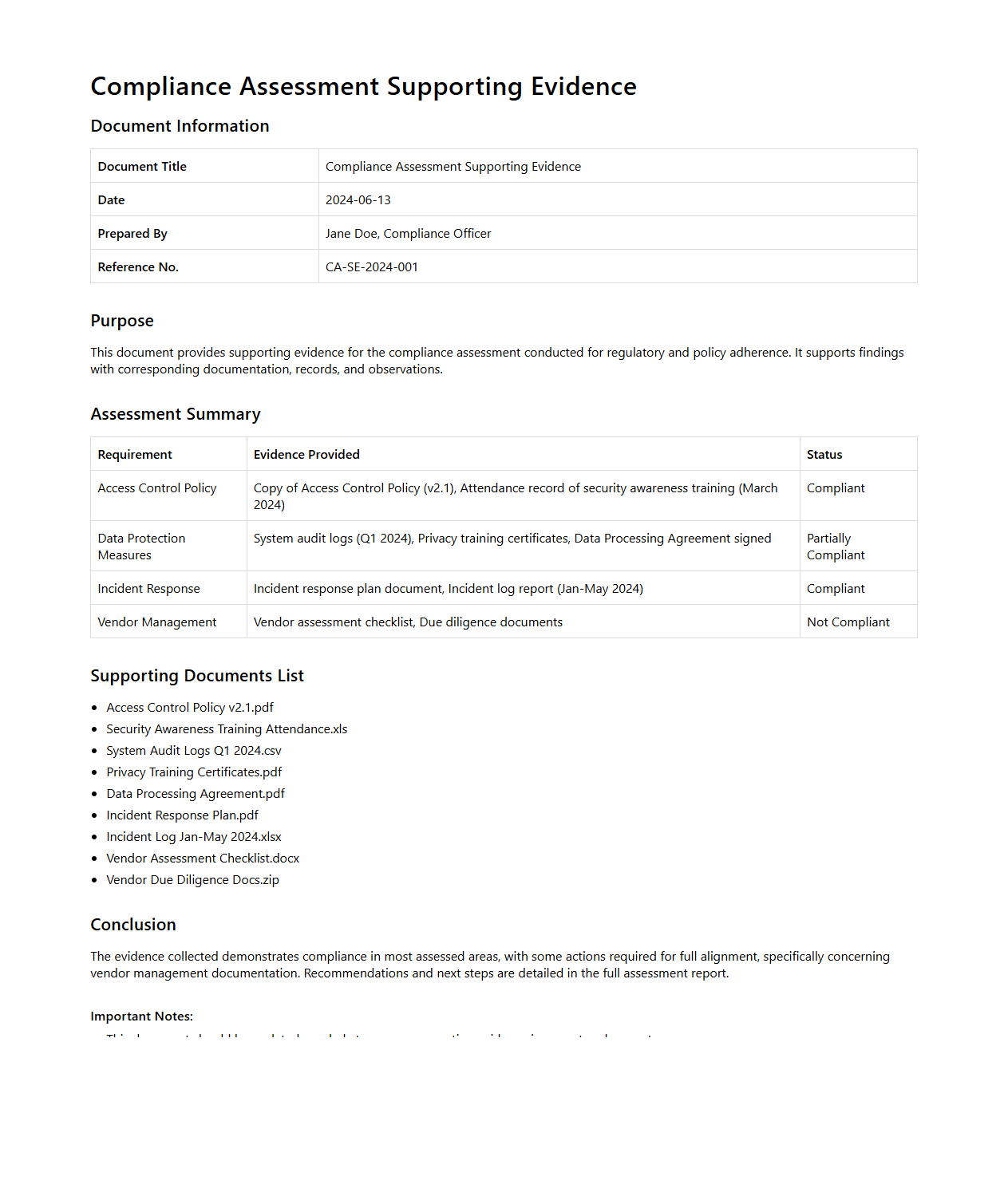
A
Compliance Assessment Supporting Evidence document serves as a critical record that verifies an organization's adherence to regulatory standards, policies, or contractual requirements. It compiles audits, test results, certifications, and other forms of proof to substantiate compliance claims during assessments and inspections. This document is essential for demonstrating accountability, mitigating risks, and maintaining trust with stakeholders and regulatory bodies.
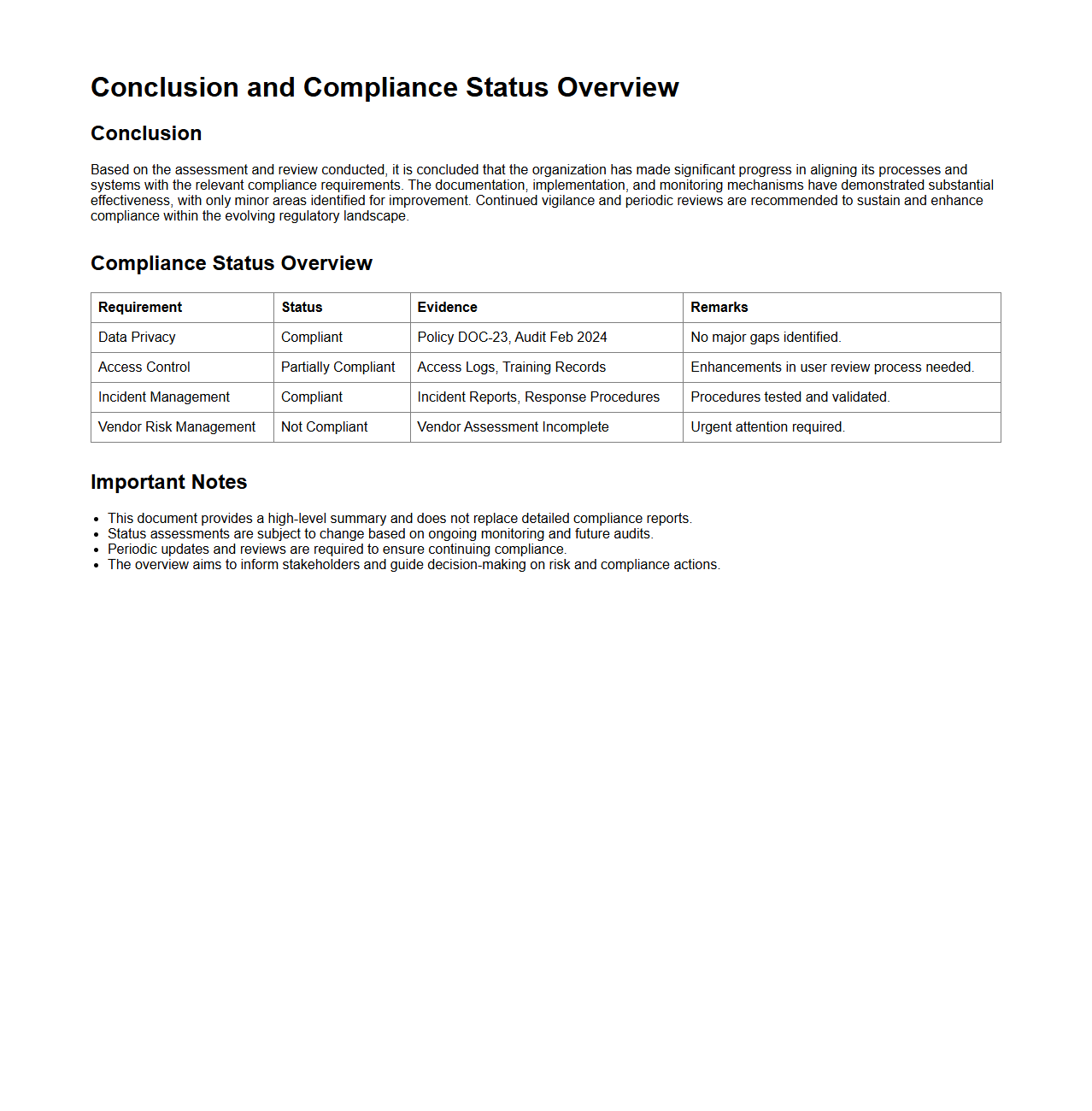
Conclusion and Compliance Status Overview
A
Conclusion and Compliance Status Overview document provides a clear summary of a project's or organization's adherence to regulatory requirements and standards. It outlines the final assessment results, highlighting areas of full compliance, non-compliance, and any corrective actions taken or required. This document serves as a critical reference for stakeholders to evaluate the overall compliance performance and ensure accountability.
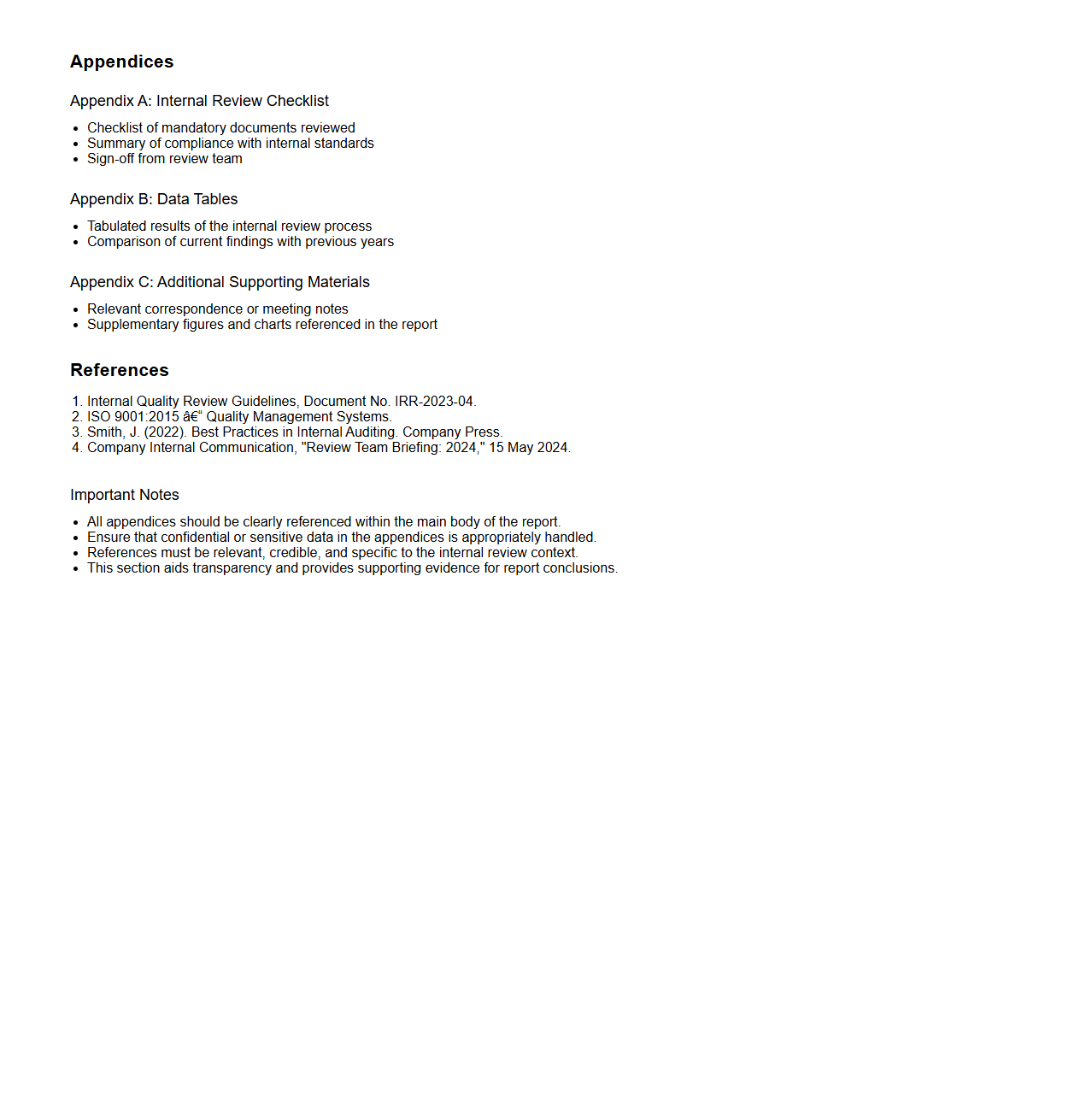
Appendices and References for Internal Review Report
Appendices in an Internal Review Report document provide supplementary material such as raw data, charts, or detailed explanations that support the main content without interrupting the flow of the report. References list all the sources, research papers, and documentation cited or consulted during the review process, ensuring transparency and credibility. Including a well-organized
Appendices and References section enhances the report's reliability and aids in thorough understanding and verification.
What is the standardized structure required in the Compliance Assessment Report for Internal Review?
The standardized structure of a Compliance Assessment Report typically includes an introduction, scope, methodology, findings, conclusions, and recommendations. Each section follows a clear, logical flow to enhance readability and ensure comprehensive coverage of compliance aspects. This format helps maintain consistency across reports for easier internal review and audit processes.
Which key sections must be documented to ensure completeness and clarity?
The report must document key sections such as Executive Summary, Background, Compliance Criteria, Detailed Findings, and Conclusions. Including these ensures that the report provides a holistic view of the assessment, the applicable standards, and the outcomes identified. Clear documentation in each section supports transparency and aids stakeholders in understanding the compliance status clearly.
How should identified compliance gaps and risks be described within the report?
Identified compliance gaps and risks should be described with specificity and clarity, detailing the nature, potential impact, and root cause. Use quantified data and examples where possible to illustrate the severity and scope of each issue. This thorough description enables targeted corrective actions and prioritizes risk management effectively.
What methods are recommended for summarizing corrective actions and follow-up plans?
Corrective actions and follow-up plans should be summarized using actionable, time-bound statements that specify responsibilities and deadlines. Visual aids such as tables or Gantt charts can enhance clarity and tracking progress. This structured approach ensures accountability and facilitates monitoring of remediation efforts over time.
How is evidence of compliance or non-compliance formatted and referenced in the report?
Evidence of compliance or non-compliance must be formatted with clear labels, timestamps, and source references, often organized in appendices or annexes. Cross-referencing within the main report text ensures easy navigation between findings and supporting documentation. Proper formatting establishes credibility and supports audit trails during reviews.
More Compliance Templates