The Format of Budget Statement for Corporate Finance typically includes sections such as projected revenues, estimated expenses, and net profit or loss. It provides a comprehensive overview of financial planning by detailing income sources and planned expenditures within a specific period. This structured format aids in effective decision-making and resource allocation for corporate financial management.
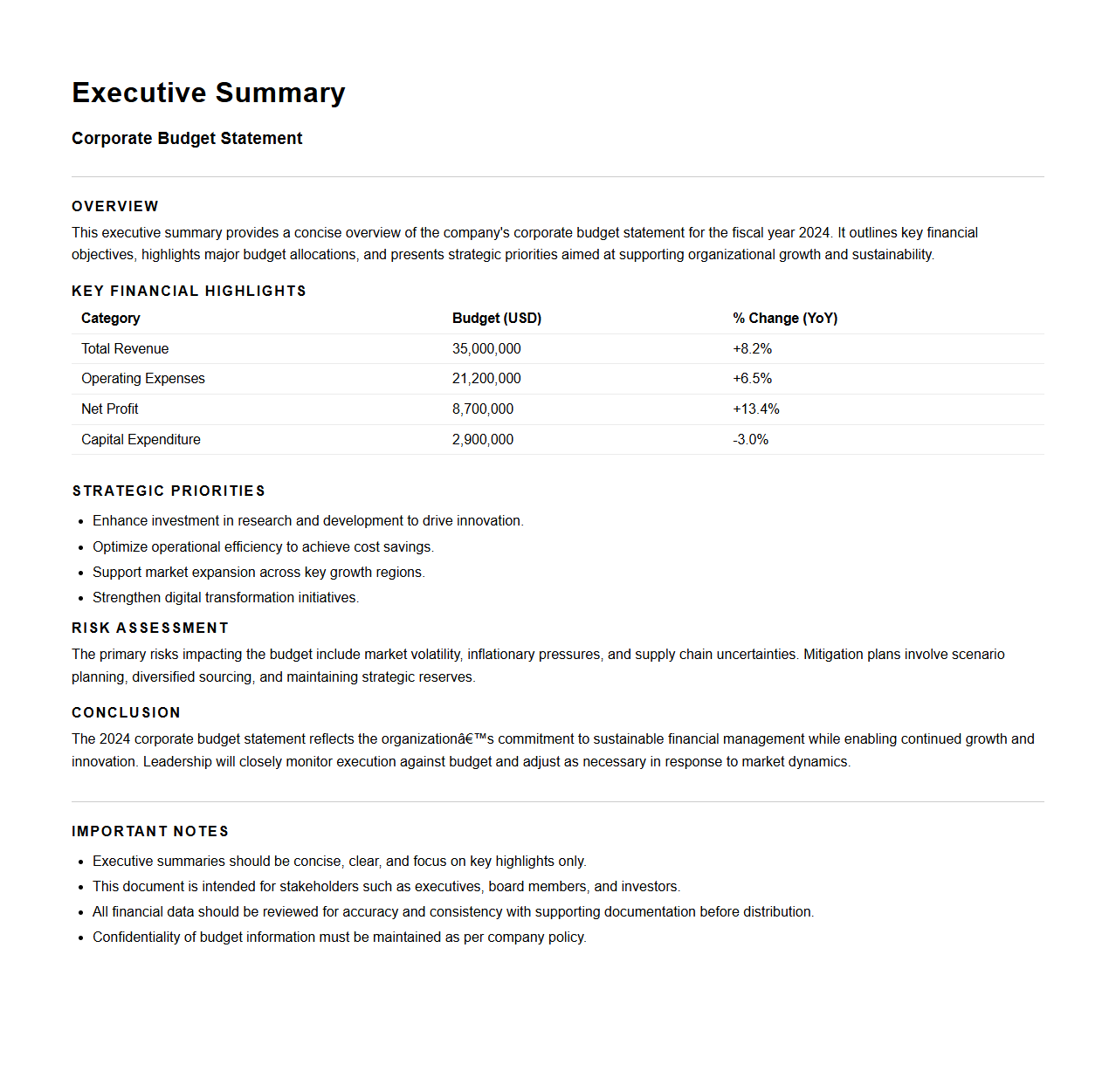
Executive Summary Format for Corporate Budget Statement
An
Executive Summary Format for a Corporate Budget Statement provides a concise overview of the key financial data, budget allocations, and strategic priorities within a company. It highlights essential budget components such as revenue projections, expense forecasts, and resource distribution to facilitate quick decision-making by stakeholders. This format ensures clarity and coherence, enabling executives to grasp the financial standing and planned expenditures efficiently.
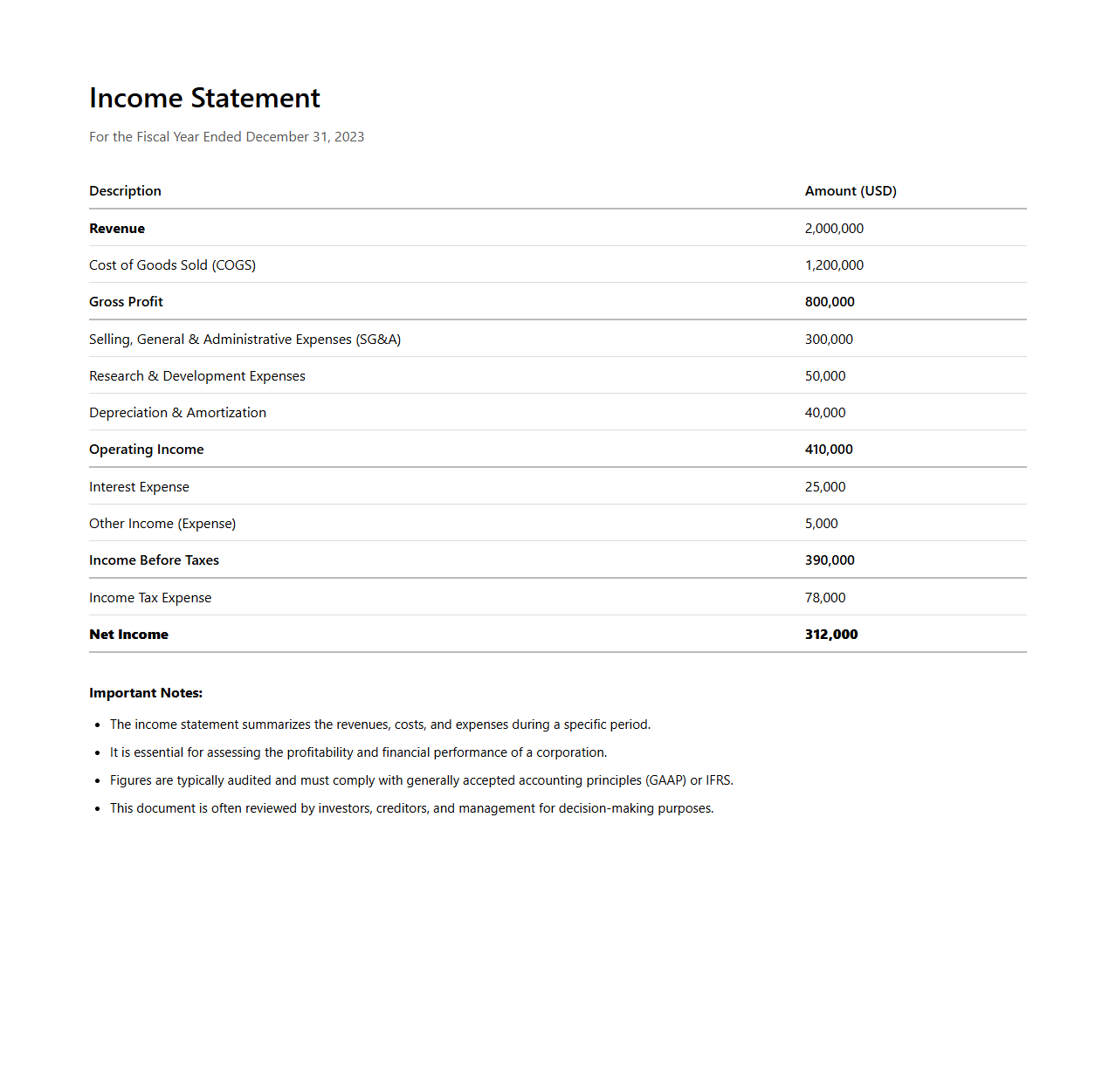
Income Statement Format for Corporate Finance
The
Income Statement Format in corporate finance is a structured financial document that summarizes a company's revenues, expenses, and profits over a specific period, typically a fiscal quarter or year. It includes key components such as net sales, cost of goods sold (COGS), gross profit, operating expenses, operating income, interest, taxes, and net income, providing critical insights into the company's financial performance and profitability. This format is essential for investors, management, and analysts to evaluate operational efficiency and make informed financial decisions.
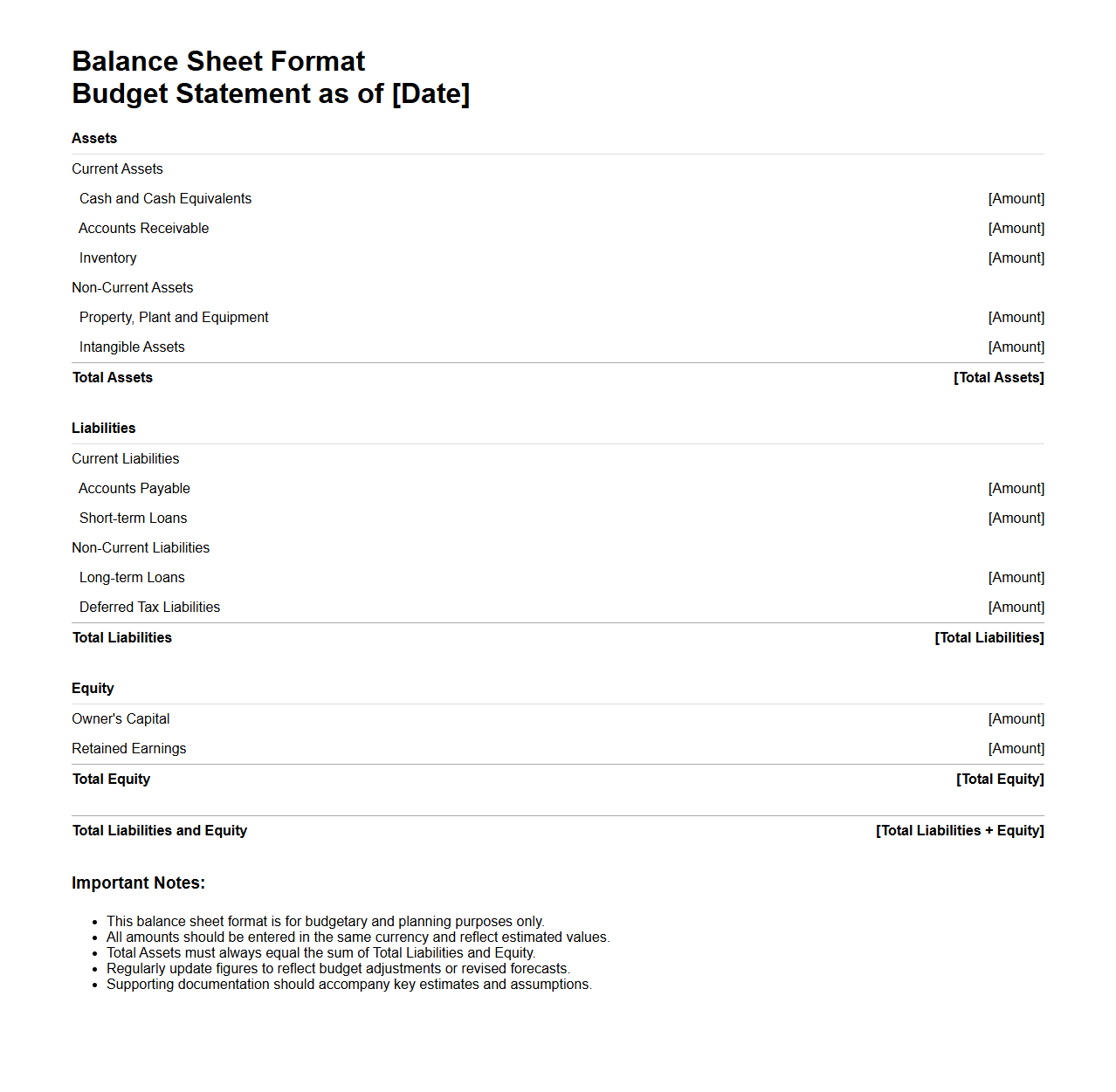
Balance Sheet Format for Budget Statement
A
Balance Sheet Format for a Budget Statement document organizes financial information into assets, liabilities, and equity to provide a clear snapshot of an entity's financial position at a specific point in time. It typically includes sections for current and fixed assets, current and long-term liabilities, and owner's equity, ensuring all components balance according to accounting principles. This format facilitates effective budgeting and financial planning by highlighting available resources and obligations.
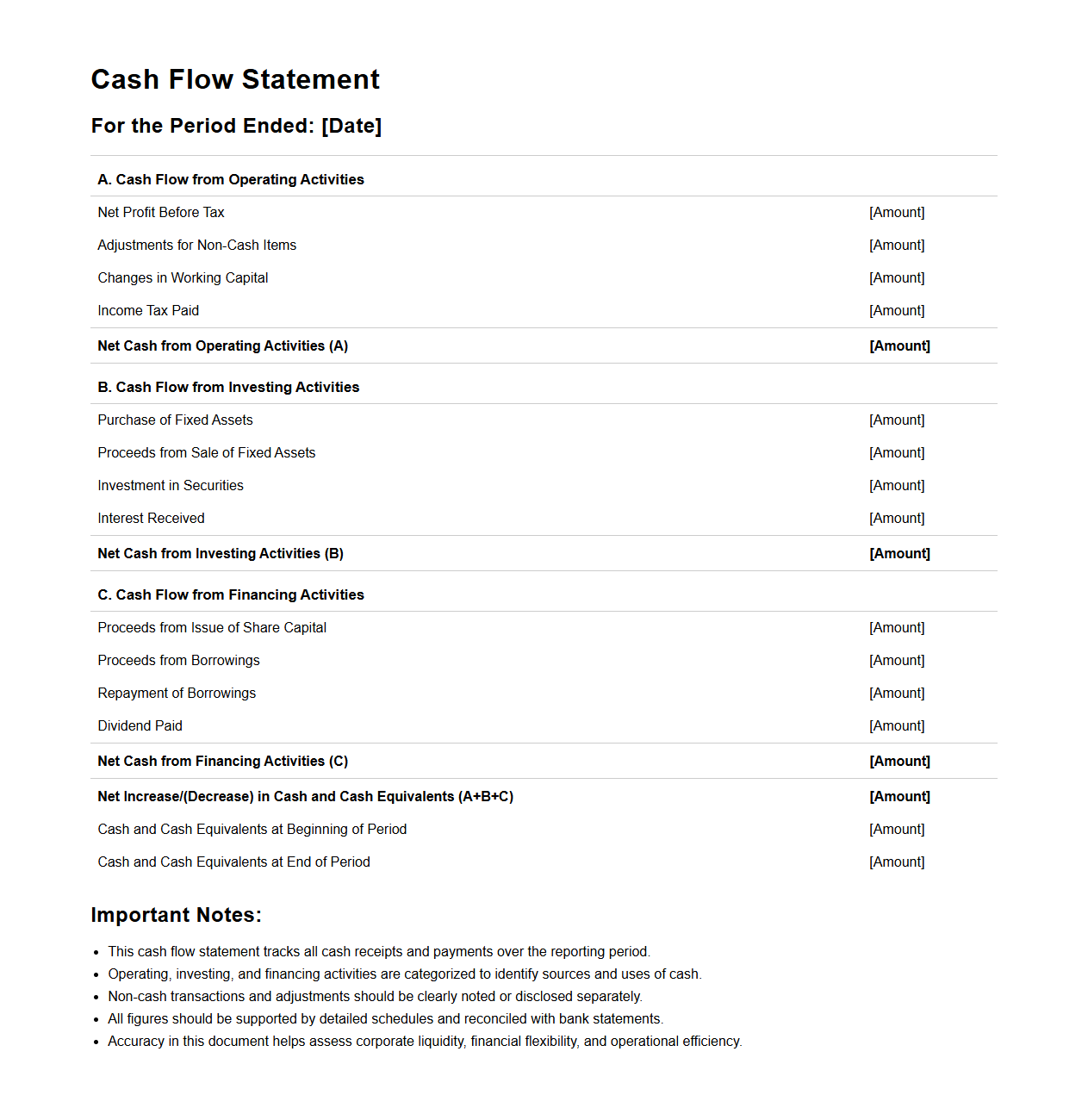
Cash Flow Statement Format for Corporate Budgets
The
Cash Flow Statement Format for corporate budgets is a structured financial document that outlines the inflows and outflows of cash within a company over a specific period. It categorizes cash activities into operating, investing, and financing sections, providing insight into liquidity and cash management. This format is essential for forecasting cash needs, ensuring solvency, and supporting strategic decision-making in corporate financial planning.
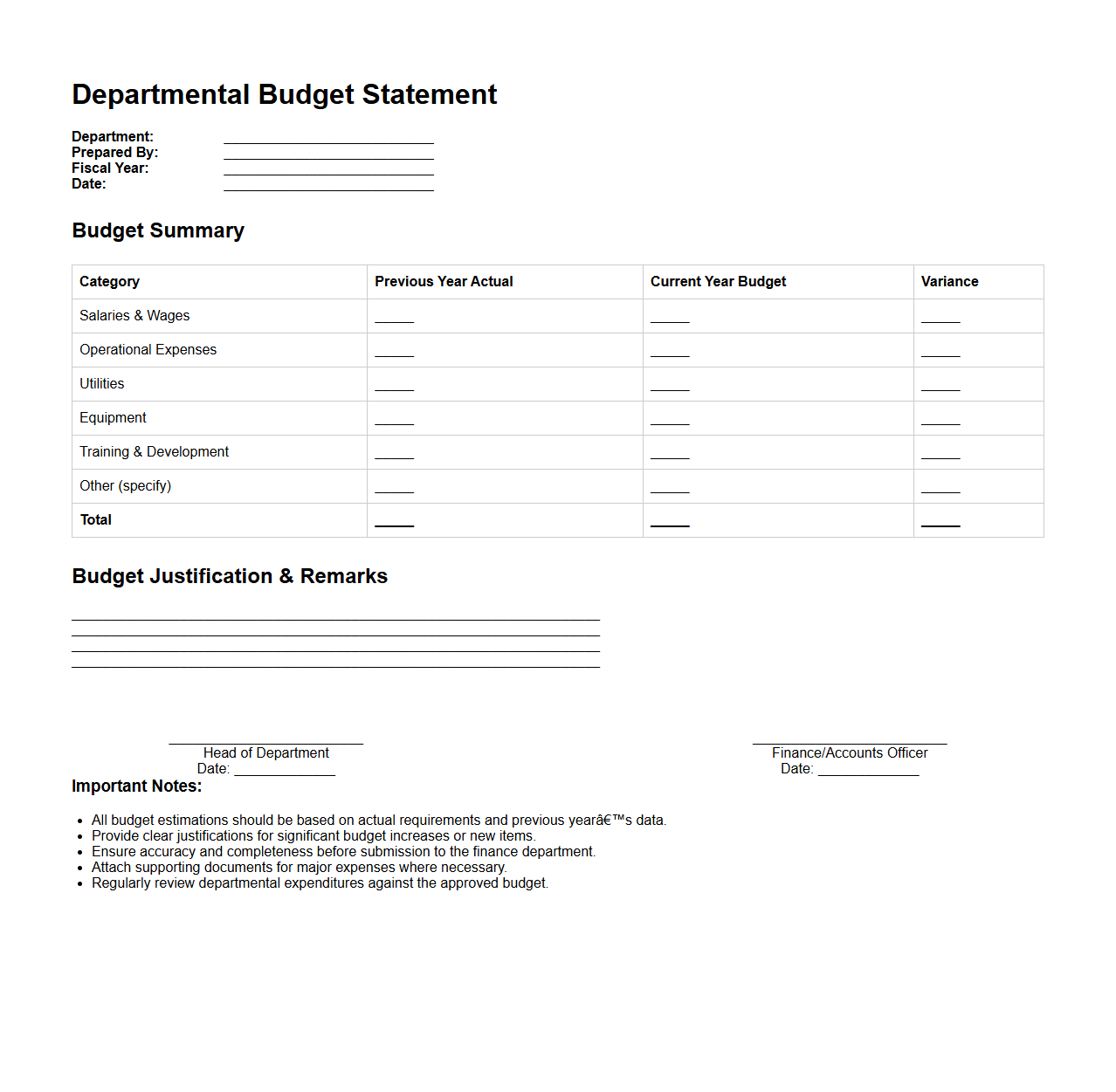
Departmental Budget Statement Format Sample
The
Departmental Budget Statement Format Sample document provides a standardized template for presenting an organization's budget allocation, expenditure, and financial planning within a specific department. It includes essential sections such as estimated revenues, detailed expense categories, and justifications for funds requested, ensuring clarity and consistency in financial reporting. This format aids in transparent resource management and supports effective decision-making for departmental fiscal responsibilities.
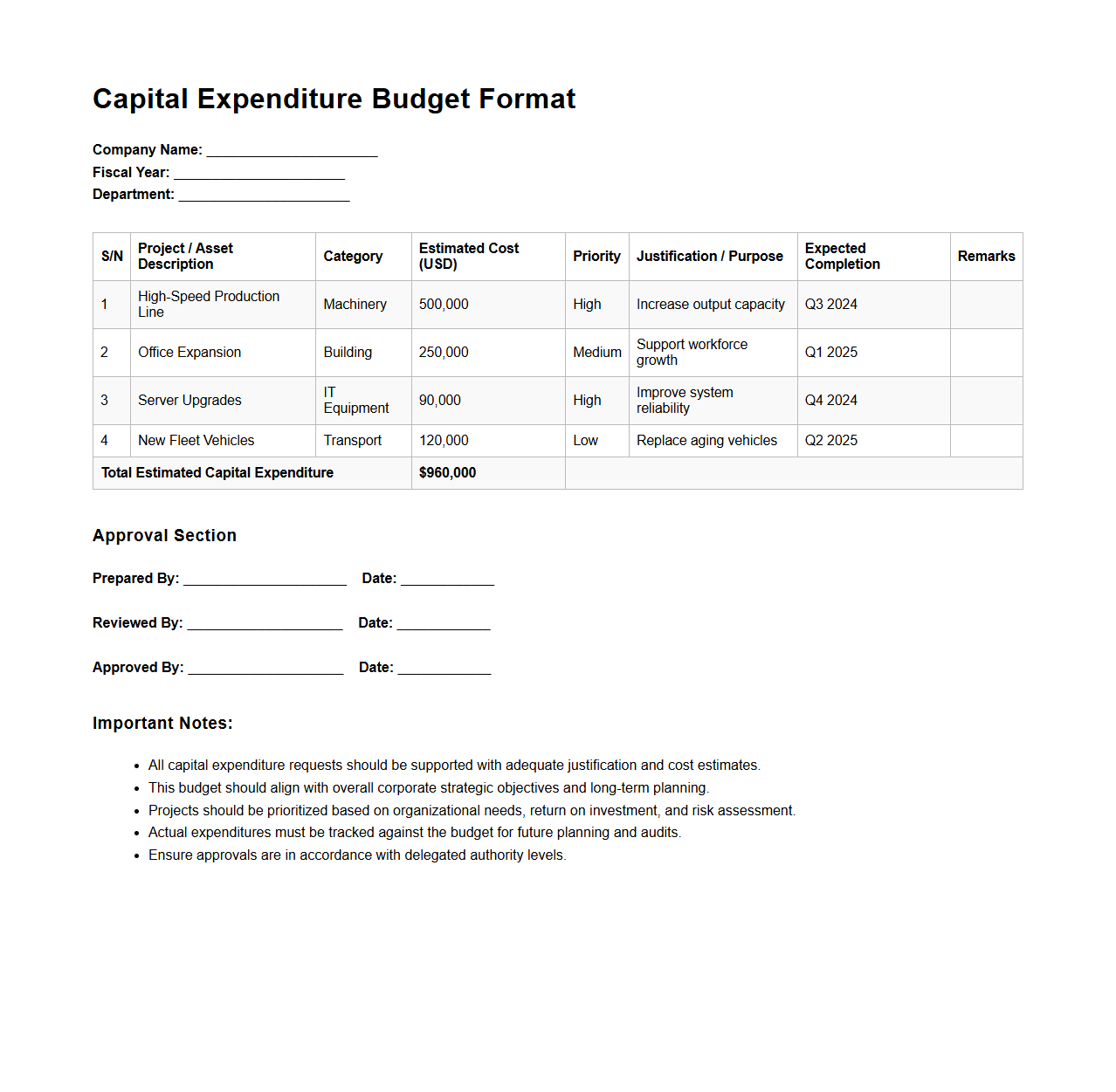
Capital Expenditure Budget Format for Corporates
The
Capital Expenditure Budget Format for corporates is a structured document used to plan and allocate funds for long-term investments such as property, equipment, and infrastructure. It typically includes sections for project descriptions, estimated costs, timelines, and expected financial returns or benefits. This format ensures systematic tracking of capital outlays, facilitating informed decision-making and effective resource management within organizations.
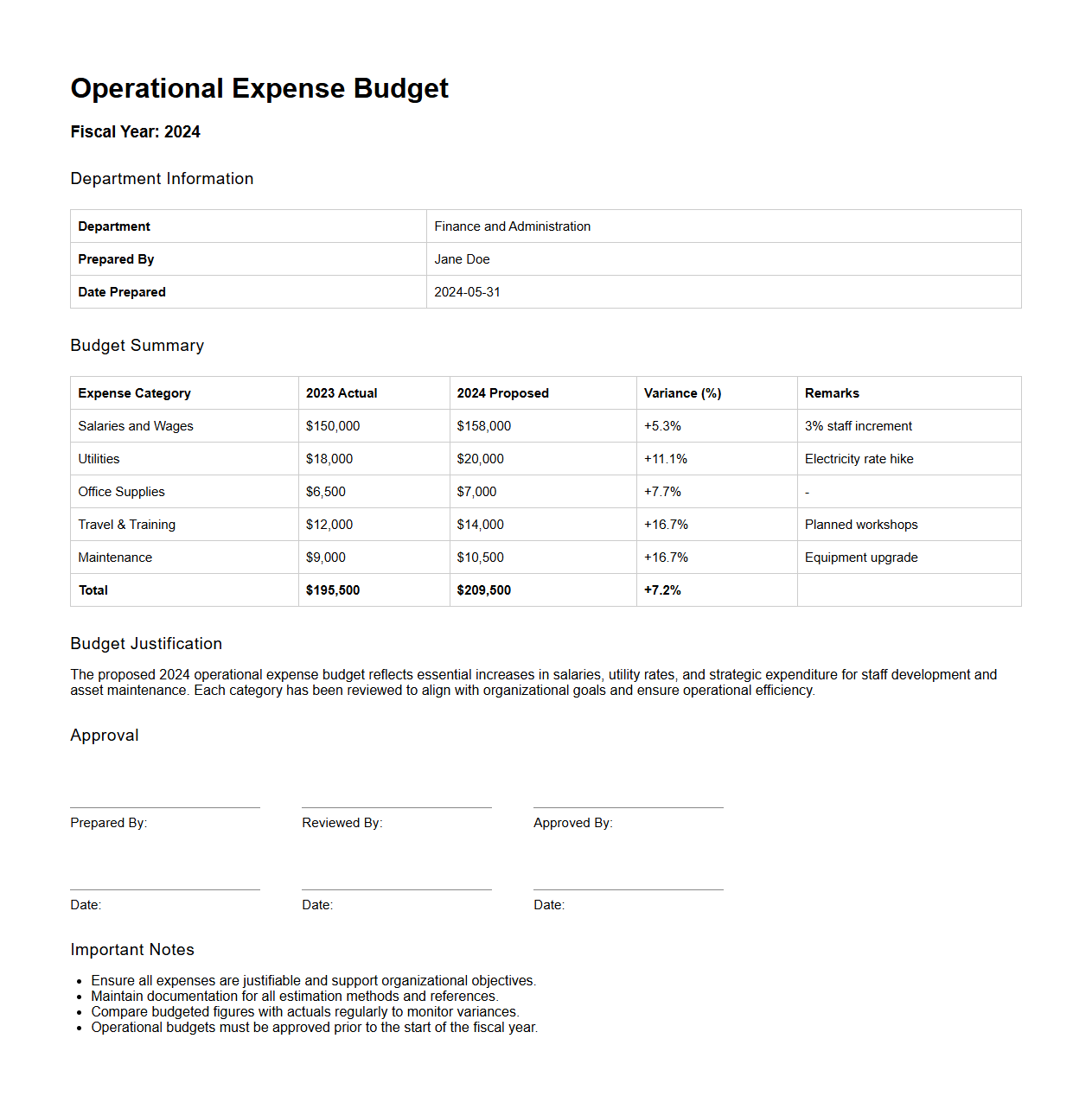
Operational Expense Budget Document Layout
An
Operational Expense Budget Document Layout is a structured template used by organizations to systematically plan, allocate, and track their day-to-day operating expenses. It typically includes predefined sections for categories such as salaries, utilities, supplies, and maintenance costs, enabling clear visibility and control over recurring expenditures. This document layout facilitates accurate financial forecasting, expense monitoring, and supports effective budget management across various departments.
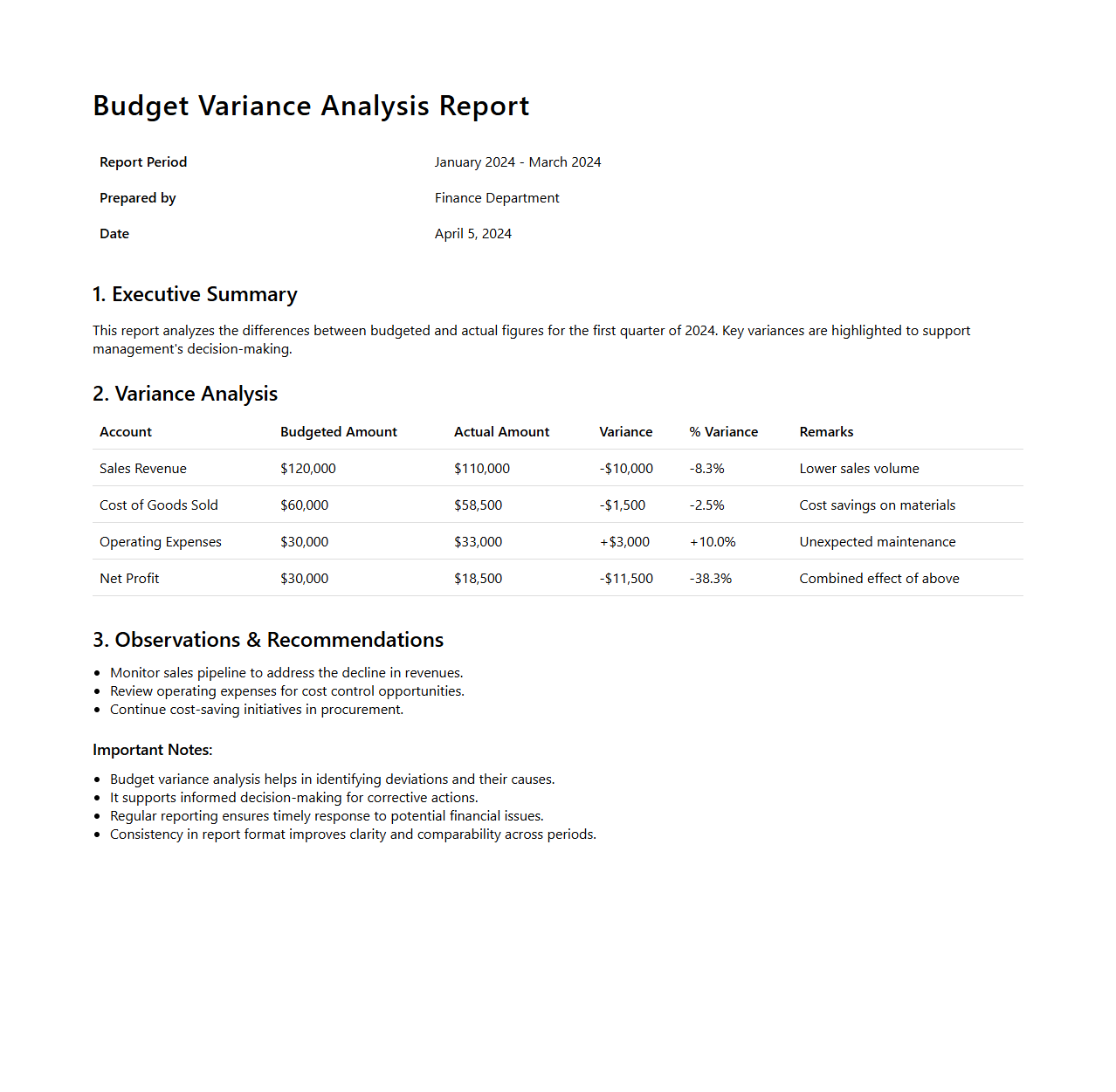
Budget Variance Analysis Report Format
A
Budget Variance Analysis Report Format document is a structured template used to compare actual financial performance against the budgeted figures. It highlights discrepancies between projected and actual expenses or revenues, enabling organizations to identify areas of overspending or underspending. This report format facilitates informed decision-making by providing clear insights into financial deviations and their potential causes.
Consolidated Budget Statement Template
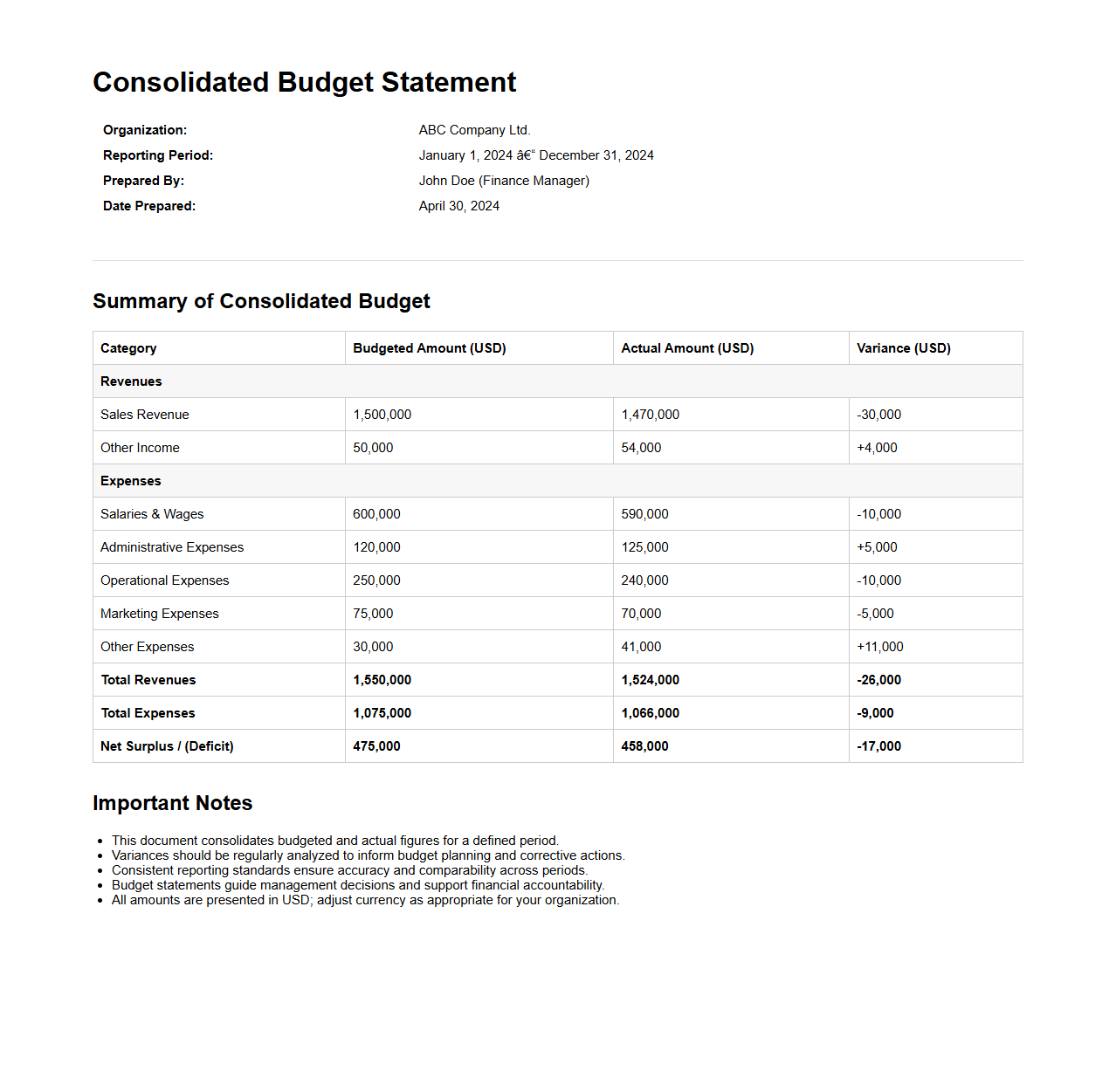
A
Consolidated Budget Statement Template document serves as a comprehensive tool for summarizing financial data from multiple departments or projects in one unified format. It enables organizations to track income, expenses, and budget allocations clearly and efficiently. This template facilitates better financial planning, monitoring, and reporting by consolidating all budget information into a single, easy-to-analyze statement.
Multi-year Budget Projection Statement Format
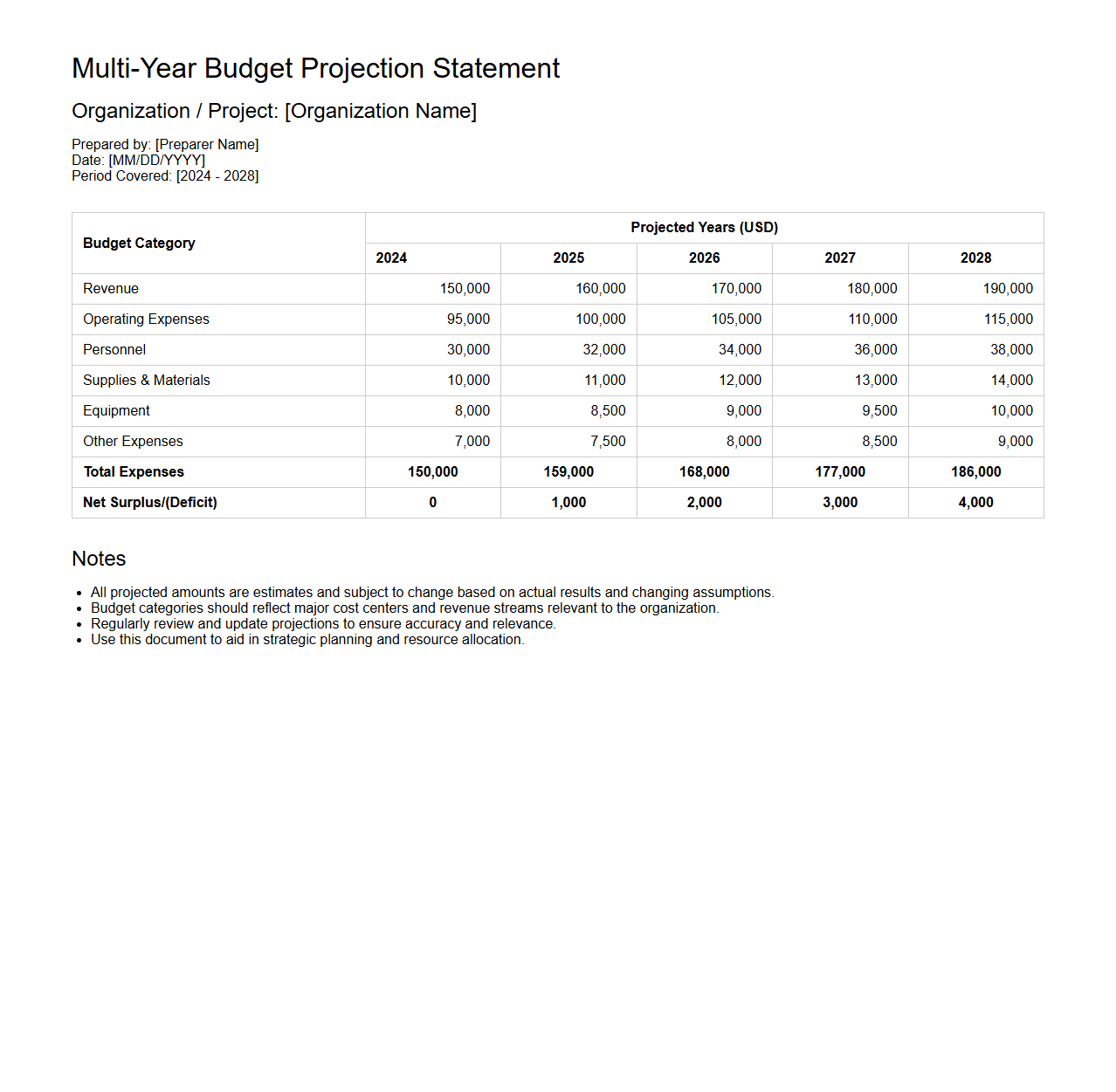
The
Multi-year Budget Projection Statement Format document provides a structured template used by organizations and governments to forecast their financial plans over multiple fiscal years. It outlines revenue sources, expenditure categories, and funding gaps, enabling strategic decision-making and resource allocation. This format ensures consistency and transparency in long-term budget planning and helps anticipate future financial challenges.
What are the mandatory sections in a corporate finance budget statement letter format?
A corporate finance budget statement letter must include an introduction, detailed budget breakdown, and a summary overview. The introduction sets the context and defines the purpose of the budget statement clearly. Detailed sections on revenue, expenses, and capital allocation provide a comprehensive financial overview.
The summary section highlights key financial metrics and strategic insights derived from the budget data. Additionally, compliance statements ensuring adherence to financial regulations are crucial. Including a conclusion that references next steps or requests approval completes the mandatory structure.
How should projected versus actual financials be presented in the document?
Projected and actual financials should be presented side by side in a clear comparative format, such as tables or charts, for easy analysis. Variance analysis is essential to explain deviations between projected and actual figures. This enables stakeholders to understand the causes of discrepancies and assess financial performance accurately.
Highlighting significant variances in bold or color coding helps draw attention to critical areas. The narrative should succinctly describe the financial impacts of deviations on corporate objectives. Providing a forecast update based on actual results supports informed decision making.
What supporting documents must be referenced or attached in the letter format?
The letter should reference key supporting documents like detailed financial statements, budget spreadsheets, and audit reports. Attachments such as income statements, balance sheets, and cash flow statements provide necessary depth. These documents validate the financial data presented in the letter.
Additional materials like variance reports, expense justifications, and management commentary enhance transparency. Referencing prior budget approvals and financial policies reinforces compliance and governance. Clearly listing all attachments at the end ensures recipients can easily locate and review them.
How is confidentiality language incorporated for sensitive budget data?
Confidentiality language is incorporated through a formal confidentiality clause prominently placed in the letter's header or footer. This clause specifies restrictions on sharing and distributing sensitive budget information. It protects proprietary financial data and prevents unauthorized disclosure.
Language often includes terms such as "confidential", "private", and "for internal use only" to emphasize the sensitivity. Incorporating a disclaimer about legal consequences for breaches strengthens the confidentiality stance. Explicit instructions for secure handling and storage of the document may also be included.
What is the ideal signatory protocol for corporate finance budget statements?
The ideal signatory protocol requires approval from senior corporate finance executives, such as the CFO or Finance Director. Their signatures validate the accuracy and authenticity of the budget statement. Including multiple levels of authorization ensures robust financial governance and accountability.
Dates and printed names should accompany signatures to maintain clear records of approval timelines. In some cases, additional endorsements from department heads or the CEO may be necessary. Digital signatures can be used to enhance security and streamline the approval process.