Audit Engagement Letter Format
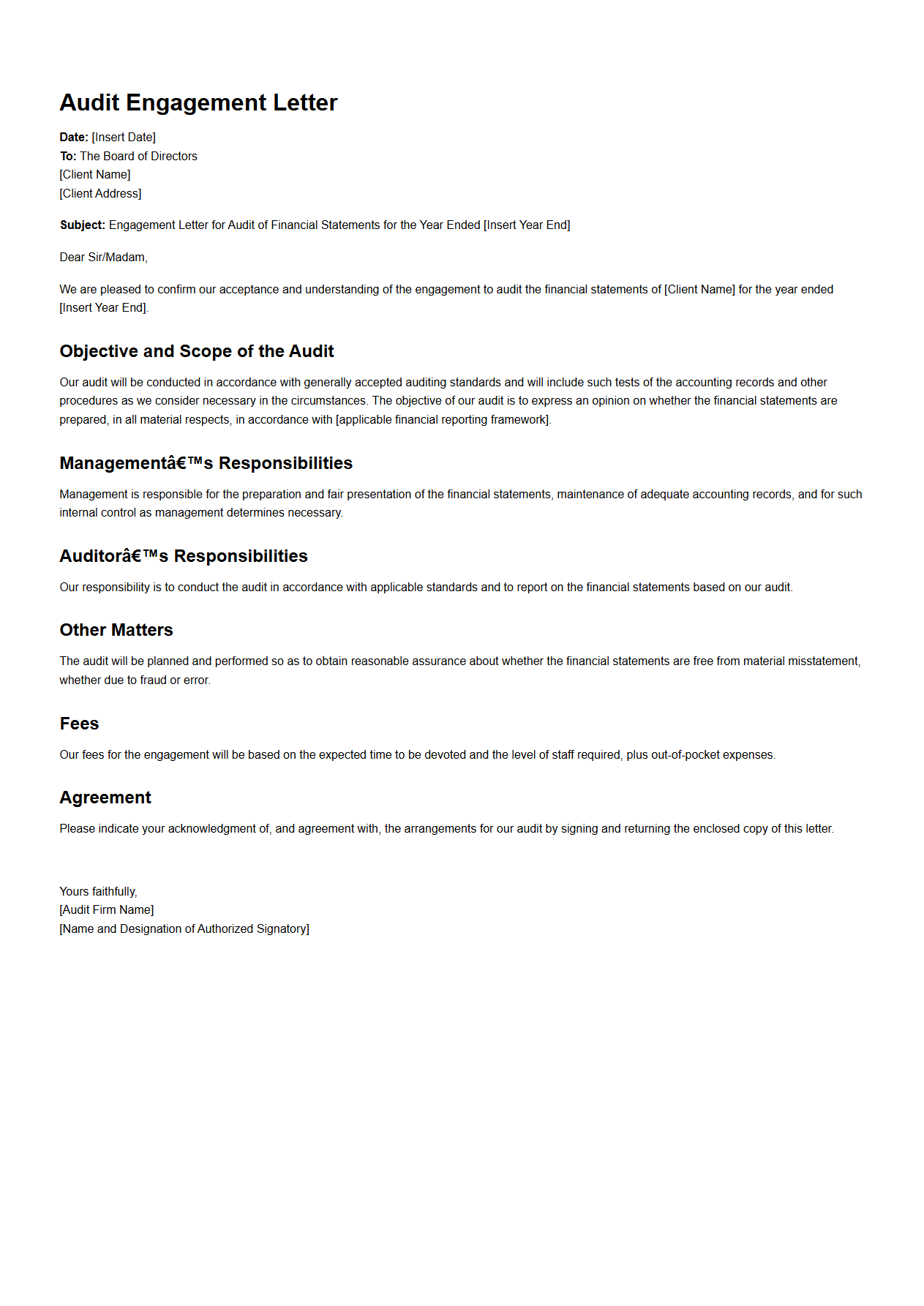
An
Audit Engagement Letter Format document outlines the specific terms and objectives agreed upon between an auditor and a client before the commencement of an audit. It typically includes details such as the scope of the audit, responsibilities of both parties, agreed fees, and timelines. This structured format ensures clear communication, sets expectations, and provides a legal framework to protect both the auditor and the client throughout the audit process.
Audit Client Information Sheet Format
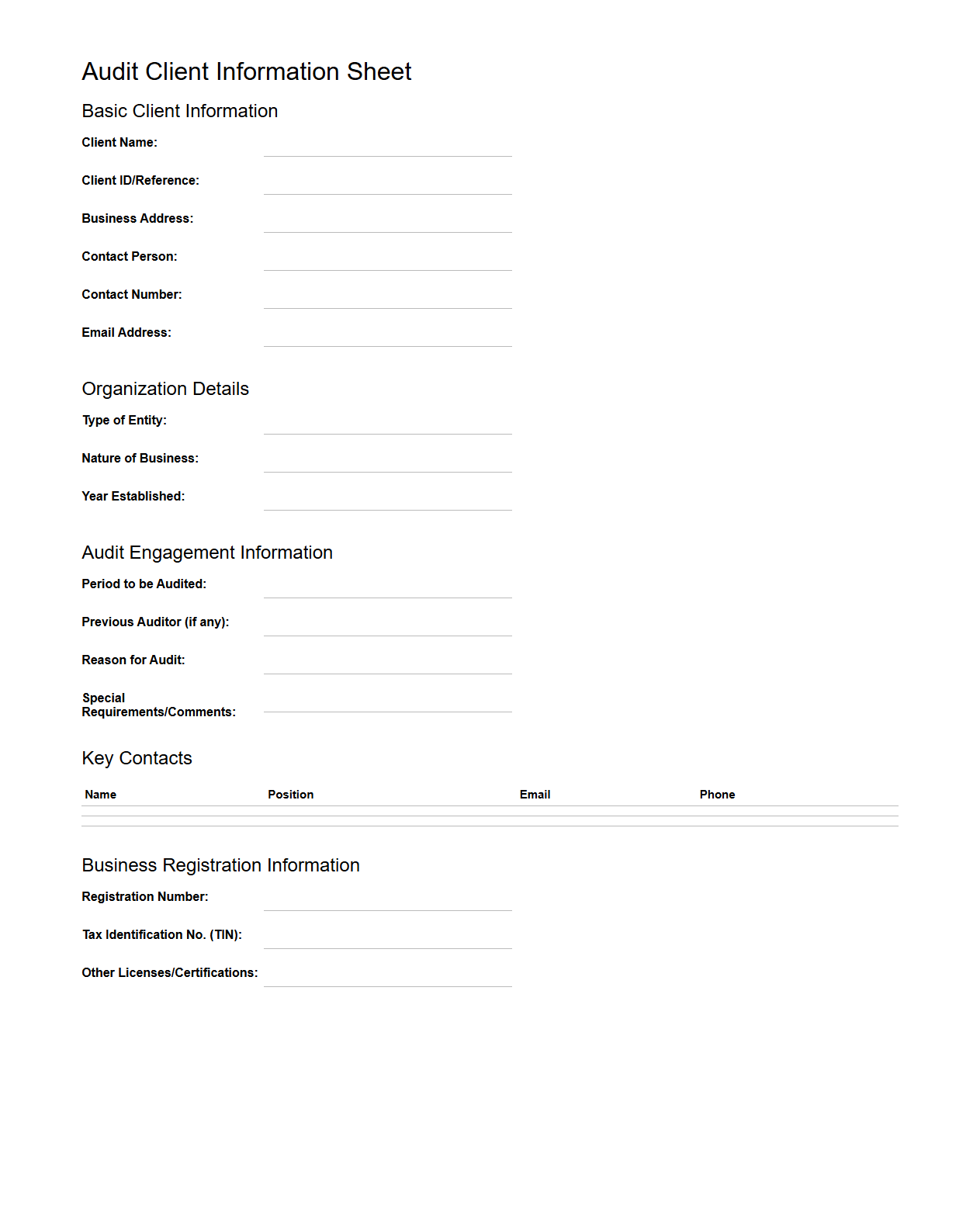
An
Audit Client Information Sheet Format document is a structured template used to systematically collect essential details about a client before initiating an audit. It includes key information such as the client's business background, financial data, contact details, and regulatory compliance status, ensuring auditors have a comprehensive understanding of the client's profile. This format enhances audit planning accuracy, risk assessment, and overall efficiency throughout the audit process.
Audit Objectives and Scope Document Format
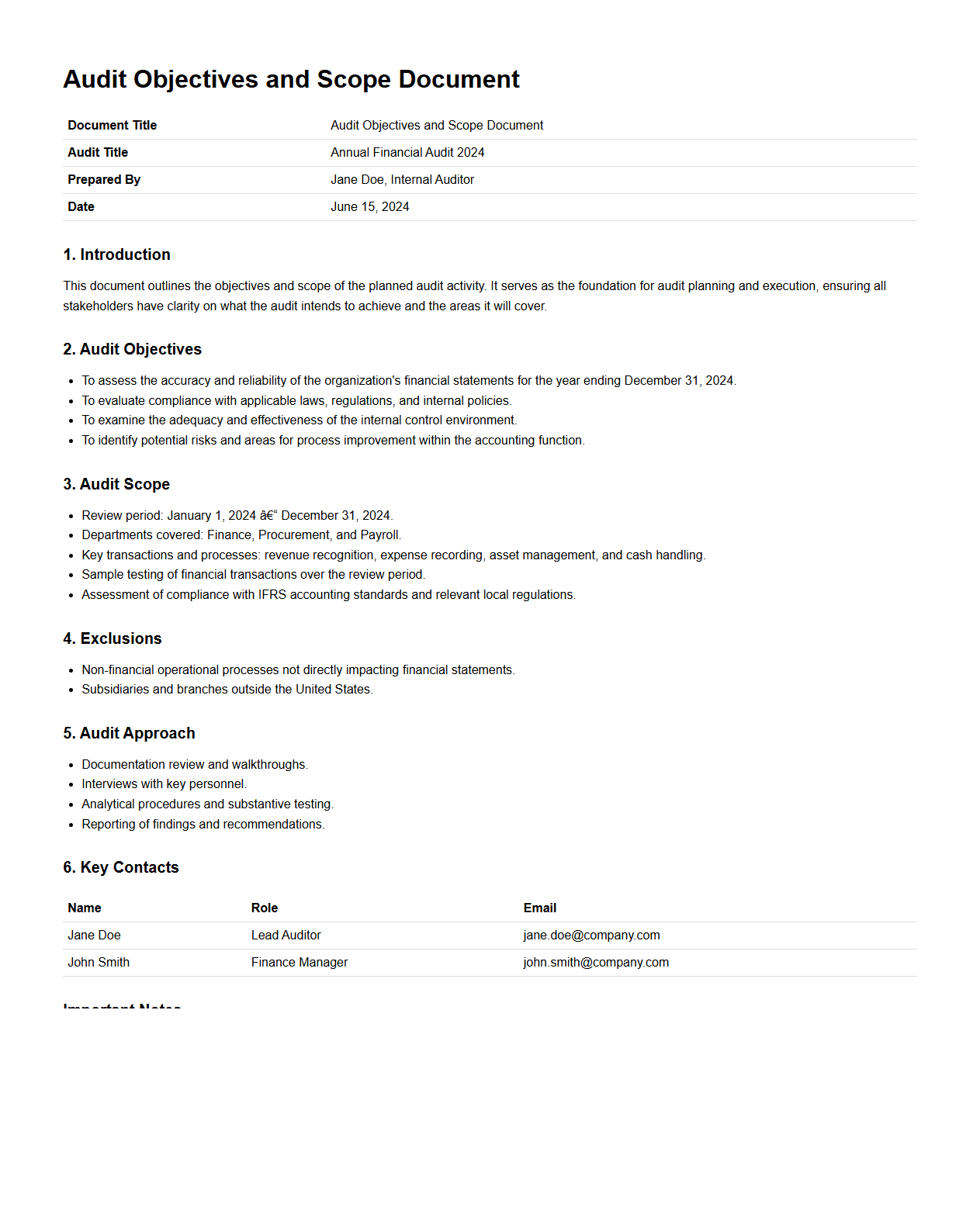
The
Audit Objectives and Scope Document Format defines the framework for outlining the goals, criteria, and boundaries of an audit engagement. It specifies the areas to be examined, the audit methods to be employed, and the expected deliverables, ensuring clarity and alignment between auditors and stakeholders. This document serves as a foundational guide that enhances audit planning, execution, and reporting efficiency.
Audit Planning Memorandum Format
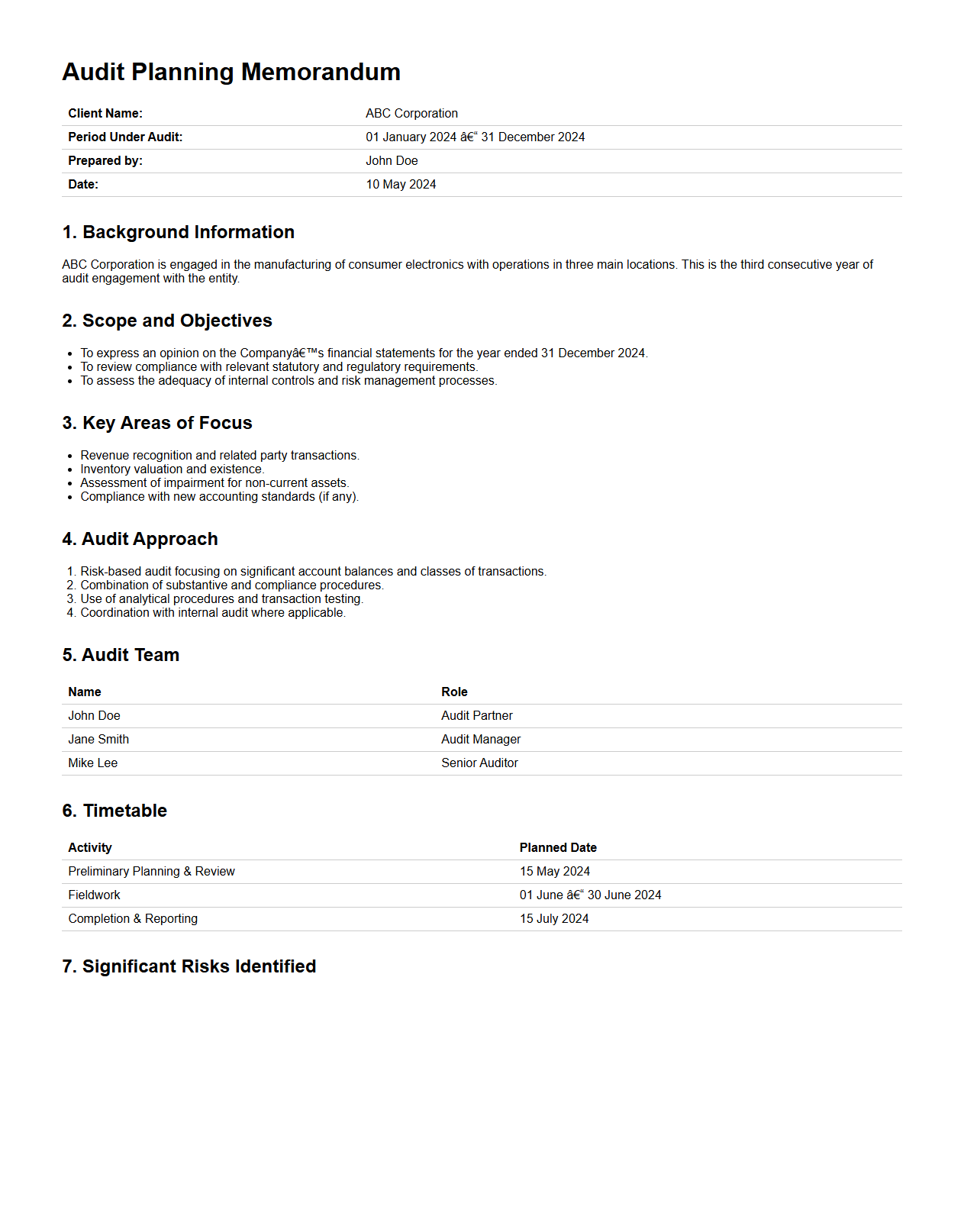
The
Audit Planning Memorandum Format document outlines the structured approach auditors use to plan and organize an audit engagement, detailing key audit objectives, scope, timelines, and resource allocation. It serves as a foundational guide ensuring all critical audit elements, including risk assessment and regulatory compliance, are systematically addressed. This format enhances communication among audit team members and supports consistent, efficient audit execution across various projects.
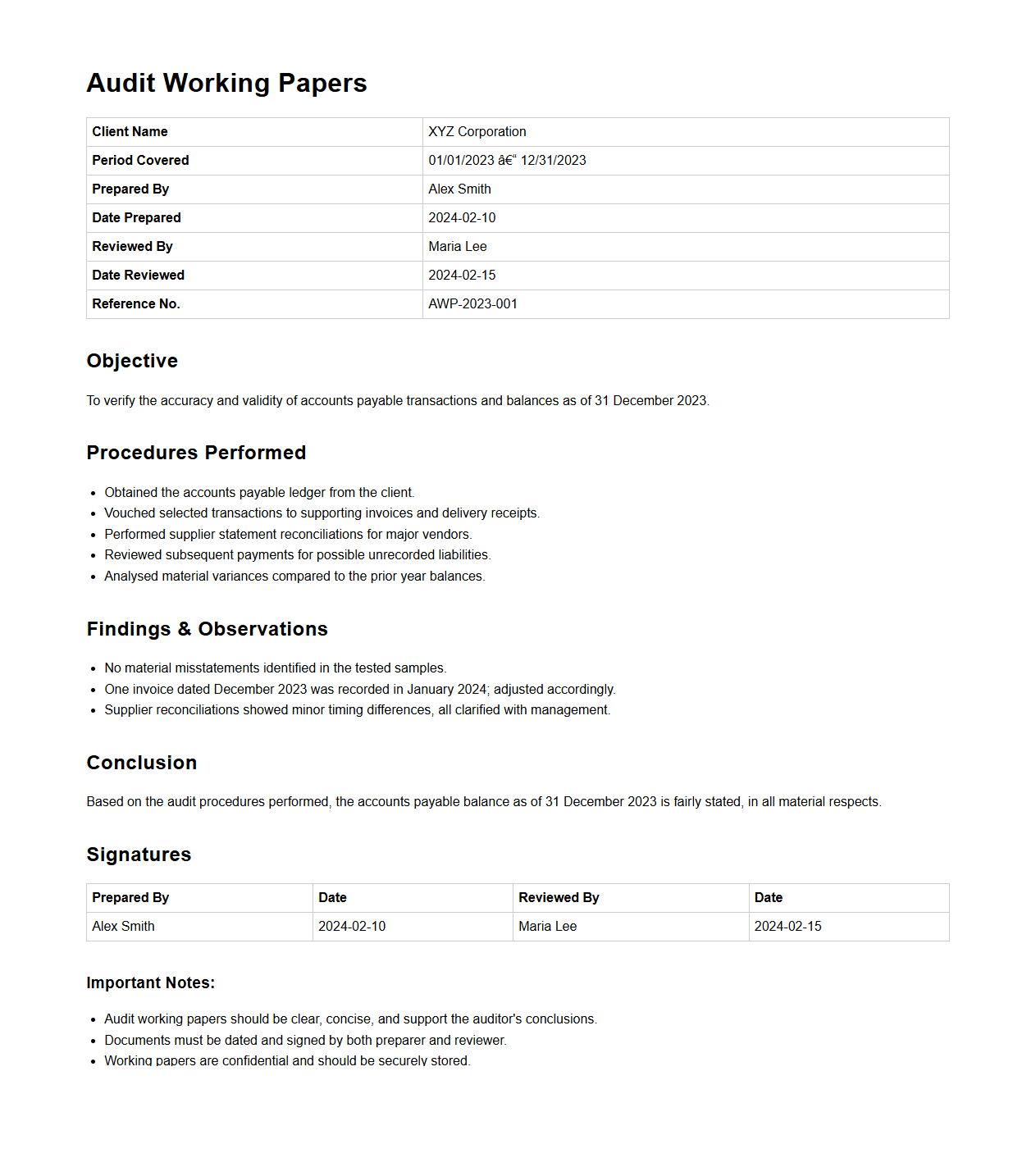
Audit Working Papers Format
Audit Working Papers Format document is a standardized template used by auditors to systematically record all evidence, findings, and procedural steps during an audit engagement. It ensures consistency, completeness, and clarity in documenting audit activities, facilitating review and compliance with professional standards. This format supports efficient tracking of audit progress and substantiates the auditor's conclusions and opinions.
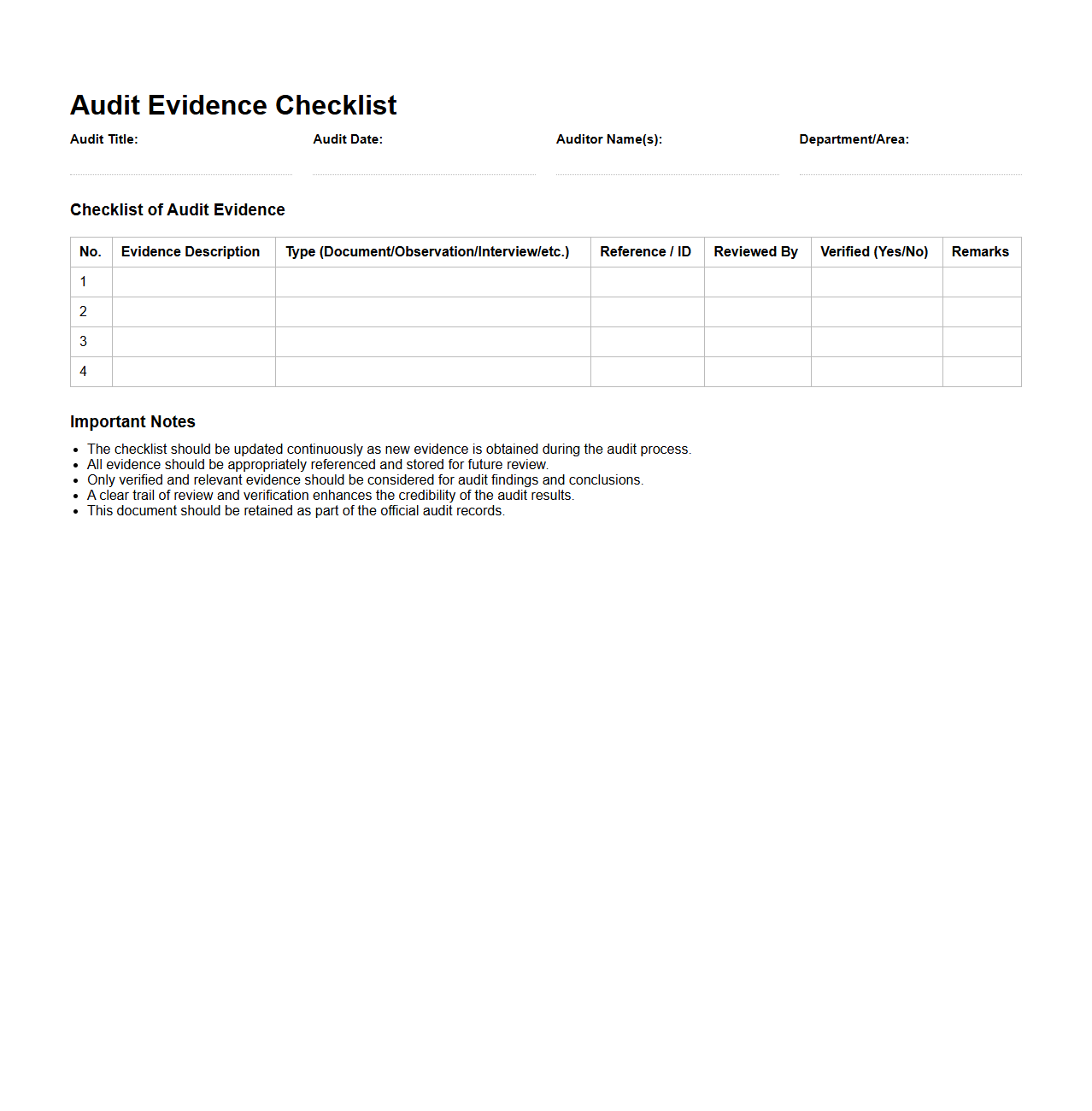
Audit Evidence Checklist Format
An
Audit Evidence Checklist Format document is a structured tool used to systematically collect and verify evidence during an audit process. It ensures auditors gather relevant, credible, and sufficient information to support audit findings and conclusions. This format enhances consistency, accuracy, and efficiency in evaluating compliance and internal controls.
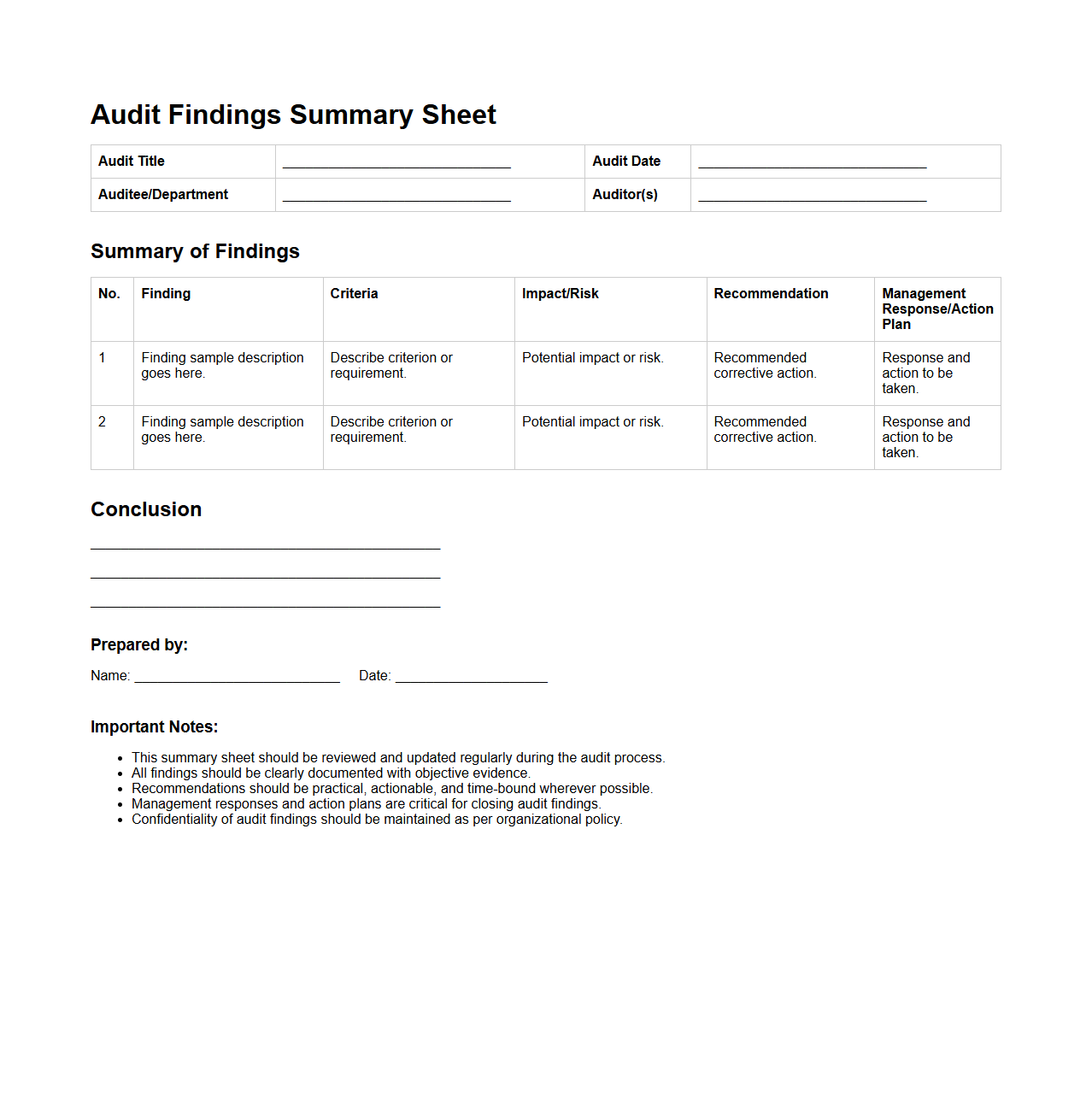
Audit Findings Summary Sheet Format
The Audit Findings Summary Sheet Format document is a structured template used to systematically record and present key observations identified during an audit process. It consolidates critical audit results, including non-conformities, risks, and recommendations, allowing for clear communication to stakeholders and management. This
audit documentation tool enhances transparency and supports effective decision-making by providing a concise overview of compliance and performance issues.
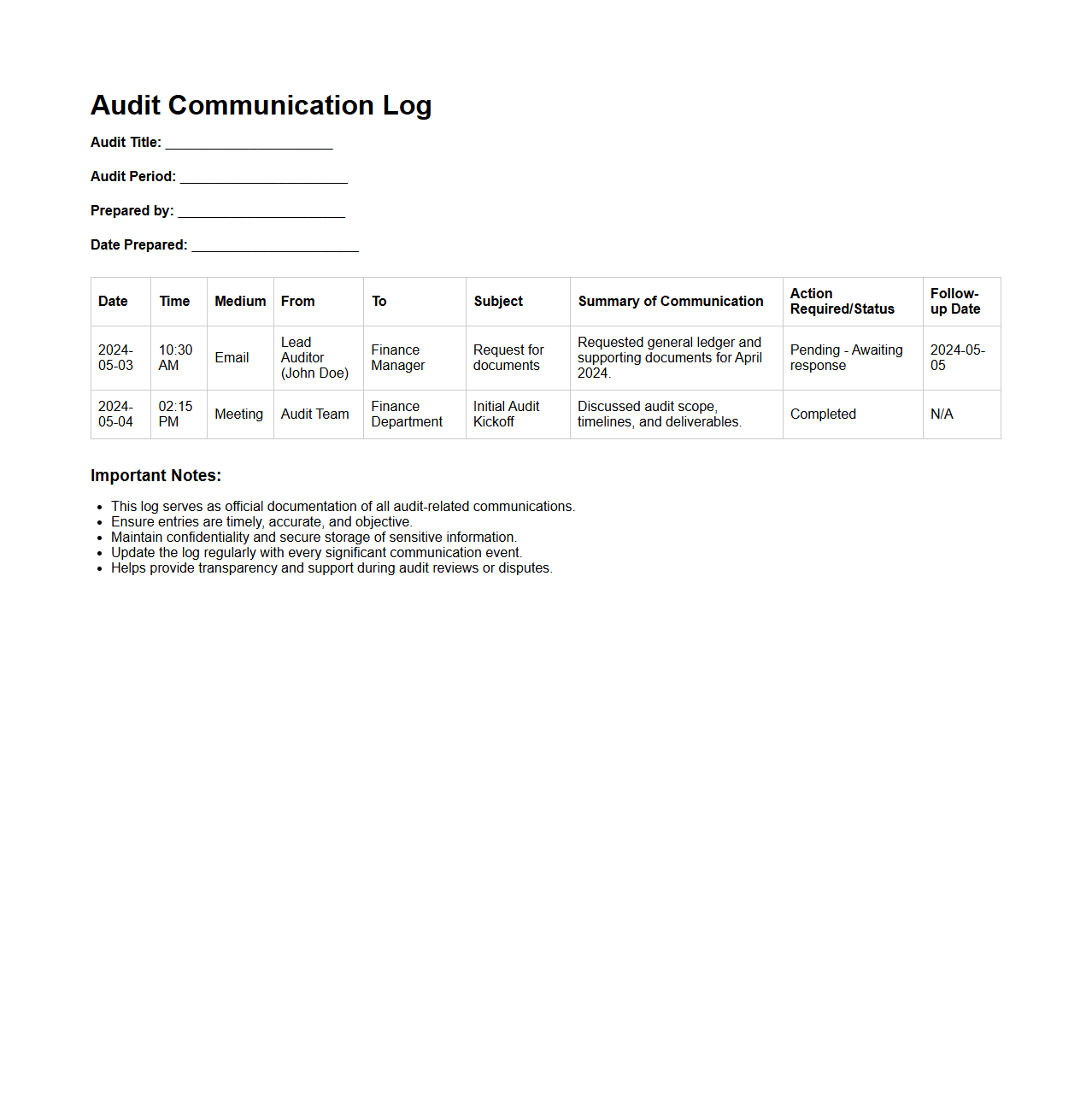
Audit Communication Log Format
The
Audit Communication Log Format document serves as a systematic record for tracking all communications related to an audit process, including interactions between auditors, clients, and stakeholders. This format standardizes data entry for details such as dates, participants, key discussion points, and follow-up actions, enabling clear documentation and accountability. Maintaining a structured log enhances transparency, supports compliance with auditing standards, and facilitates efficient review during audit reporting and post-audit analysis.
Audit Completion Checklist Format
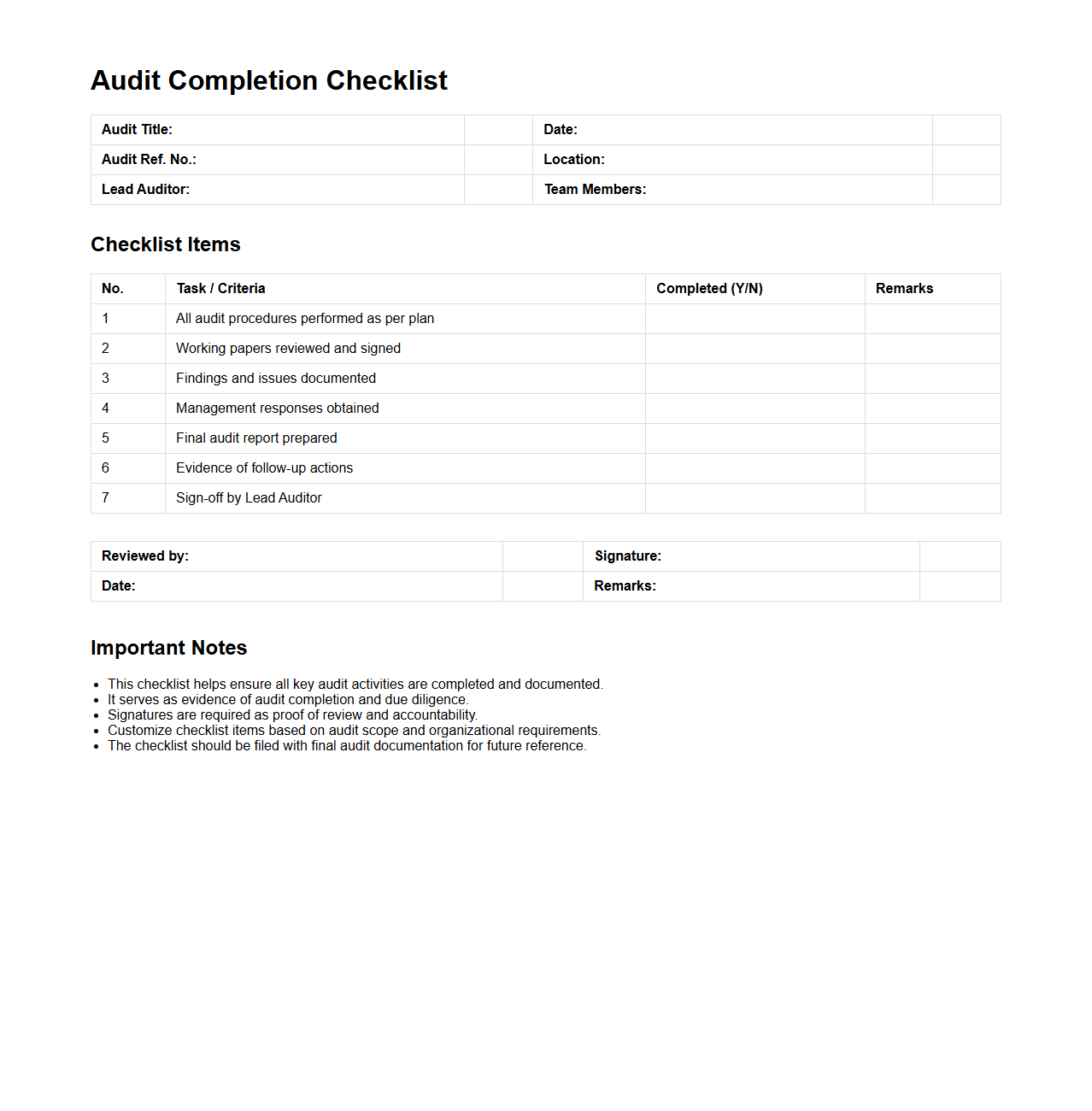
An
Audit Completion Checklist Format document is a structured tool used by auditors to ensure all audit procedures and necessary steps have been thoroughly completed before finalizing the audit process. It includes detailed sections for verifying compliance with auditing standards, reviewing financial statements, and confirming the resolution of identified issues. This checklist enhances audit quality and supports accurate, comprehensive reporting by systematically tracking each task's completion.
Audit Final Report Template Format
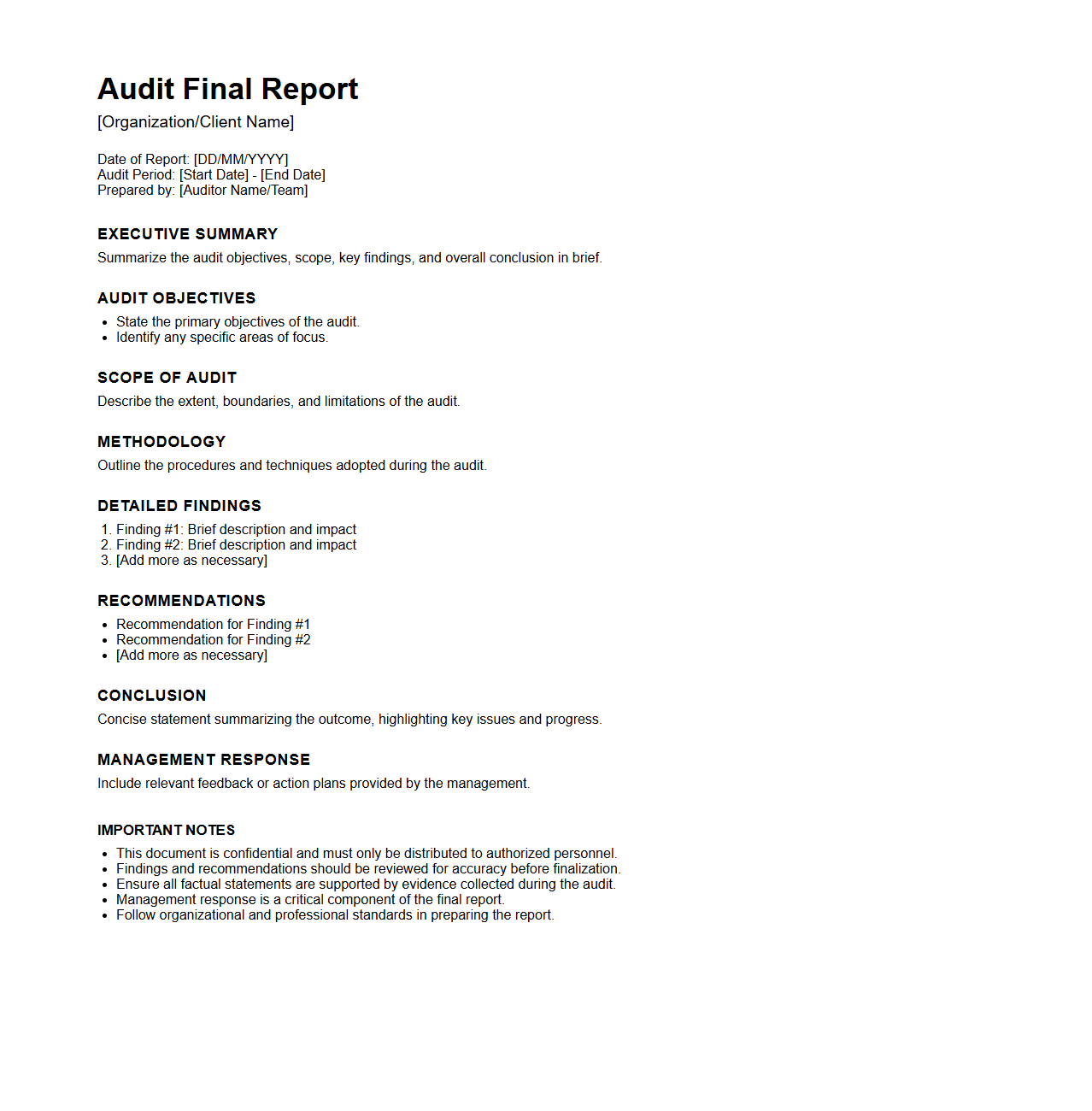
The
Audit Final Report Template Format document standardizes the presentation of audit findings, ensuring clarity and consistency across all audit reports. It includes structured sections for audit objectives, scope, methodology, findings, conclusions, and recommendations, facilitating comprehensive and transparent communication. Organizations use this template to streamline the review process and support decision-making based on audit results.
What specific sections must be included in an audit engagement documentation format for compliance?
An audit engagement documentation format must include key sections such as engagement objectives, scope, auditor responsibilities, and client responsibilities. Additionally, documentation should detail the terms and conditions along with the agreed-upon deliverables. Including compliance requirements and regulatory references ensures the audit meets legal and professional standards.
How should digital signatures be incorporated in recordkeeping of audit engagement letters?
Digital signatures should be integrated within audit engagement letters by using secure, verifiable electronic signature platforms. These signatures must be timestamped and linked to the audit document to guarantee authenticity and non-repudiation. Proper encryption methods and audit trails are essential for maintaining the integrity of digital records.
What metadata fields are essential for tracking revisions in audit engagement documentation?
Essential metadata fields for tracking revisions include version number, date of modification, author of changes, and reason for revision. Timestamping each update helps maintain a clear timeline of document evolution. Including approval status and reviewer comments further enhances control over audit documentation revisions.
Which templates ensure standardized terminology in audit engagement records?
Templates that leverage standardized terminology are typically based on recognized professional audit frameworks like ISA or PCAOB guidelines. Using these templates ensures consistency in language, reduces ambiguity, and facilitates clearer communication among audit teams. Customizable fields allow adaptation while maintaining standardized core terminology.
How can confidentiality clauses be clearly documented in audit engagement formats?
Confidentiality clauses should be clearly outlined as a distinct section in the engagement documentation. This section must specify the handling, storage, and sharing restrictions of sensitive information. Clearly defined confidentiality terms protect both the auditor and client by establishing legal obligations upfront.