The Format of Limitation of Liability Clause for Contracts typically includes clear definitions of the scope and extent of liability, specifying any caps or exclusions. It outlines the types of damages covered or excluded, such as indirect, incidental, or consequential damages. The clause should be precise, unambiguous, and tailored to the specific contractual relationship to effectively manage risk.
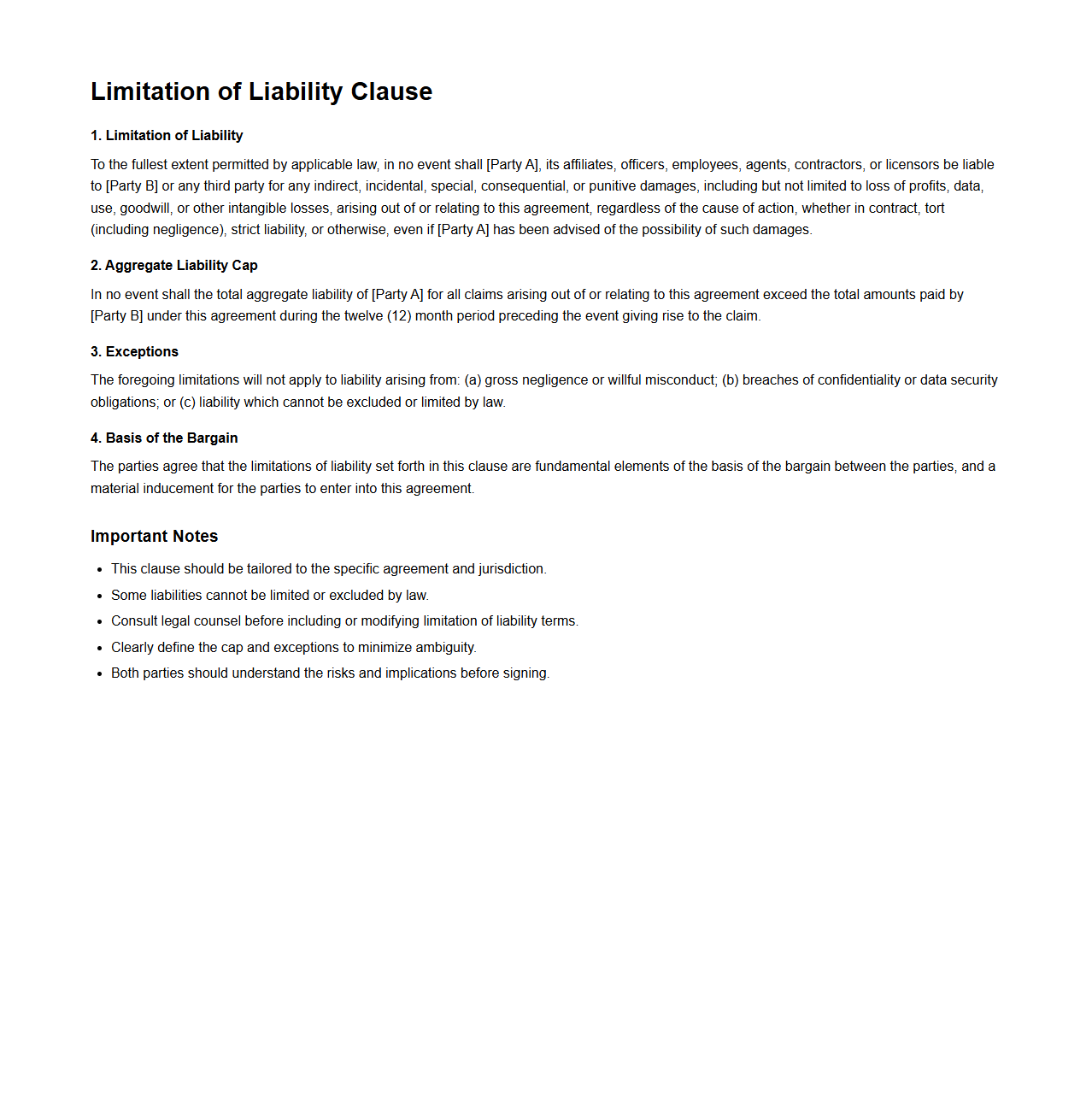
Standard Limitation of Liability Clause Format
A
Standard Limitation of Liability Clause Format document outlines the predefined terms that cap the amount or types of damages one party can claim from another in a contract. This format helps businesses manage risk by clearly specifying financial responsibility boundaries and exclusions for indirect or consequential damages. Using a standardized clause ensures consistency and legal clarity across various agreements, minimizing potential disputes.
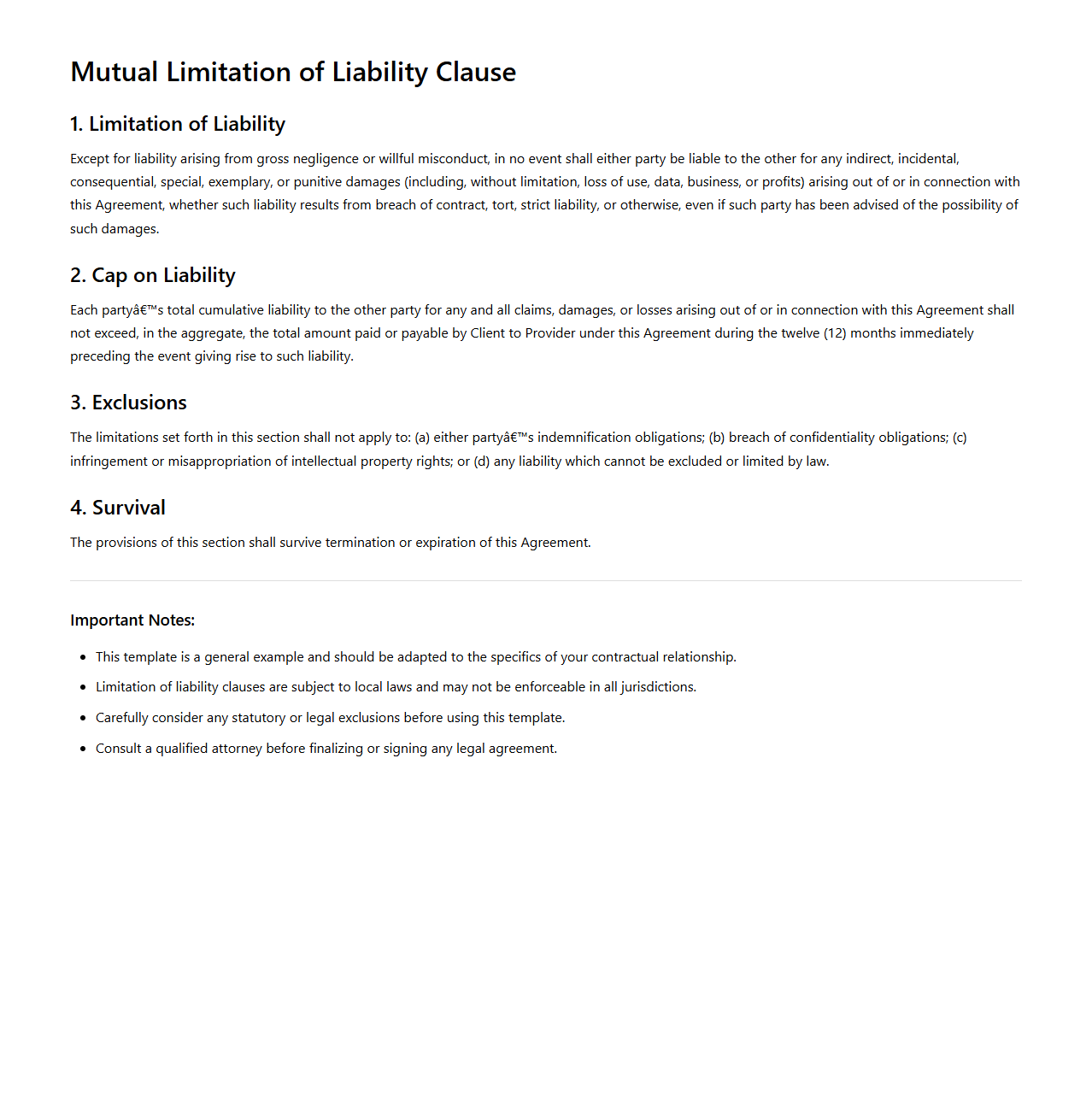
Mutual Limitation of Liability Clause Template
A
Mutual Limitation of Liability Clause Template is a pre-drafted legal document designed to establish clear boundaries on the extent of financial responsibility between contracting parties. It helps protect both parties by capping potential damages or losses that can be claimed, thereby minimizing risks in commercial agreements. This template ensures balanced liability terms, promoting fair risk allocation and preventing excessive claims in case of contract breaches or unforeseen events.
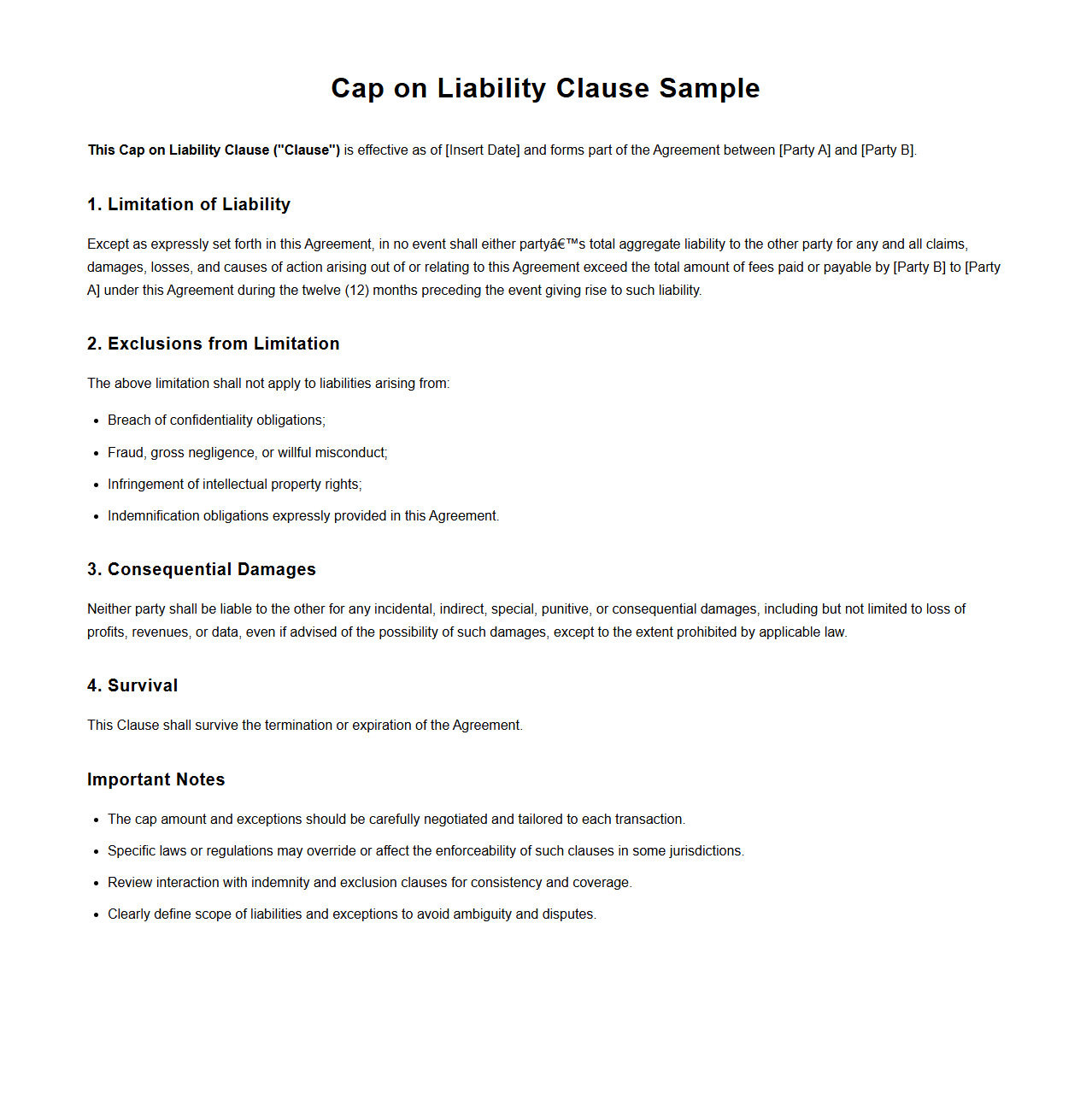
Cap on Liability Clause Document
A
Cap on Liability Clause document defines the maximum amount one party must pay if they are held responsible for damages or losses under a contract. This clause limits financial exposure and risk, ensuring that liability does not exceed a predetermined sum, often expressed as a fixed amount or percentage of the contract value. It is crucial for managing legal and financial risks in commercial agreements.
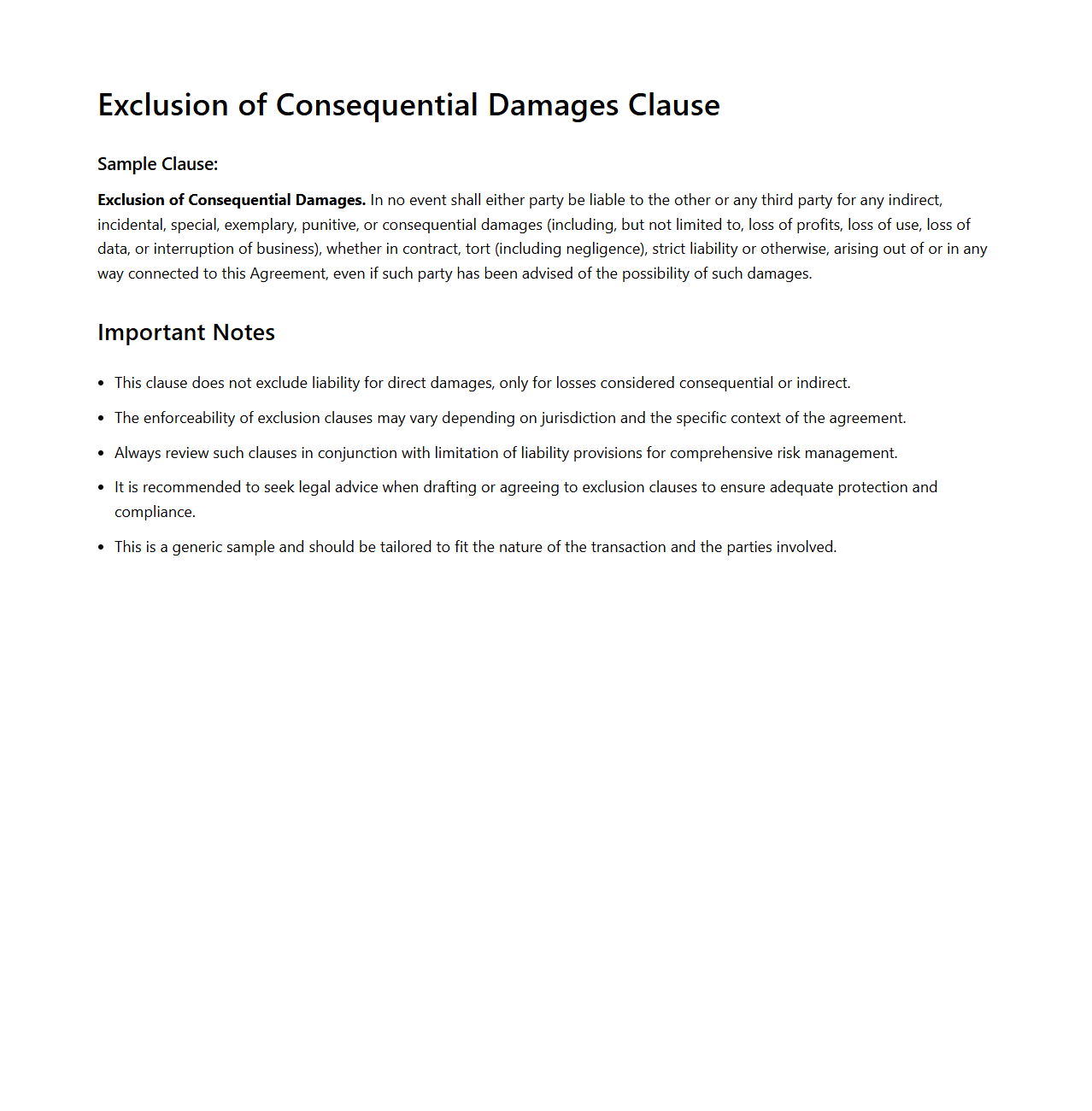
Exclusion of Consequential Damages Clause Format
An
Exclusion of Consequential Damages Clause Format document outlines the specific language used in contracts to limit or eliminate liability for indirect or consequential damages arising from a breach or failure of performance. This clause protects parties from claims involving lost profits, loss of business opportunities, or other secondary losses that do not directly result from the contract itself. By clearly defining these terms, the document helps manage risk and prevent costly legal disputes in commercial agreements.
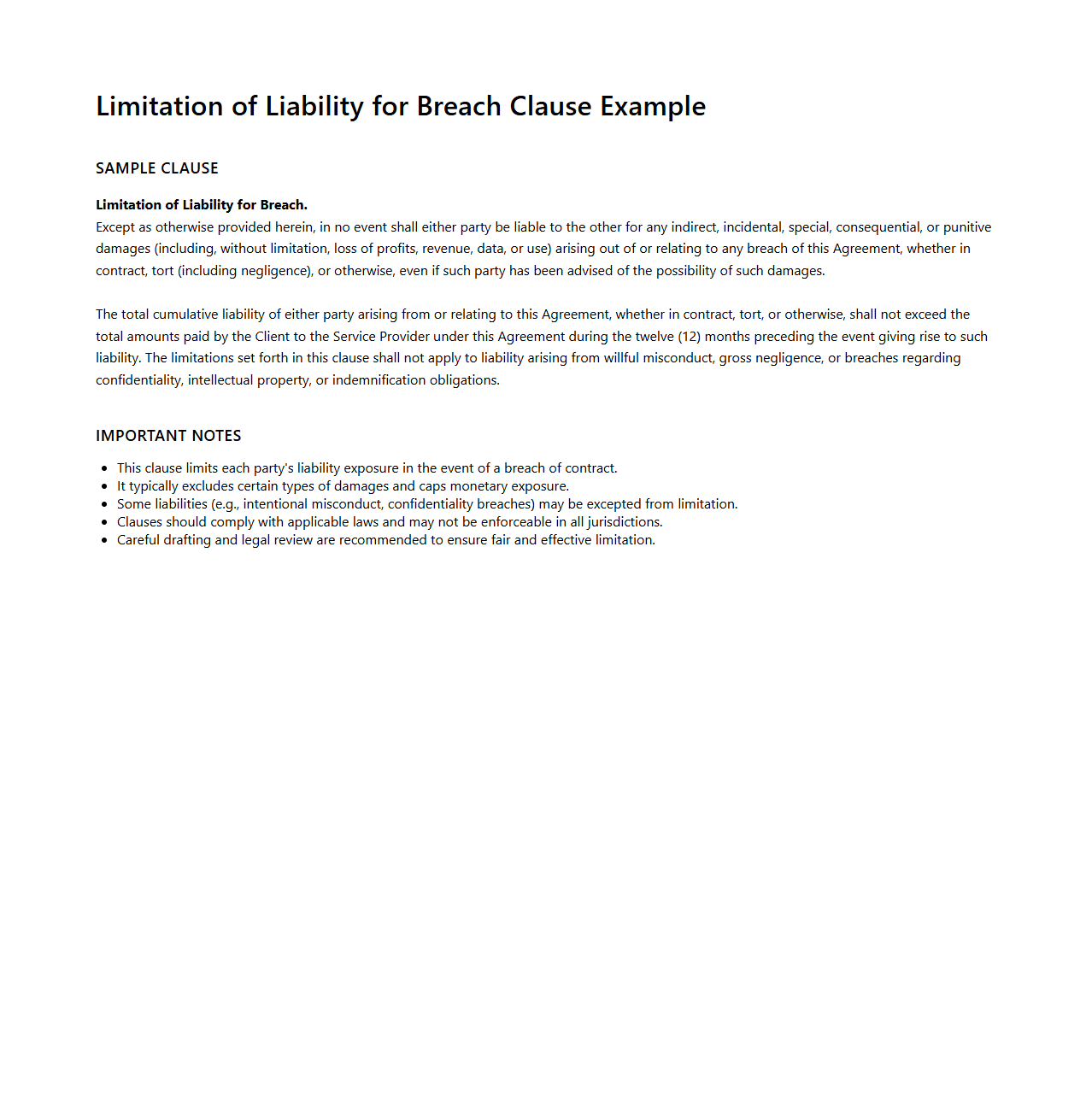
Limitation of Liability for Breach Clause Example
A
Limitation of Liability for Breach Clause in a contract document specifies the maximum amount or extent of damages that one party can claim if the other party breaches the agreement. This clause helps control financial risk by capping liability and often excludes consequential or indirect damages. Clear examples in such documents illustrate how liabilities are confined, protecting businesses from excessive losses during contractual disputes.
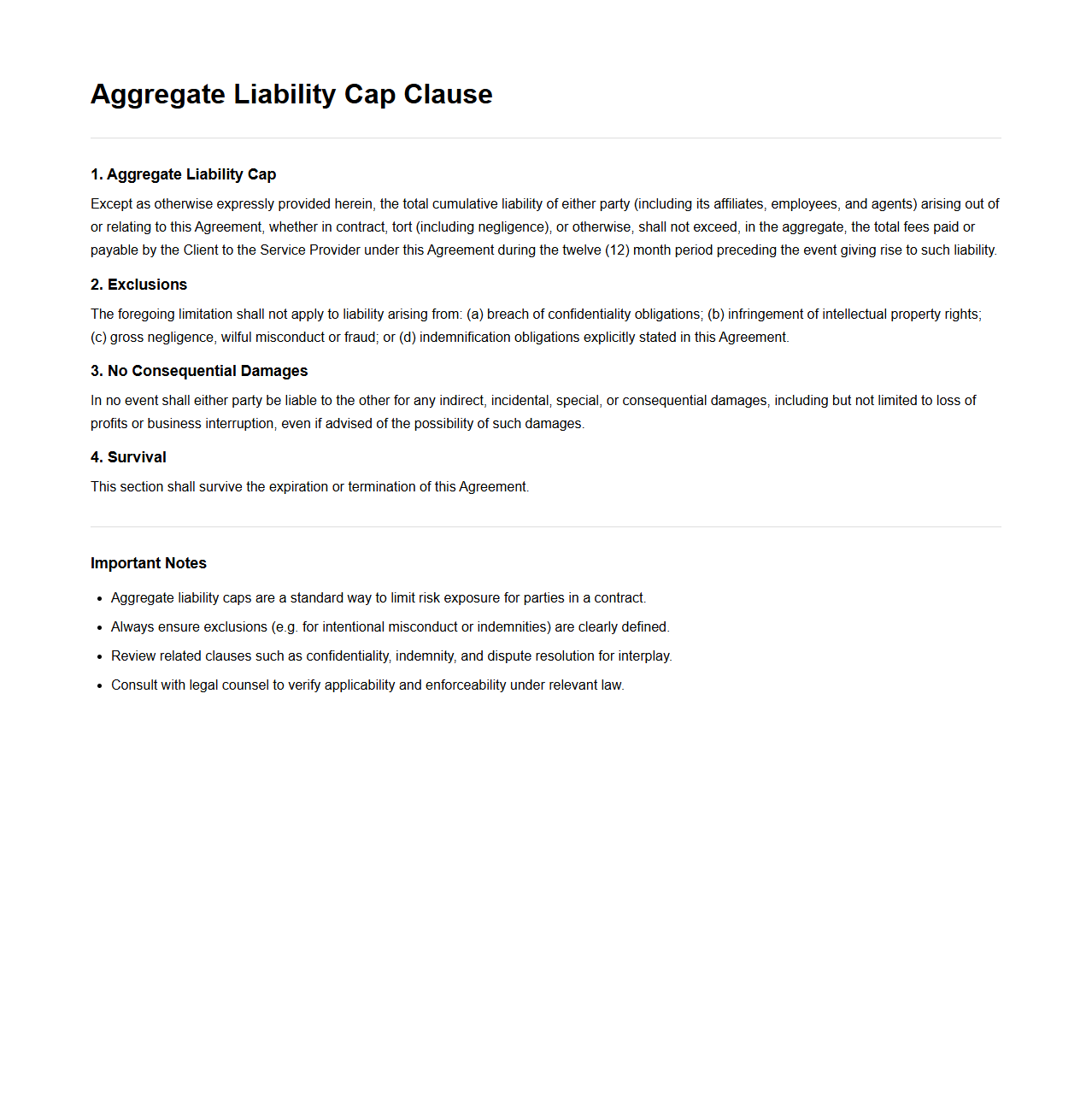
Aggregate Liability Cap Clause Format
An
Aggregate Liability Cap Clause Format document defines the maximum total financial liability that one party can incur under a contract. This clause protects parties by limiting exposure to cumulative damages or losses, ensuring risk management in legal agreements. It clearly outlines the monetary ceiling, helping both parties understand their responsibilities and potential financial risks.
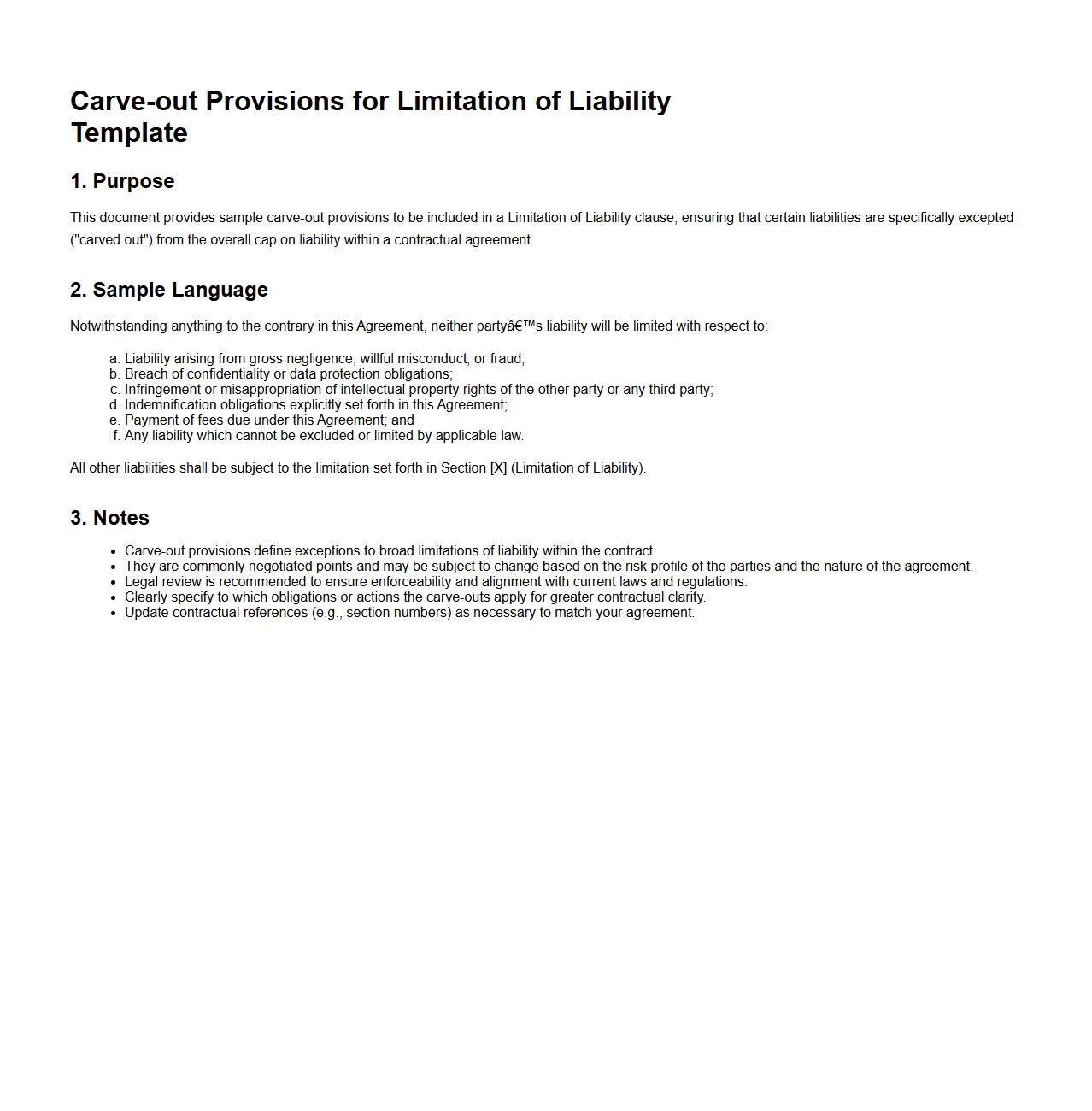
Carve-out Provisions for Limitation of Liability Template
A
Carve-out Provisions for Limitation of Liability Template document specifies exceptions within contracts where certain liabilities cannot be limited or excluded. It clearly defines scenarios such as gross negligence, willful misconduct, or breach of confidentiality where full liability is retained by the responsible party. This template helps ensure clarity and legal enforceability by outlining precise conditions under which liability restrictions do not apply.
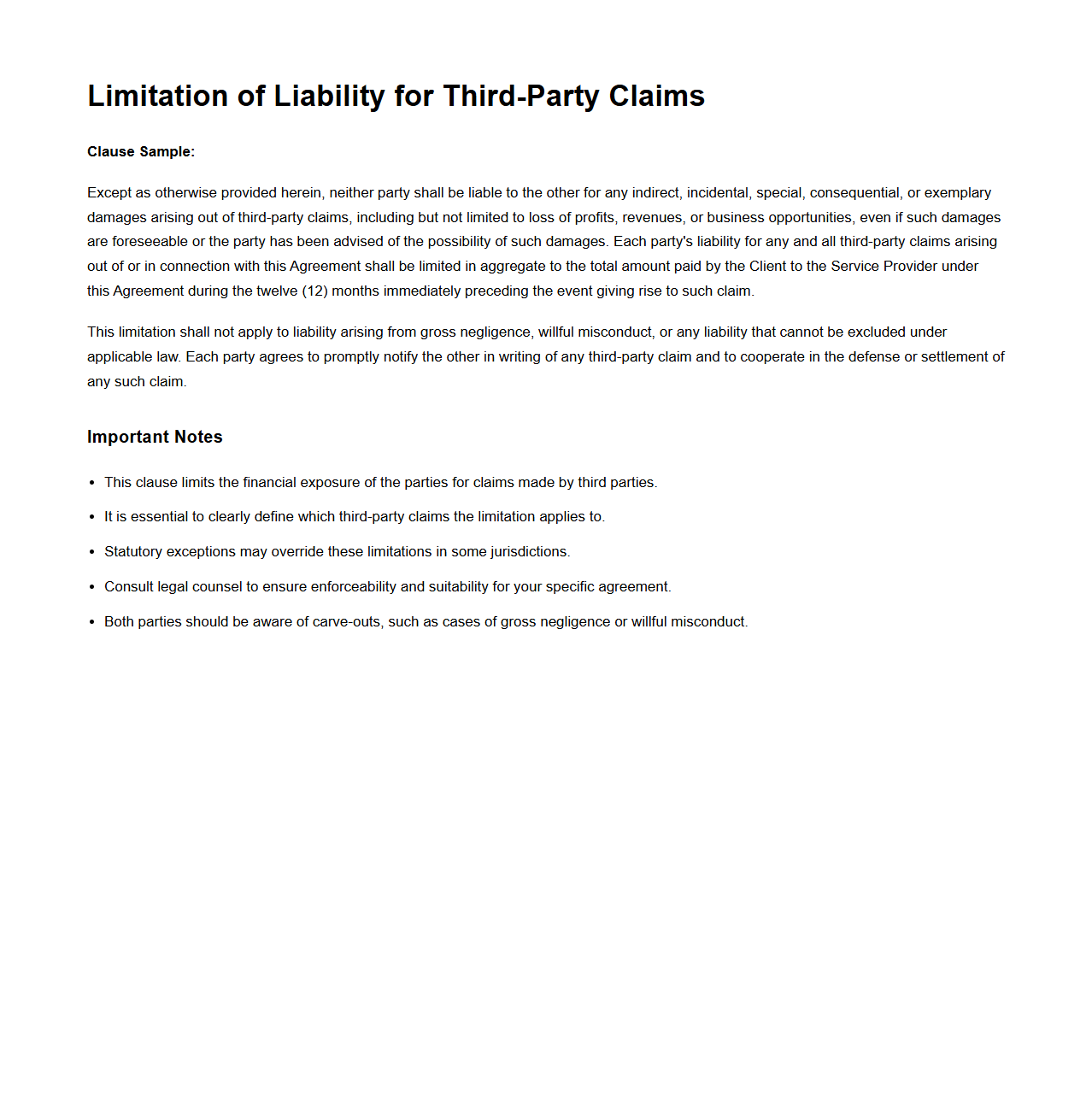
Limitation of Liability for Third-Party Claims Clause
A
Limitation of Liability for Third-Party Claims Clause document outlines the extent to which a party is financially responsible for damages or losses arising from claims made by third parties. This clause is designed to cap or restrict liability exposure, protecting parties from excessive claims and litigation costs. It specifies conditions, monetary limits, and scenarios under which indemnification or liability applies.
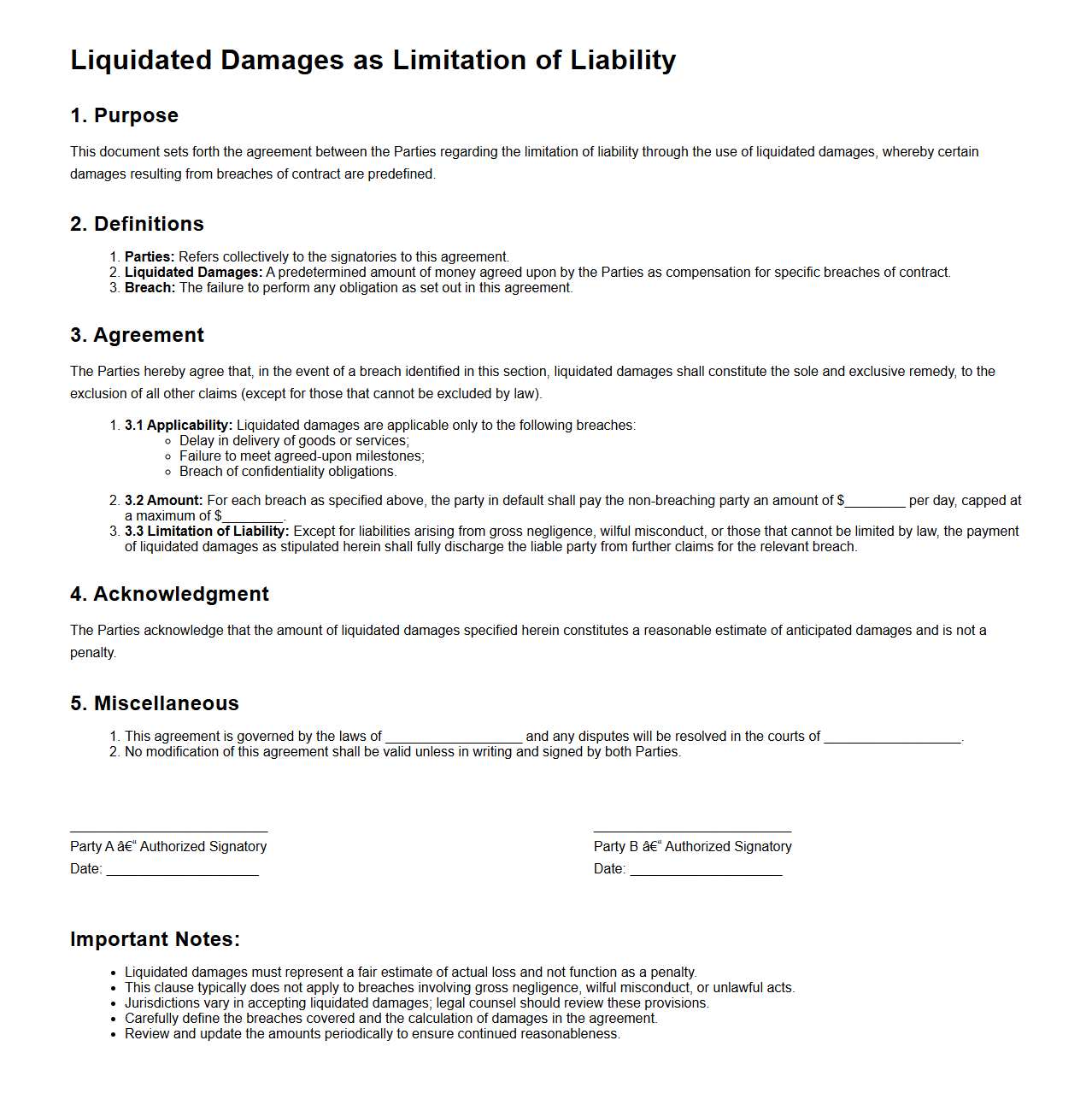
Liquidated Damages as Limitation of Liability Document
Liquidated Damages as a
Limitation of Liability document defines a predetermined monetary amount that a party agrees to pay if they breach specific contractual obligations, providing certainty for potential losses. This document helps avoid lengthy disputes by establishing clear compensation limits for damages that are difficult to quantify. It ensures both parties understand their financial exposure and mitigates risks associated with unforeseen damages in contract performance.
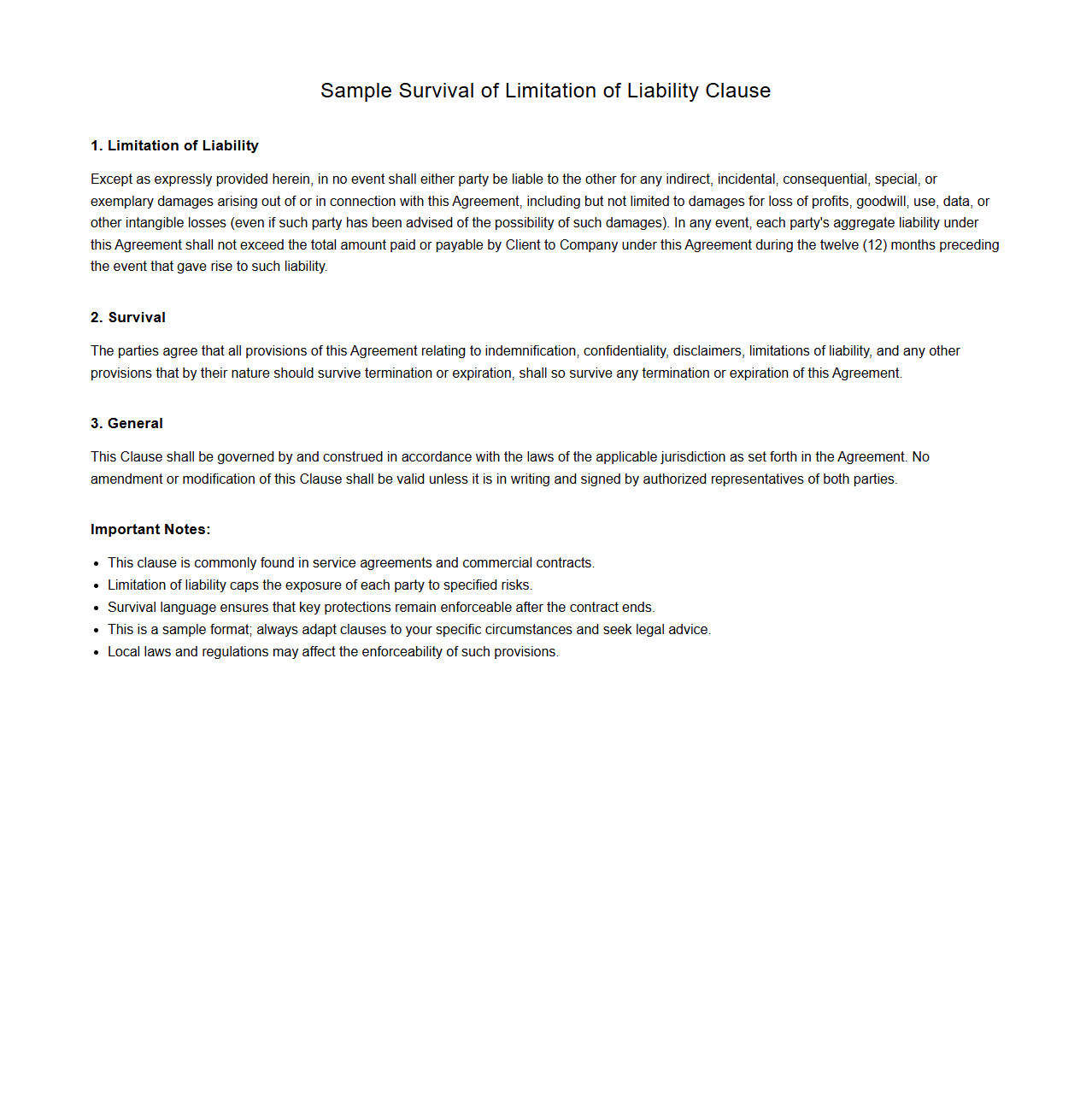
Survival of Limitation of Liability Clause Format
A
Survival of Limitation of Liability Clause Format document outlines the contractual provisions specifying that certain liability limitations remain effective even after the termination or expiration of the main agreement. This clause ensures that parties are protected from extended or unexpected legal claims related to breaches, damages, or indemnities beyond the contract's active period. Precise wording in this document is critical to maintain enforceability and clarify the extent and duration of liability protections.
What are the standard components required in a limitation of liability clause within a contract?
A limitation of liability clause typically includes clear definitions of the types of liabilities covered and the extent to which each party is responsible. It must specify the maximum amount or cap on liability that either party can claim. Additionally, the clause should outline any exceptions where limitations do not apply, ensuring transparency.
How should monetary caps be formatted or specified in a limitation of liability clause?
Monetary caps should be clearly stated using precise financial figures or formulas, such as a fixed dollar amount or a multiple of fees paid. The format often includes exact currency values and time frames to avoid ambiguity. Including examples or referencing specific contract milestones enhances clarity and enforceability.
Which types of damages are typically excluded or included in a limitation of liability clause?
Limitation of liability clauses usually exclude indirect, consequential, incidental, and punitive damages from recoverable losses. Direct damages are generally included but may be capped as specified in the clause. Clear differentiation between damage types helps in managing risk expectations for both parties.
How is the scope of liability (direct, indirect, consequential, etc.) defined and limited in the clause format?
The scope of liability is defined by explicitly listing or categorizing liabilities as direct, indirect, consequential, incidental, or special. The clause limits each category by either excluding certain damages or imposing specific caps. Precision in language ensures all parties understand which liabilities are covered or excluded.
What language or formatting ensures the enforceability of a limitation of liability clause under contract law?
To ensure enforceability, the clause must use clear, unambiguous, and conspicuous language, often highlighted or set apart in the contract. Incorporating terms like "maximum," "sole remedy," and "excluding liability for" strengthens its legal impact. Consistency with applicable jurisdiction laws and including severability provisions also enhance validity.