A Third-Party Liability Insurance Certificate typically includes the insured party's details, coverage limits, policy number, and the insurer's information. It specifies the period of coverage and outlines the types of third-party claims the insurance protects against. This certificate serves as proof of insurance, ensuring that the insured is financially responsible for damages or injuries caused to others.
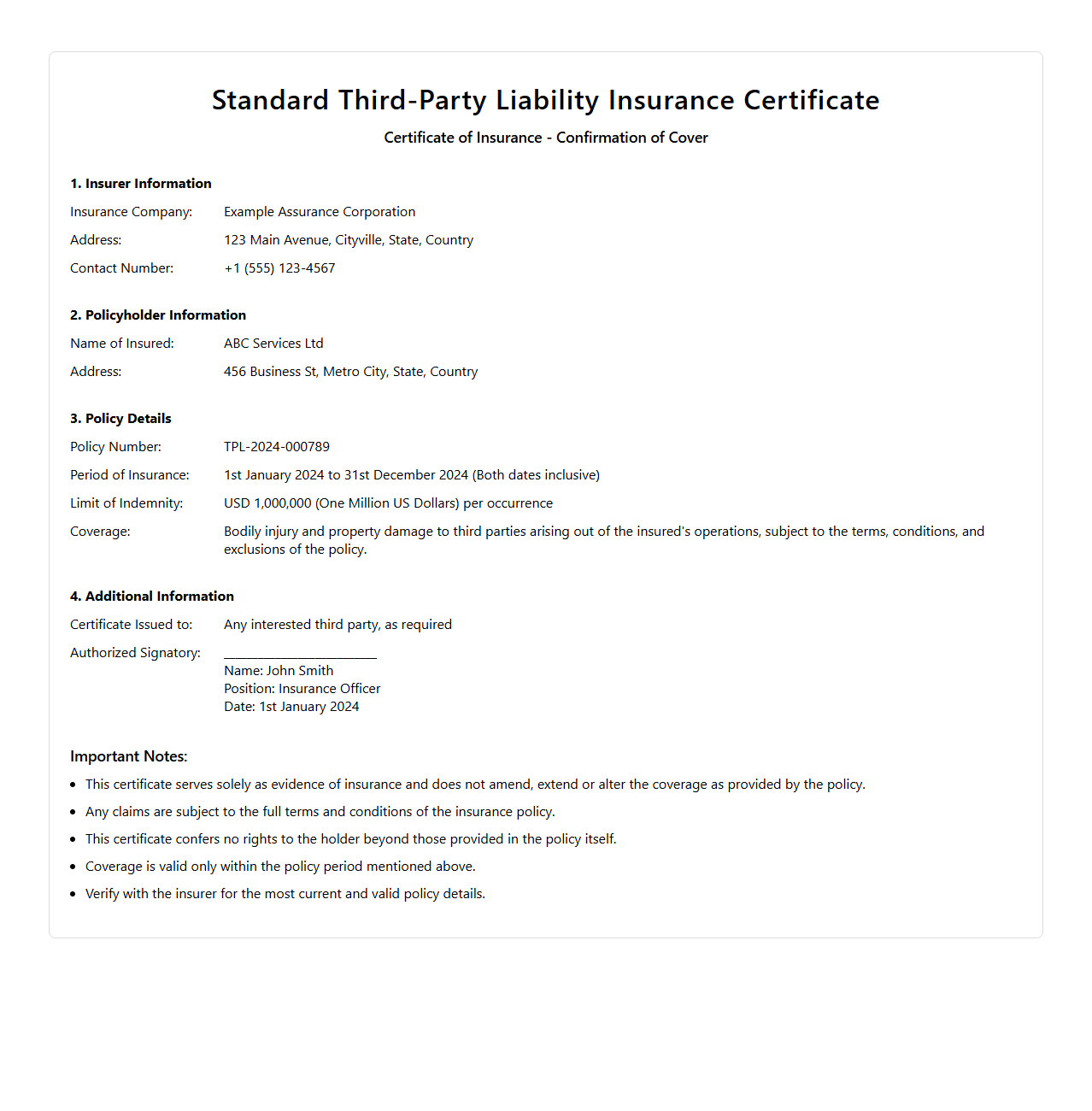
Standard Third-Party Liability Insurance Certificate Template
A
Standard Third-Party Liability Insurance Certificate Template is a pre-formatted document that verifies the existence of liability insurance coverage provided by one party to another. It outlines key details such as the insured party's information, policy number, coverage limits, effective dates, and the scope of protection against claims arising from third-party bodily injury or property damage. This template ensures consistent communication and proof of insurance compliance between businesses, clients, and regulatory agencies.
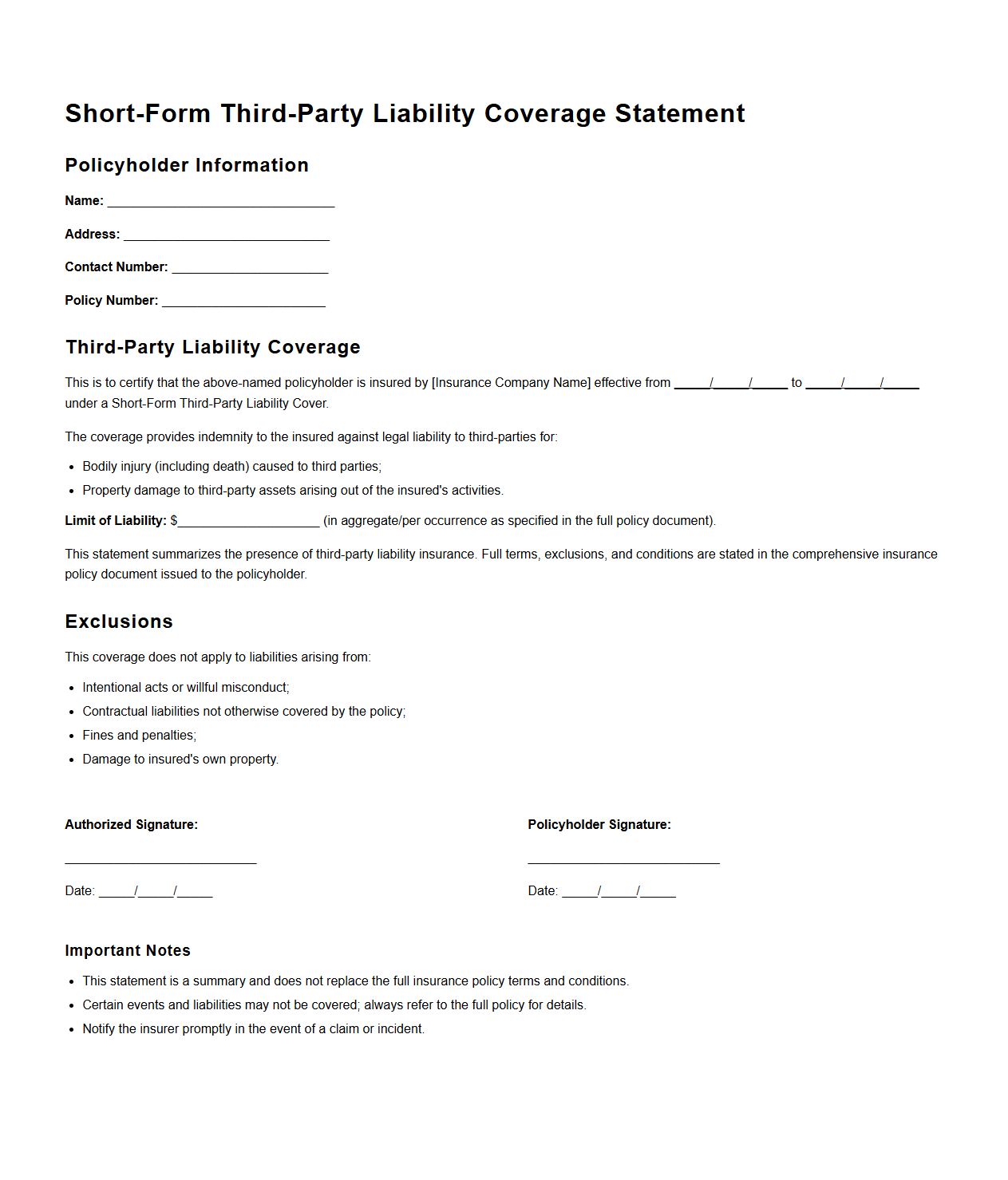
Short-Form Third-Party Liability Coverage Statement
A
Short-Form Third-Party Liability Coverage Statement document is a concise, standardized form used by insurance providers to confirm the existence and extent of third-party liability coverage under a policy. This document typically outlines key details such as coverage limits, policy number, effective dates, and the insured party's responsibilities, ensuring clear communication between insurers, third parties, and claimants. It is essential for verifying insurance coverage quickly during claims processing, contract agreements, or legal inquiries.
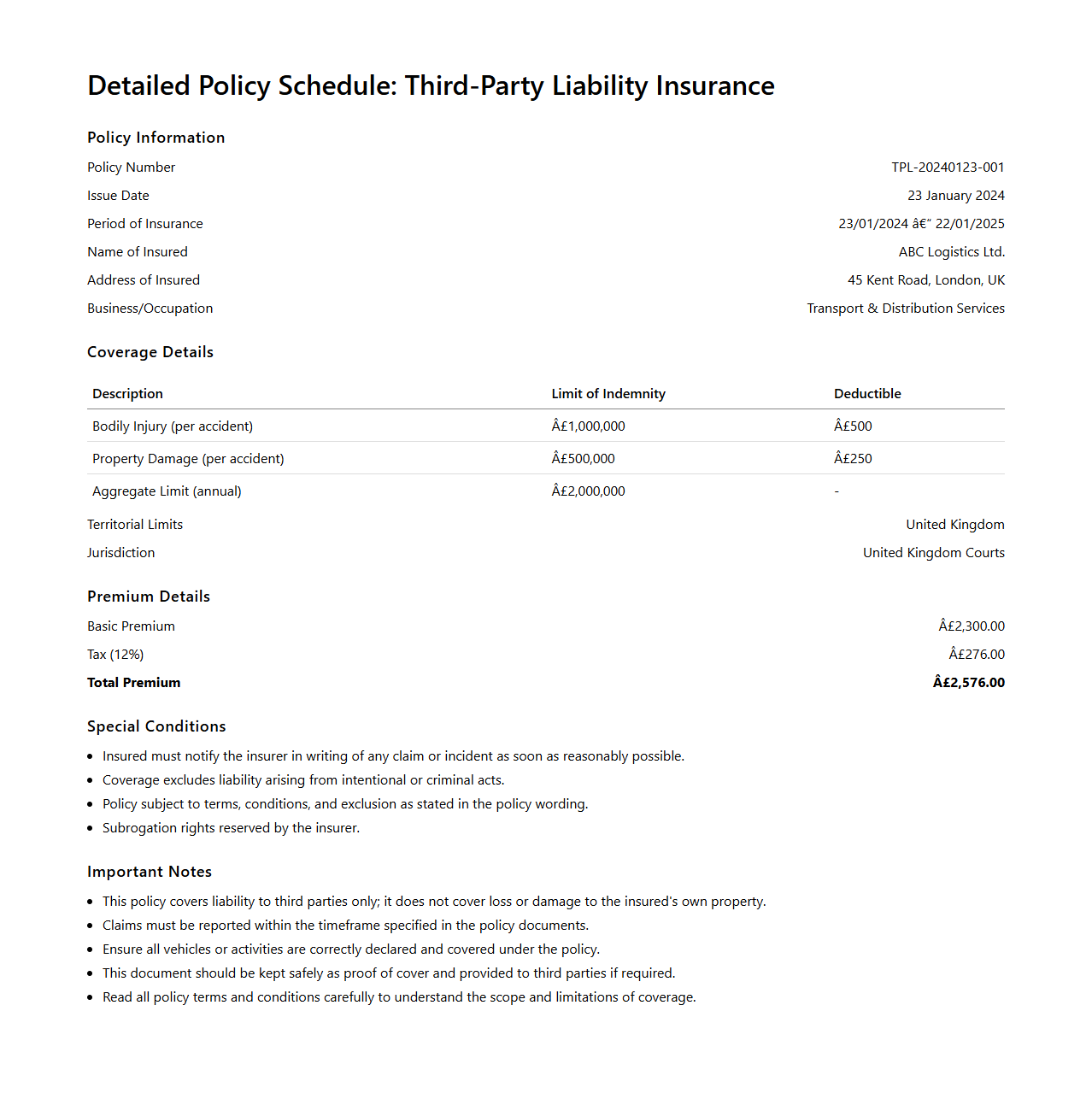
Detailed Policy Schedule for Third-Party Liability
The
Detailed Policy Schedule for Third-Party Liability document outlines the specific terms, limits, and coverage details of liability insurance protecting policyholders against claims from third parties for bodily injury or property damage. It specifies the insured parties, policy period, coverage limits, exclusions, and premium amounts, providing a comprehensive framework for understanding the obligations and protections under the policy. This document serves as a critical reference for both insurers and insureds to clarify the extent of liability coverage in legal or claim-related scenarios.
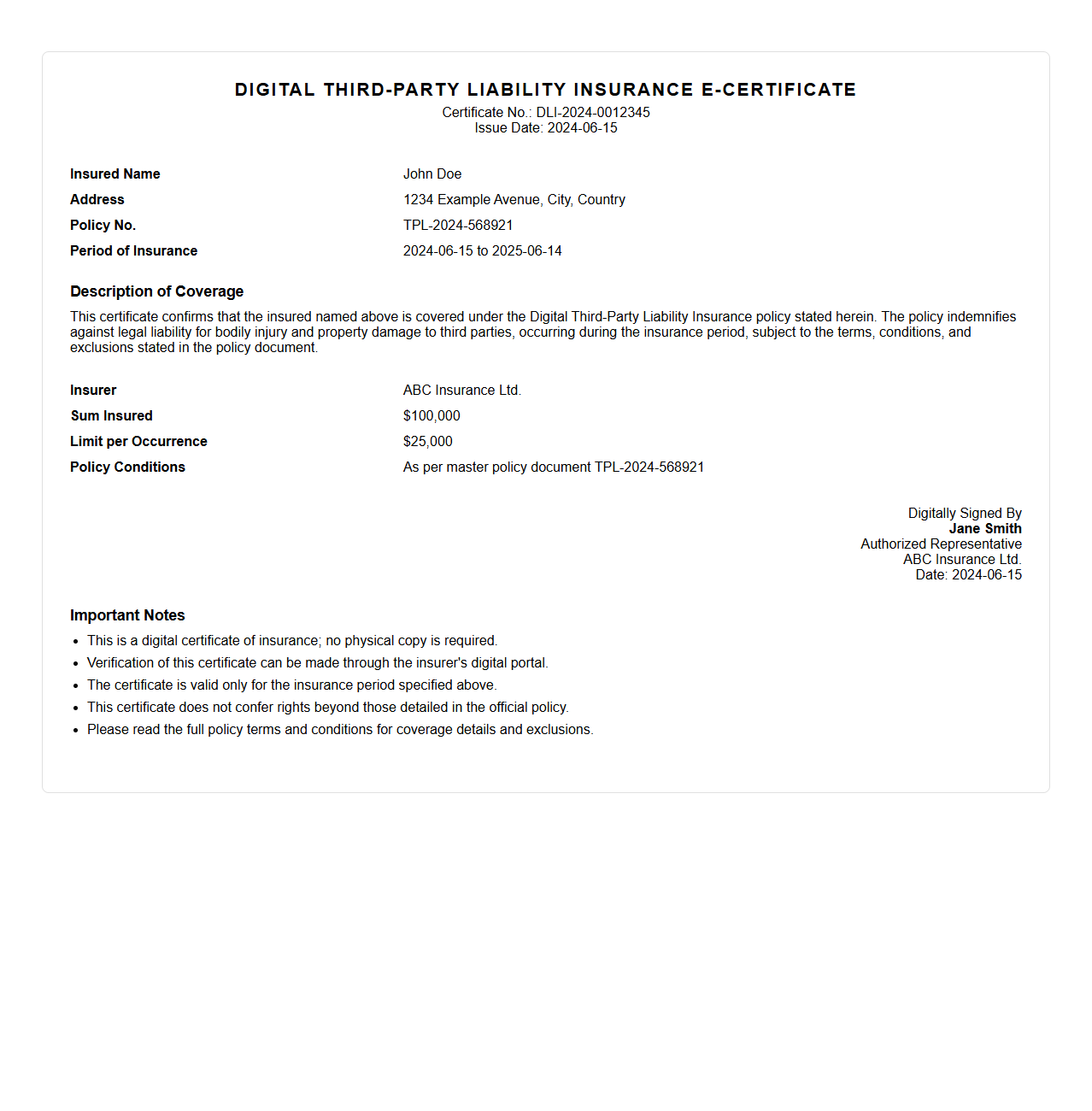
Digital Third-Party Liability Insurance e-Certificate
A
Digital Third-Party Liability Insurance e-Certificate is an electronically issued document that serves as proof of insurance coverage for third-party liabilities. It securely verifies that the insured party holds a valid liability policy, facilitating faster claims processing and risk management. This digital format enhances accessibility, reduces administrative errors, and supports compliance in various legal and commercial transactions.
Condensed Summary of Third-Party Liability Coverage
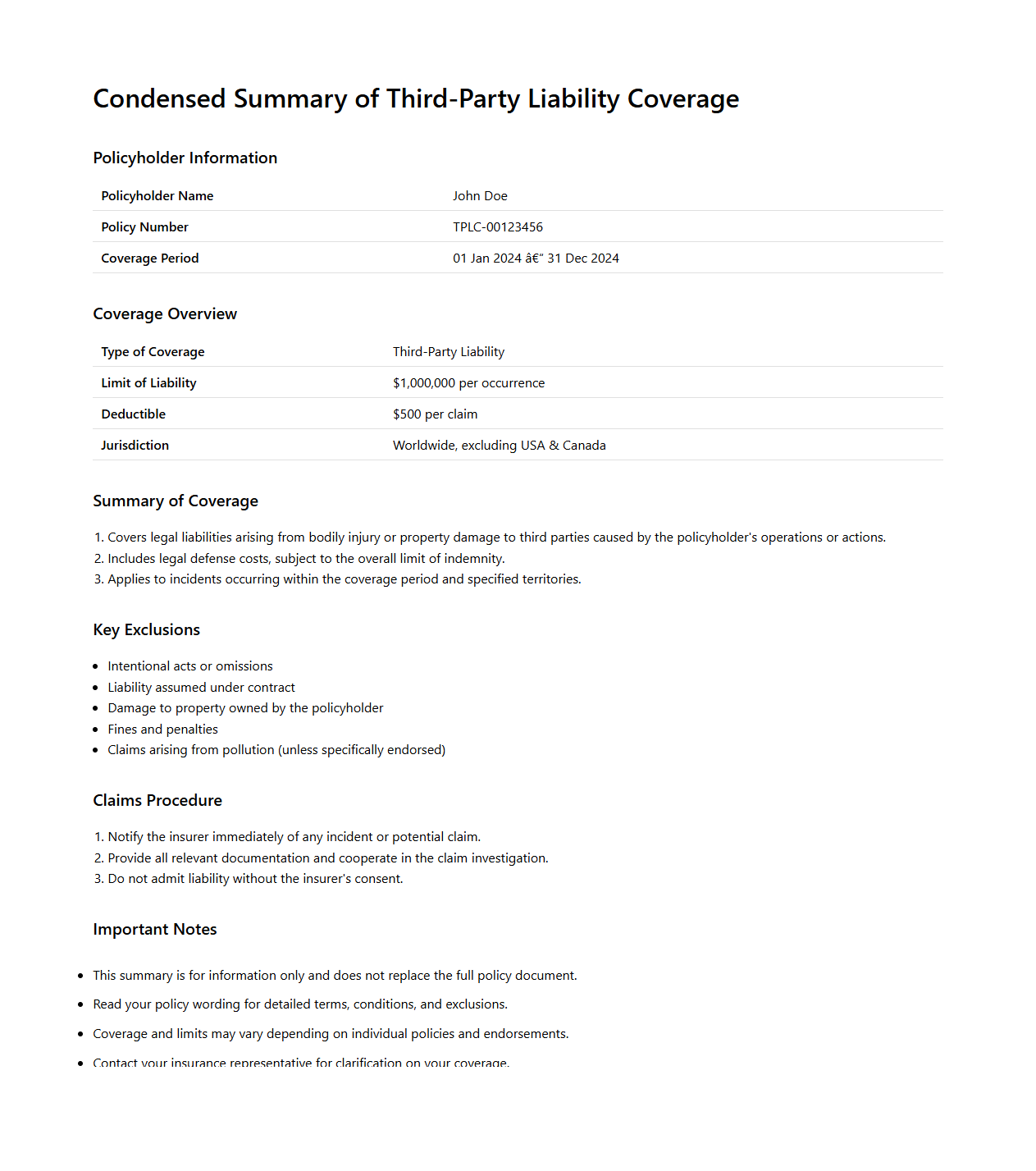
A
Condensed Summary of Third-Party Liability Coverage document provides a clear and concise overview of the insurance protection offered against claims made by individuals or entities for damages or injuries caused by the insured party. This summary highlights key coverage limits, exclusions, and claim procedures, ensuring policyholders understand their legal and financial responsibilities. It serves as a vital reference for risk management and effective claim handling in liability insurance policies.
Authorized Agent Third-Party Liability Certificate Letter
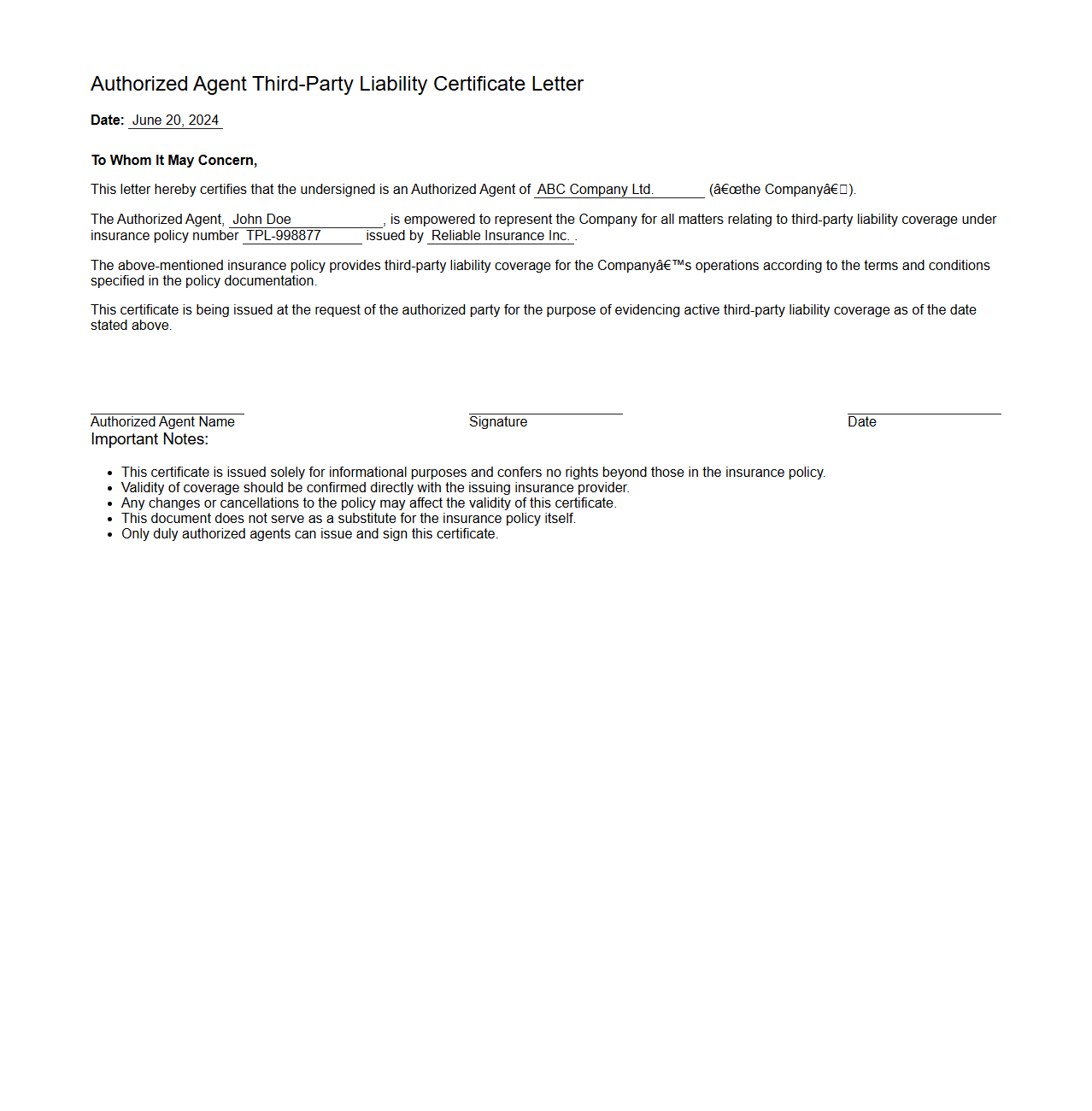
An
Authorized Agent Third-Party Liability Certificate Letter is a formal document that authorizes a representative to act on behalf of a company or individual in matters related to third-party liability claims. This letter serves as proof that the designated agent has the legal authority to handle, negotiate, and settle claims or responsibilities involving third-party damages or losses. It ensures clear communication and responsibility allocation between the principal, agent, and third parties involved.
Third-Party Liability Insurance Endorsement Document
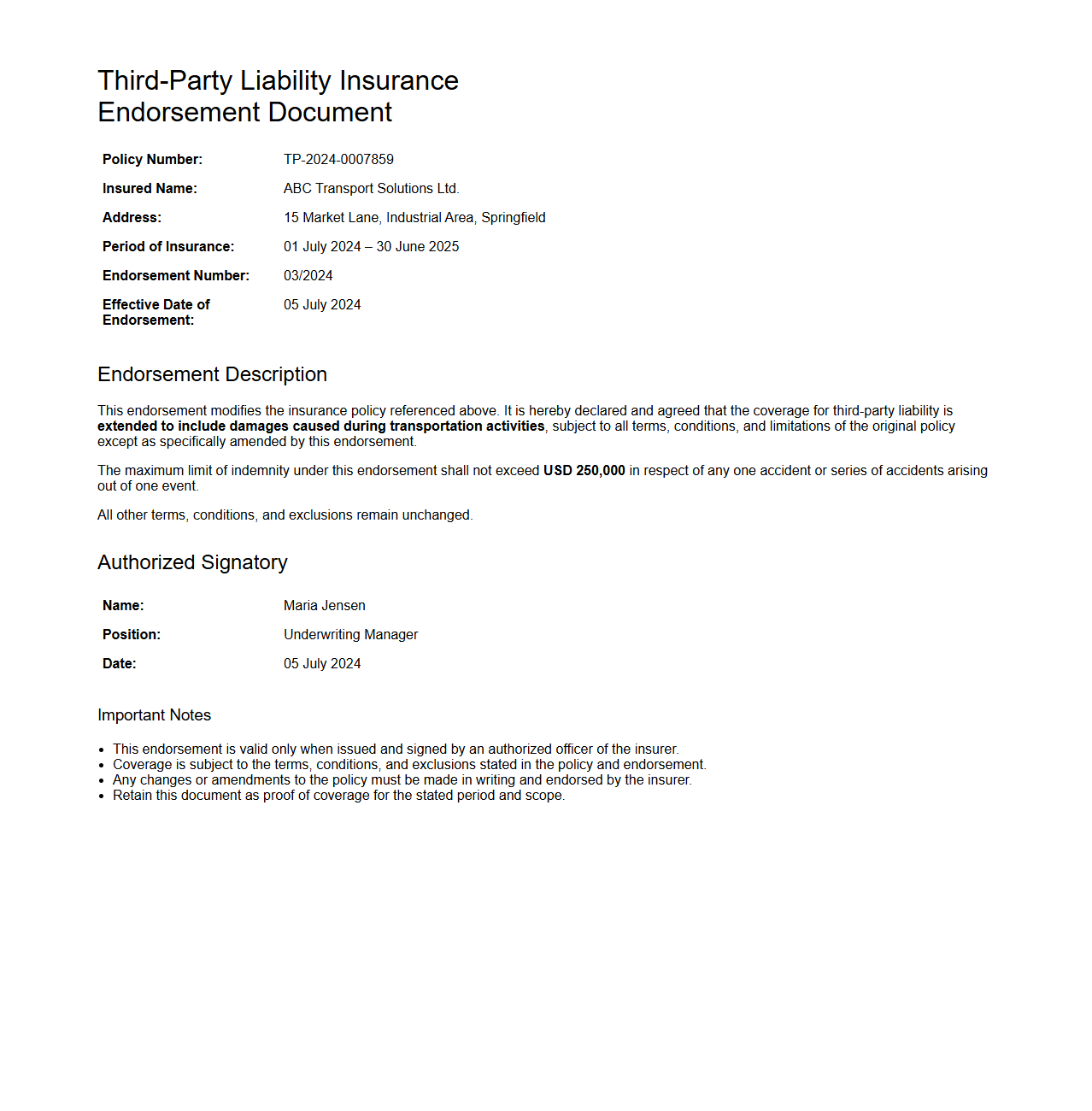
The
Third-Party Liability Insurance Endorsement Document modifies the terms of an existing insurance policy to extend or clarify coverage for claims made by third parties for bodily injury, property damage, or legal expenses. This endorsement ensures the policyholder is protected against financial loss arising from lawsuits or claims filed by individuals or entities not involved in the insured's contract. It is essential for businesses or individuals seeking to manage risk exposure related to third-party liabilities effectively.
Annual Third-Party Liability Insurance Declaration Form
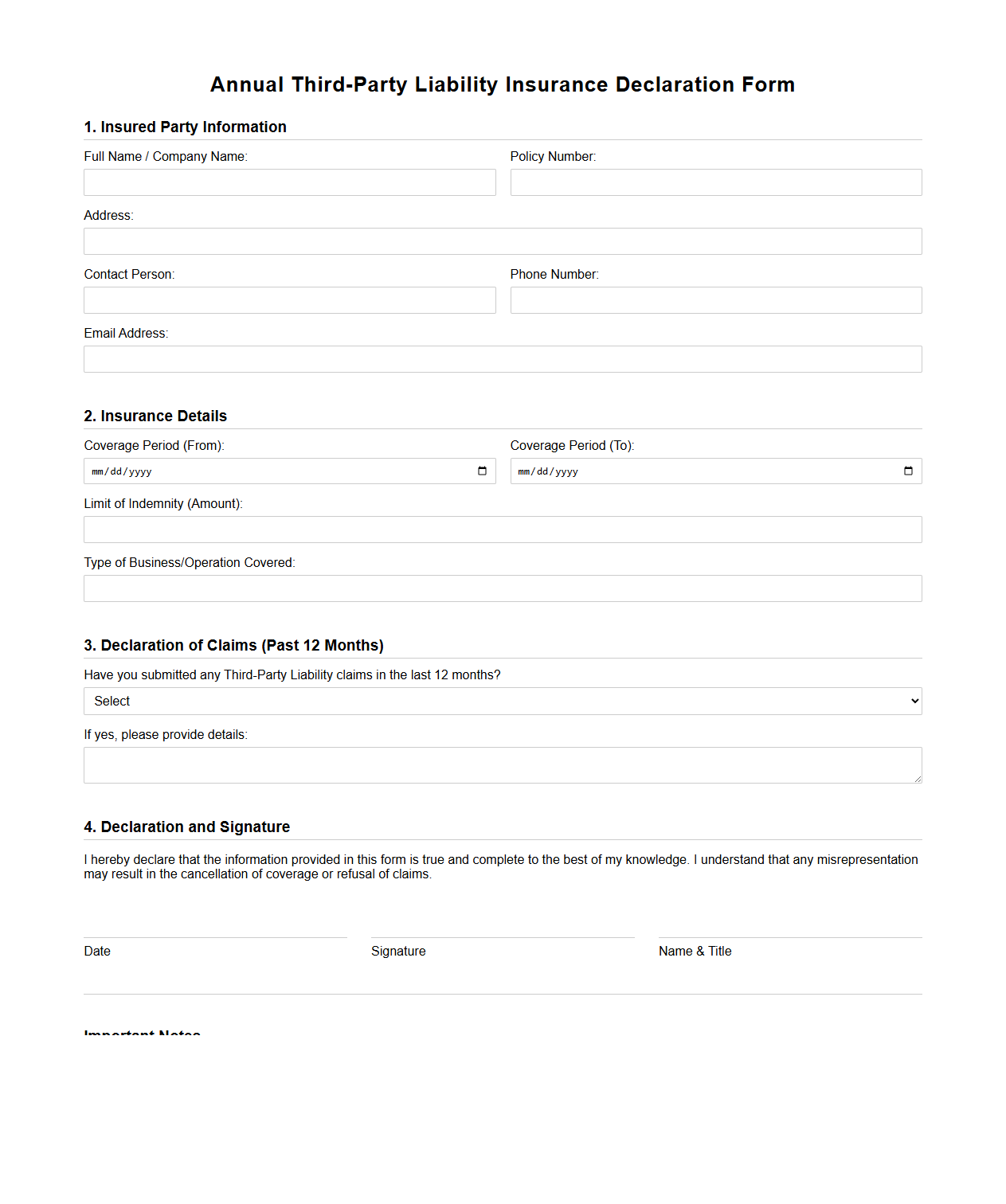
The
Annual Third-Party Liability Insurance Declaration Form is a document that verifies an individual's or organization's coverage for liabilities arising from third-party claims over the past year. This form details the insured parties, policy coverage limits, and any changes in liability protection, ensuring compliance with legal and contractual obligations. It is essential for maintaining transparency and confirming continuous insurance coverage in various industries.
Certificate of Proof of Third-Party Insurance Compliance
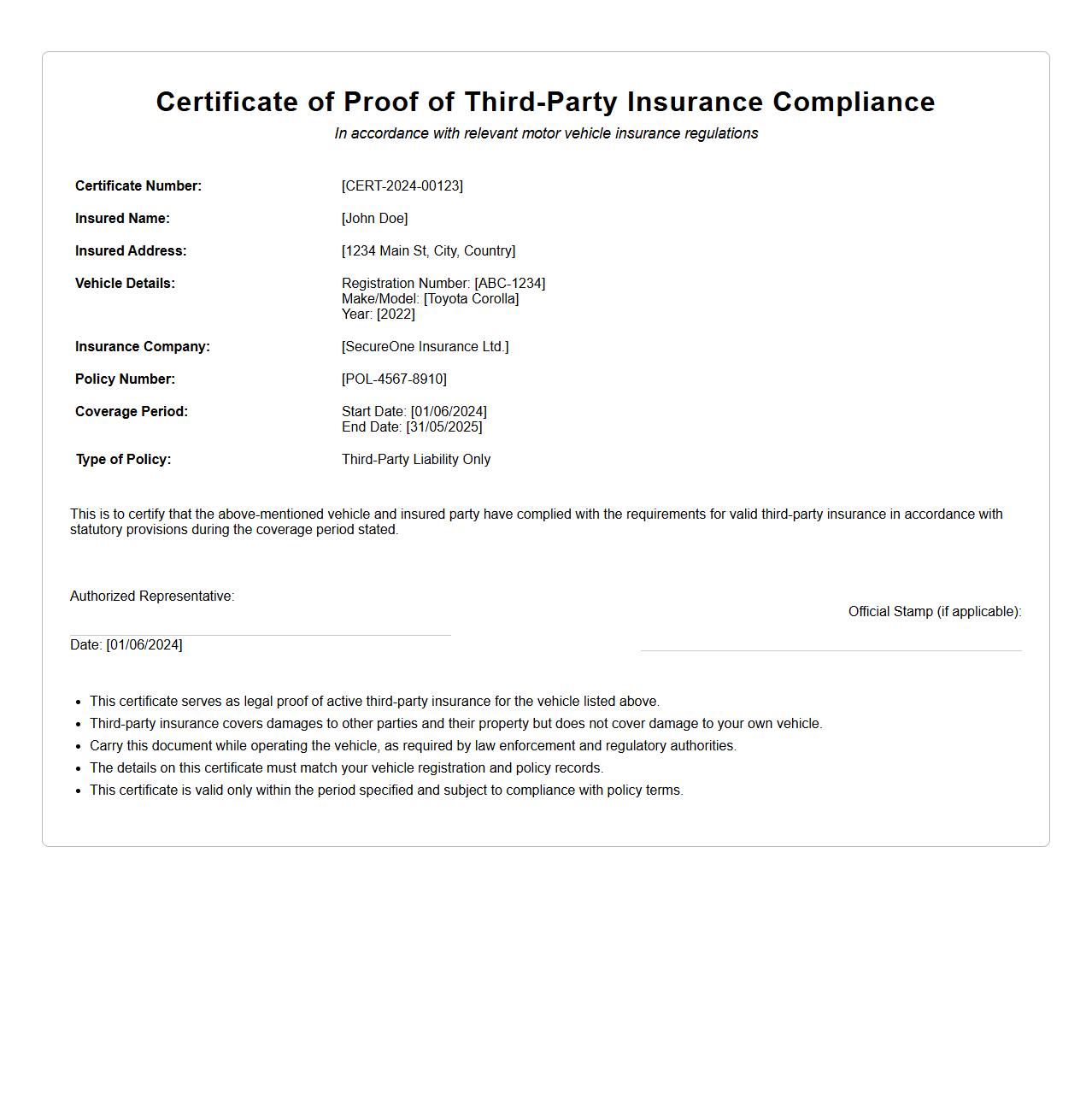
A
Certificate of Proof of Third-Party Insurance Compliance is an official document that verifies a person or entity holds the necessary third-party insurance coverage as mandated by law or contract. This certificate confirms that the policy meets specific regulatory requirements, protecting against liabilities arising from damages or injuries caused to others. It is commonly used in industries such as construction, transportation, and vehicle ownership to ensure legal and financial responsibility is in place.
Custom Third-Party Liability Insurance Confirmation Sheet
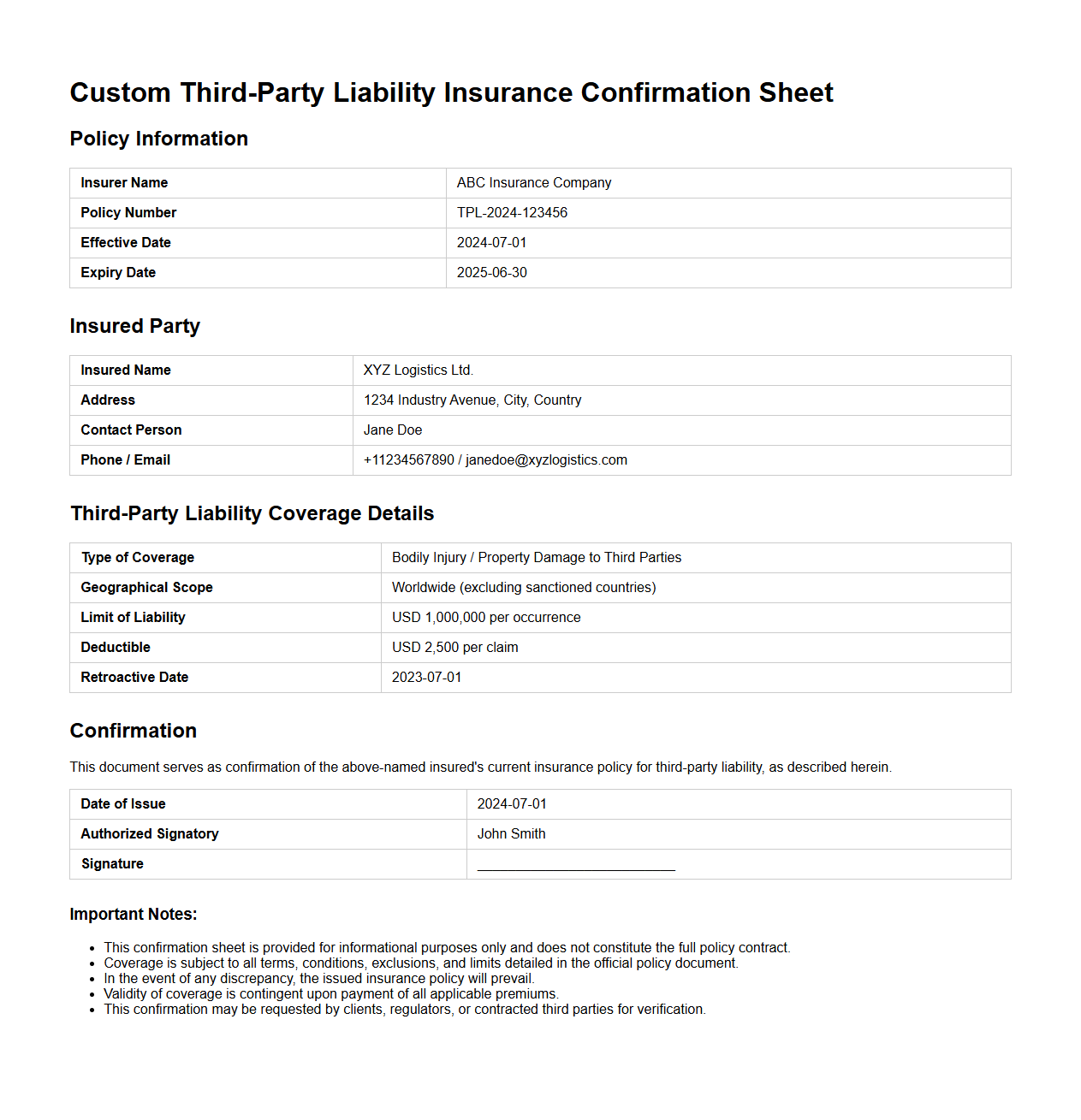
A
Custom Third-Party Liability Insurance Confirmation Sheet is a formal document verifying that a third party holds adequate liability insurance coverage tailored to specific contractual or regulatory requirements. It details the insurer's information, policy limits, coverage period, and insured activities, ensuring compliance and risk management for all involved entities. This sheet serves as a critical tool for businesses to confirm protection against potential claims arising from damages or injuries caused by third-party actions.
Essential Components Required in the Format of a Third-Party Liability Insurance Certificate
A Third-Party Liability Insurance Certificate must include the insurer's name and contact information to validate authenticity. It should clearly state the insured party's details including full name and address. Additionally, the certificate must reference the policy number and effective dates to link the document to the actual insurance coverage.
Presentation of Policy Coverage and Limits in the Certificate Document
The certificate must detail the policy coverage specifying the types of risks insured under the Third-Party Liability policy. Coverage limits must be explicitly stated in numeric amounts and currency to avoid ambiguity. These details ensure all parties understand the extent and boundaries of the insurance protection provided.
Party's Details to be Prominently Included According to Standard Format Guidelines
The insured party's information is essential and must be prominently displayed in the certificate, including full legal name and address. Additionally, the insurance provider's data should be featured to confirm policy authenticity. The certificate should also specify any third-party beneficiaries if applicable under the insurance agreement.
Standard Declarations or Warranties that the Certificate Format Must Include
The certificate should contain a declaration from the insurer confirming the policy is in force and valid for the stated period. It must include warranties that the coverage complies with regulatory standards and premium payments are up to date. Such declarations build trust and provide legal assurances to all stakeholders.
Documentation of Validity Period and Effective Dates in the Certificate Format
The validity period must be clearly documented, showing the start and end dates of the insurance coverage. This ensures clarity on when the liability protection begins and expires. Accurate effective dates are critical for claims and risk management purposes.