Asset Management Policy Statement
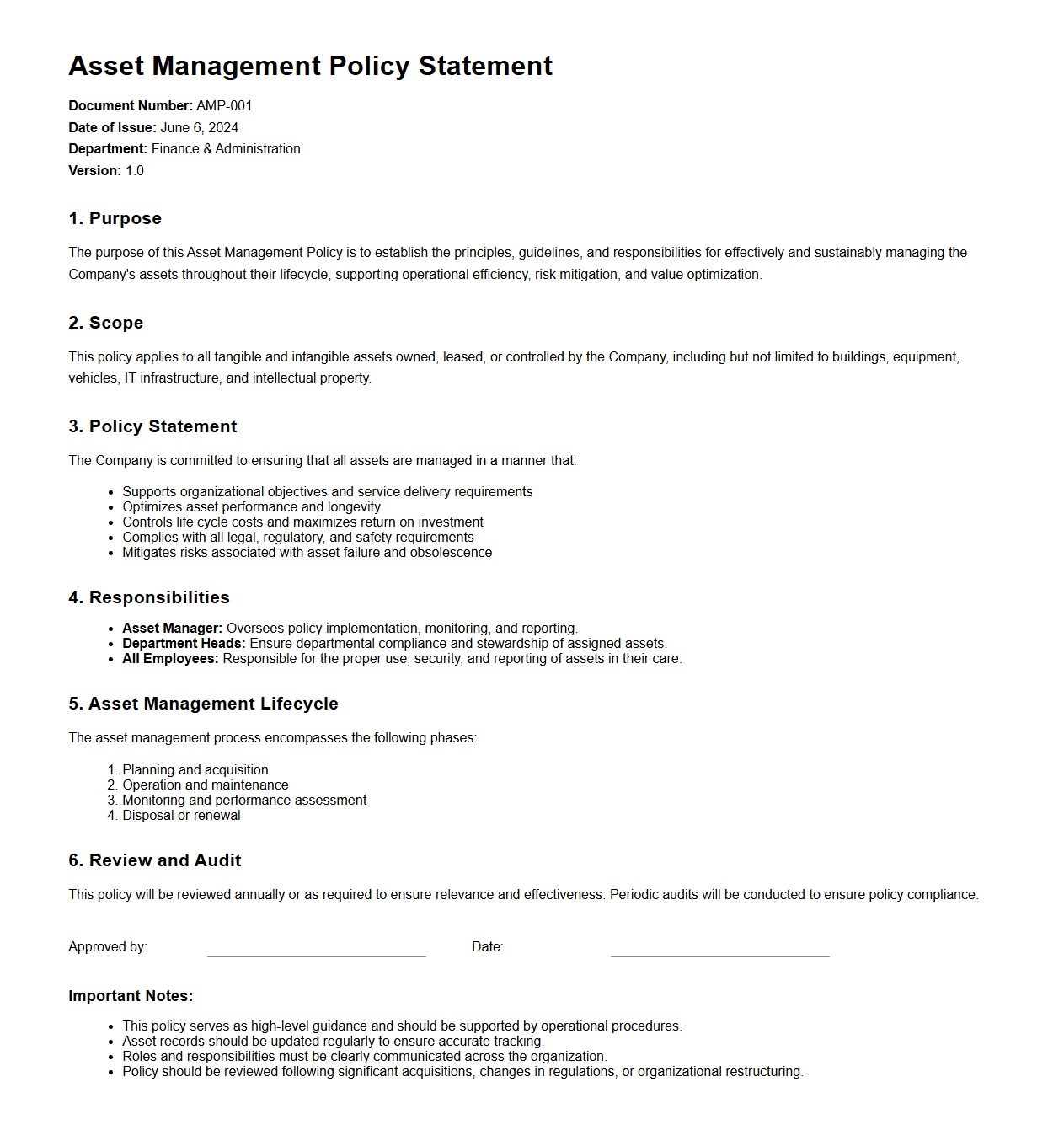
An
Asset Management Policy Statement document outlines an organization's principles, objectives, and framework for managing its assets effectively. It provides clear guidelines on asset acquisition, maintenance, utilization, and disposal to maximize value and minimize risk. This policy ensures alignment with regulatory requirements and supports long-term financial sustainability and operational efficiency.
Scope and Objectives of Asset Management
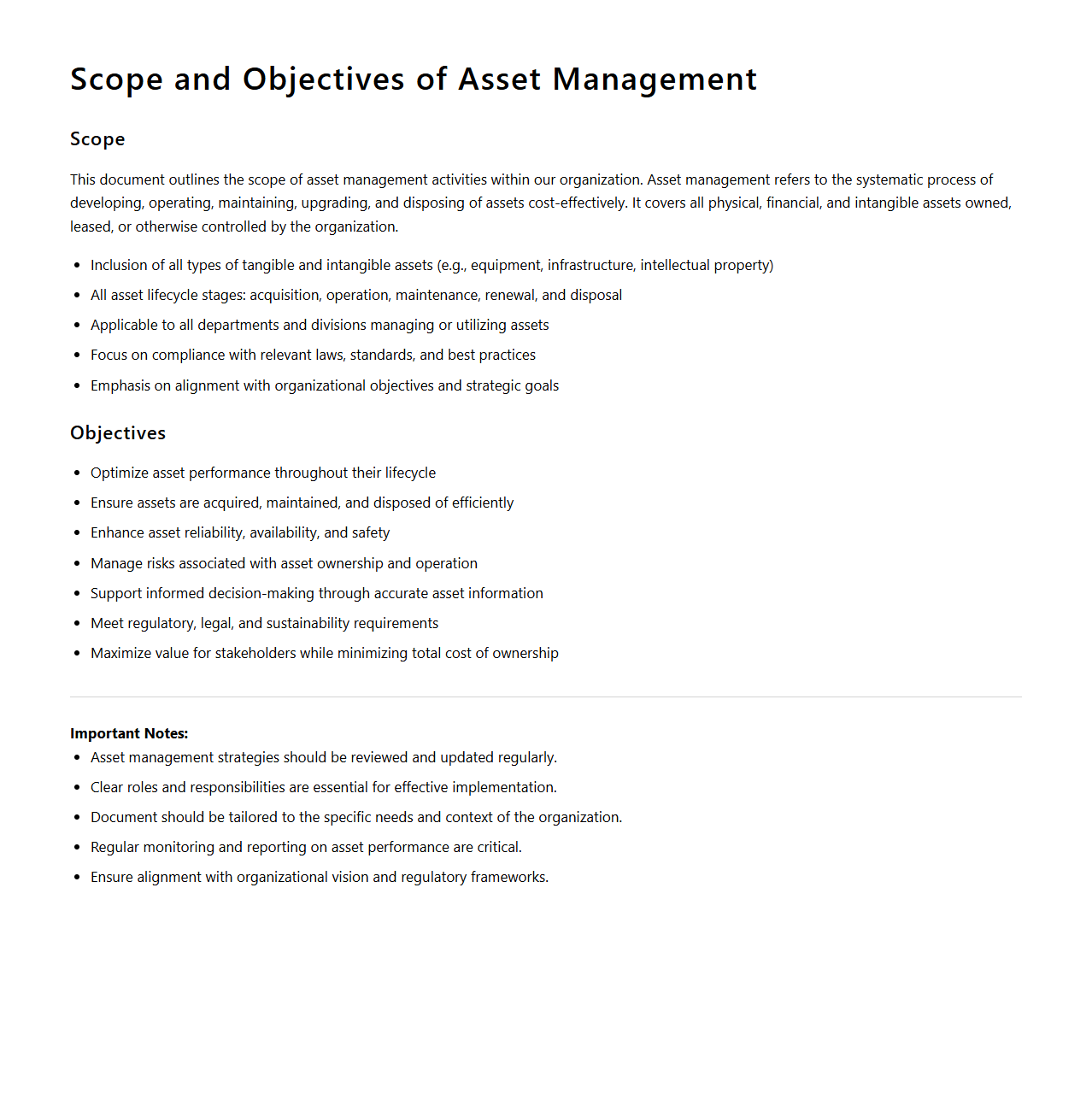
The
Scope and Objectives of Asset Management document defines the boundaries and goals for managing organizational assets to maximize value, minimize risks, and ensure compliance with regulatory requirements. It outlines the types of assets covered, including physical, digital, and intellectual property, and specifies performance targets, lifecycle management processes, and resource allocation strategies. This document serves as a foundational guide for aligning asset management activities with business objectives and stakeholder expectations.
Roles and Responsibilities in Asset Management
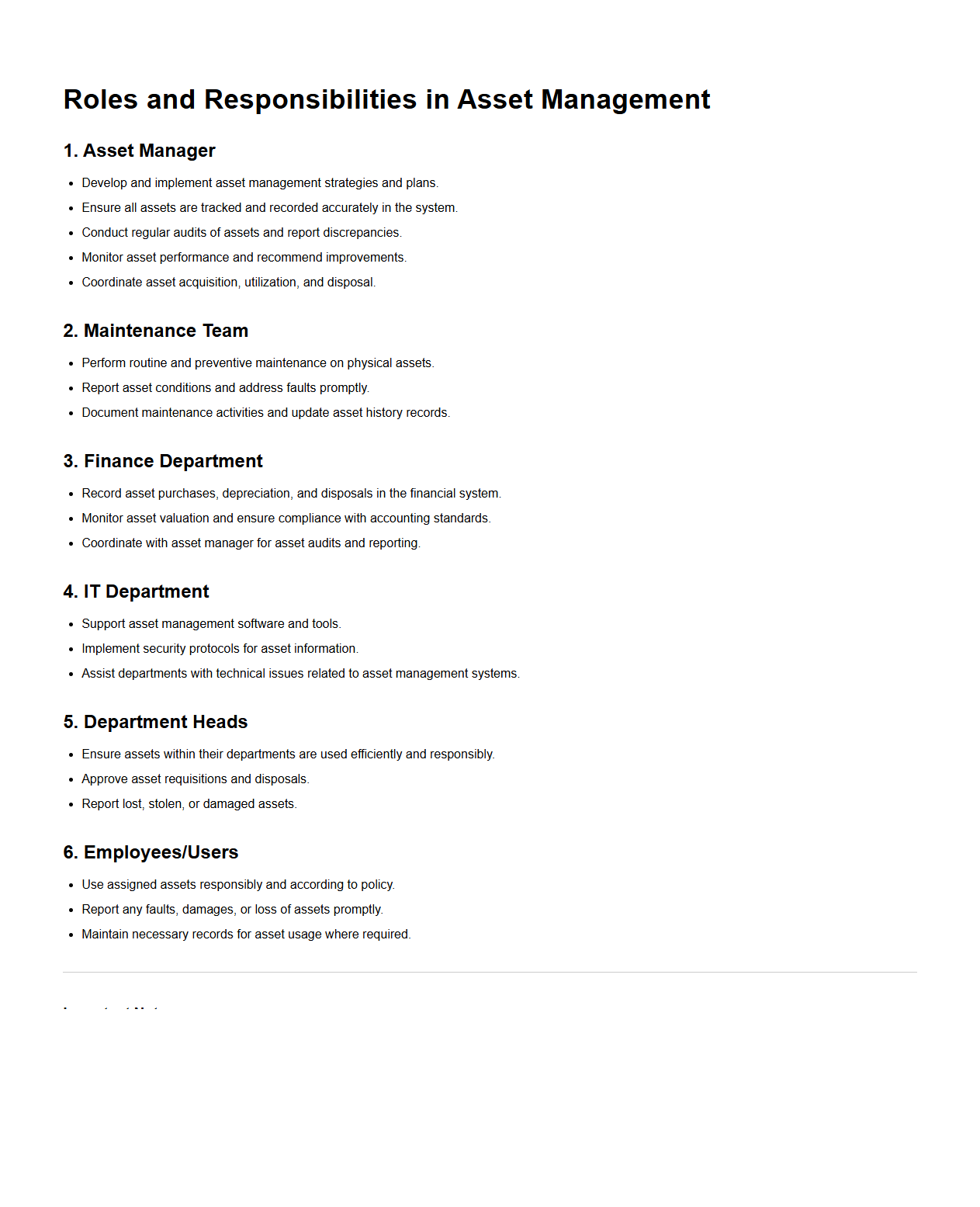
The
Roles and Responsibilities in Asset Management document clearly defines the specific duties and accountabilities assigned to individuals or teams involved in managing organizational assets. It ensures proper governance, risk management, and efficient utilization of assets by outlining who is responsible for asset acquisition, maintenance, monitoring, and disposal. This structured approach supports achieving operational goals while maintaining compliance with industry standards and regulatory requirements.
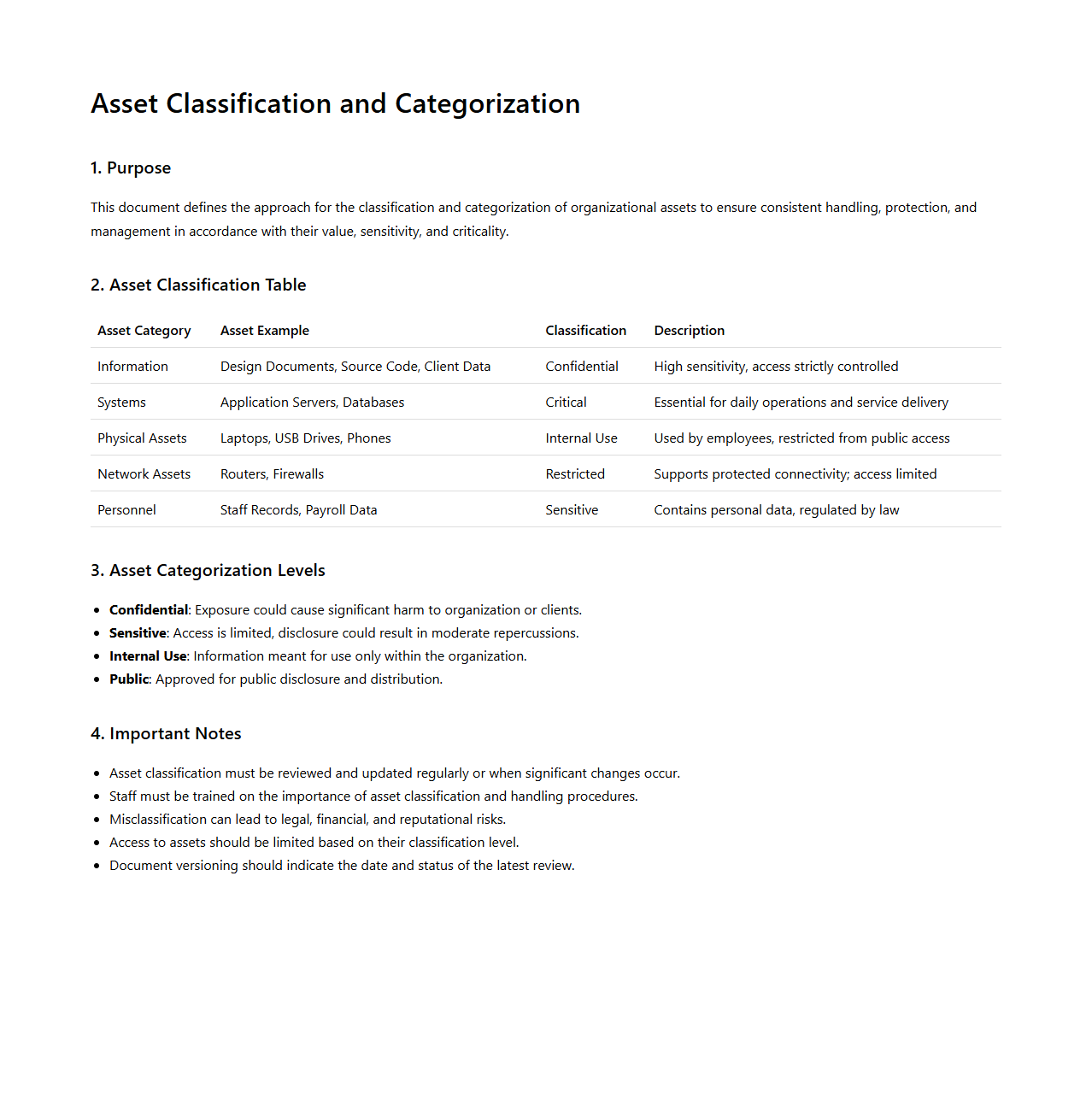
Asset Classification and Categorization
An
Asset Classification and Categorization document outlines the systematic process of identifying, labeling, and grouping organizational assets based on their value, sensitivity, and criticality to business operations. This document helps establish clear guidelines for handling, protecting, and managing assets such as hardware, software, data, and intellectual property according to predefined security requirements. Proper asset classification supports risk management, compliance, and resource allocation by ensuring that the most important assets receive appropriate levels of security and oversight.
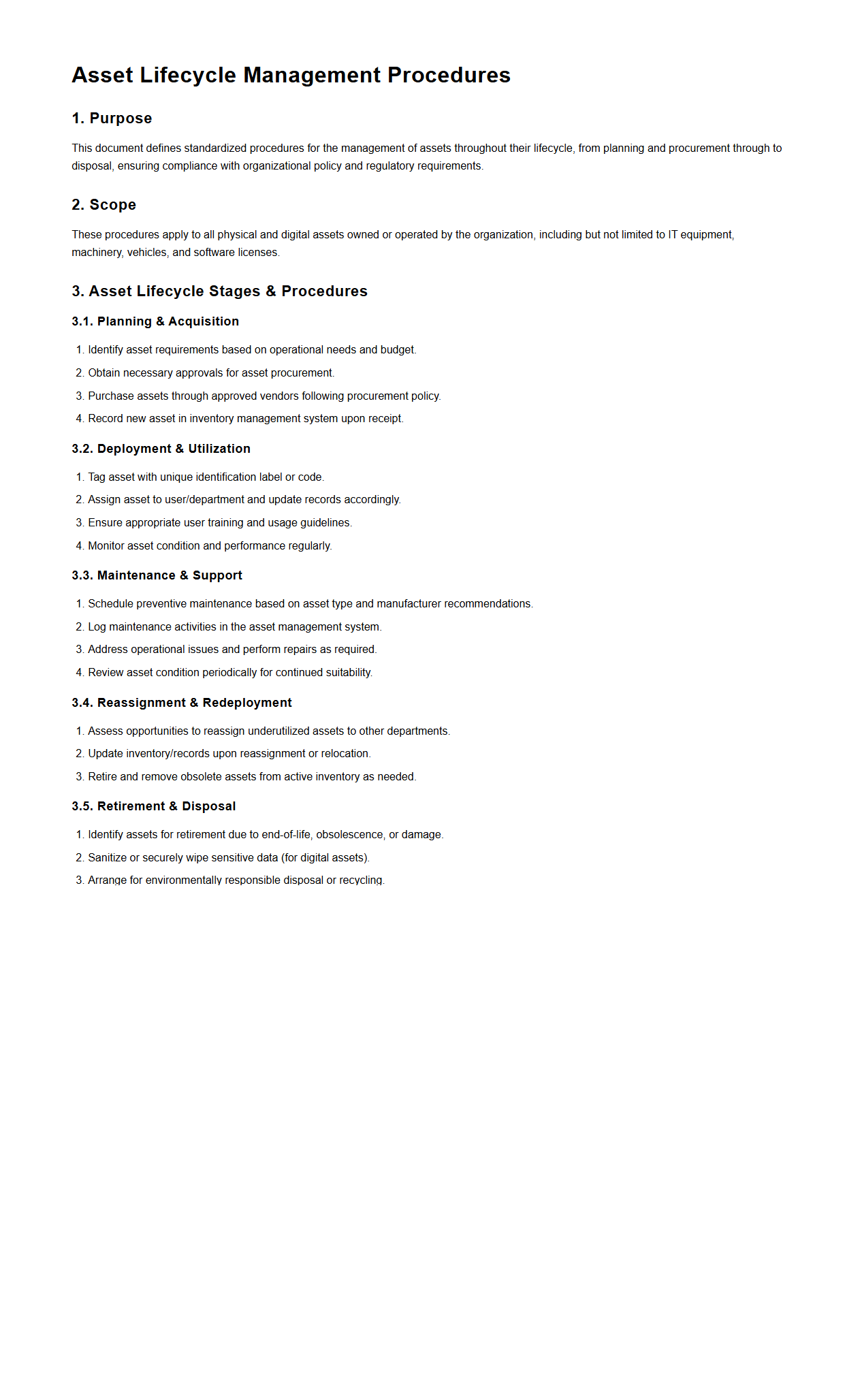
Asset Lifecycle Management Procedures
An
Asset Lifecycle Management Procedures document outlines standardized processes for managing assets from acquisition through disposal, ensuring optimal performance and cost-efficiency. It covers stages such as procurement, maintenance, tracking, and decommissioning to maximize asset value and compliance with regulatory requirements. By implementing these procedures, organizations improve asset utilization, reduce downtime, and enhance decision-making for asset investments.
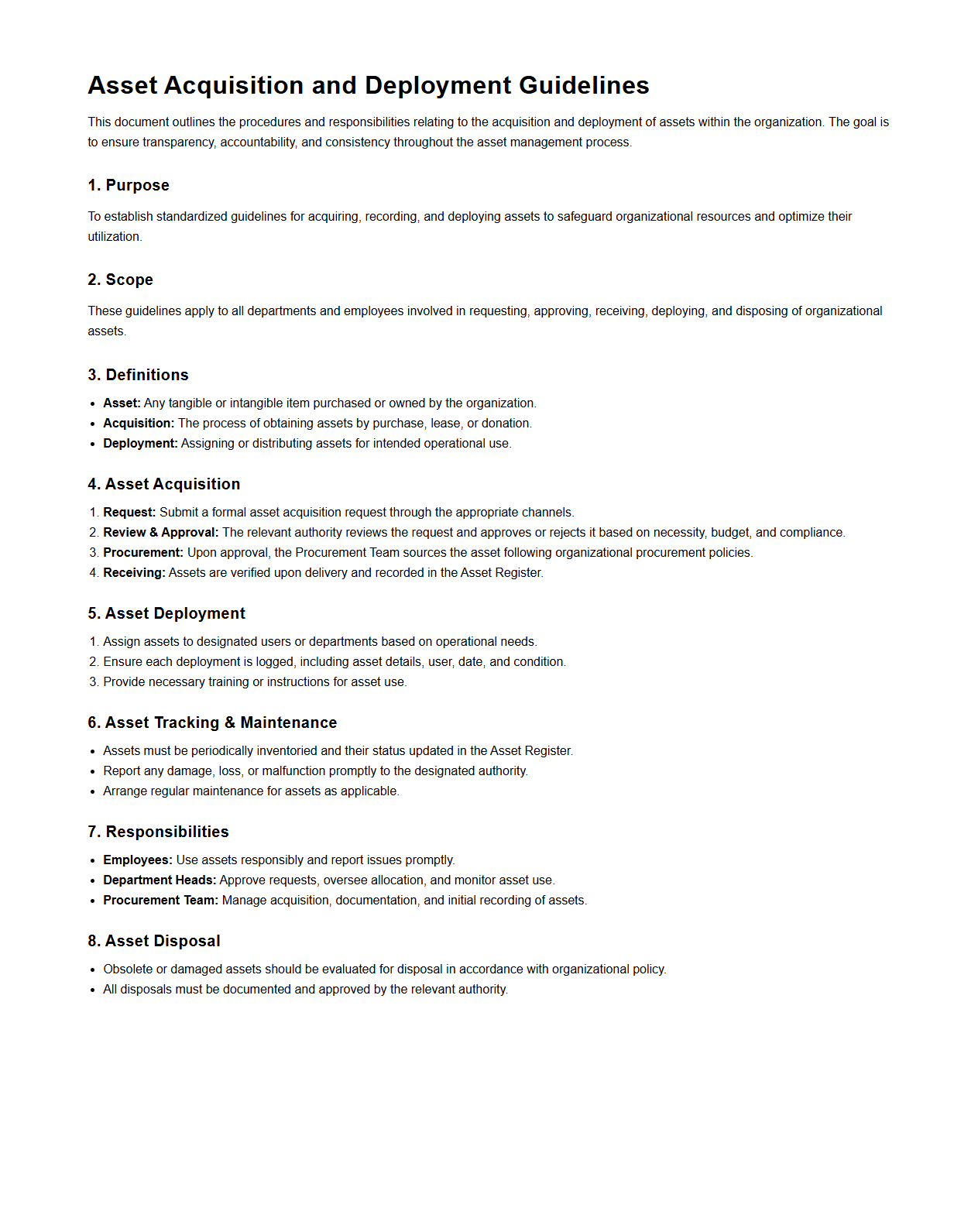
Asset Acquisition and Deployment Guidelines
An
Asset Acquisition and Deployment Guidelines document outlines the standardized procedures for procuring, implementing, and managing organizational assets to ensure efficiency, compliance, and cost-effectiveness. It defines criteria for asset evaluation, selection, and approval processes, as well as deployment strategies to optimize resource utilization and minimize operational risks. This document serves as a vital reference for aligning asset management with business objectives and regulatory requirements.
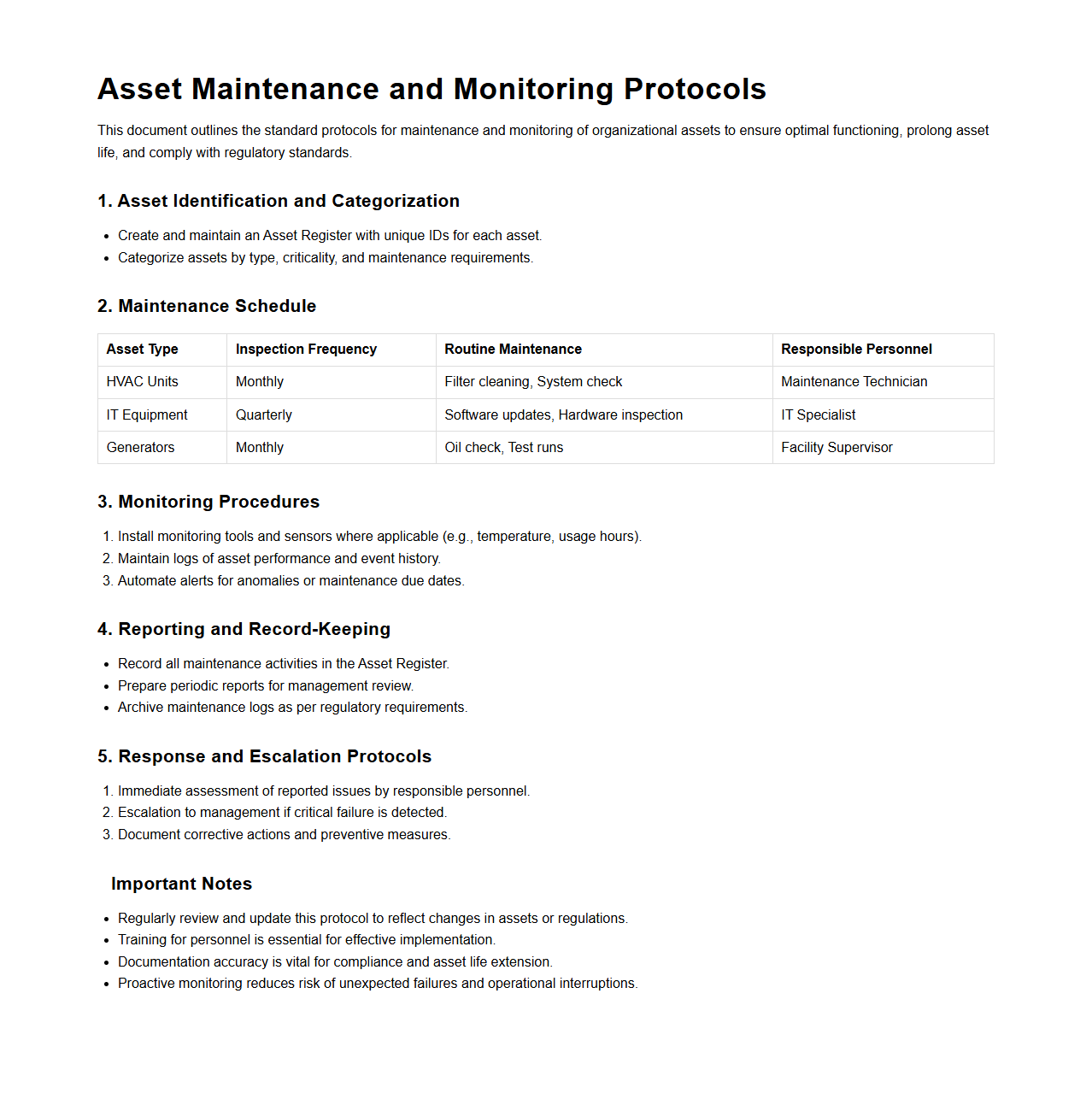
Asset Maintenance and Monitoring Protocols
An
Asset Maintenance and Monitoring Protocols document outlines standardized procedures for ensuring the optimal performance and longevity of physical and digital assets through regular inspections, maintenance tasks, and real-time monitoring. It specifies maintenance schedules, monitoring technologies, performance indicators, and response actions to prevent asset failure and minimize downtime. This document is essential for asset management teams to maintain operational efficiency, reduce costs, and comply with safety and regulatory standards.
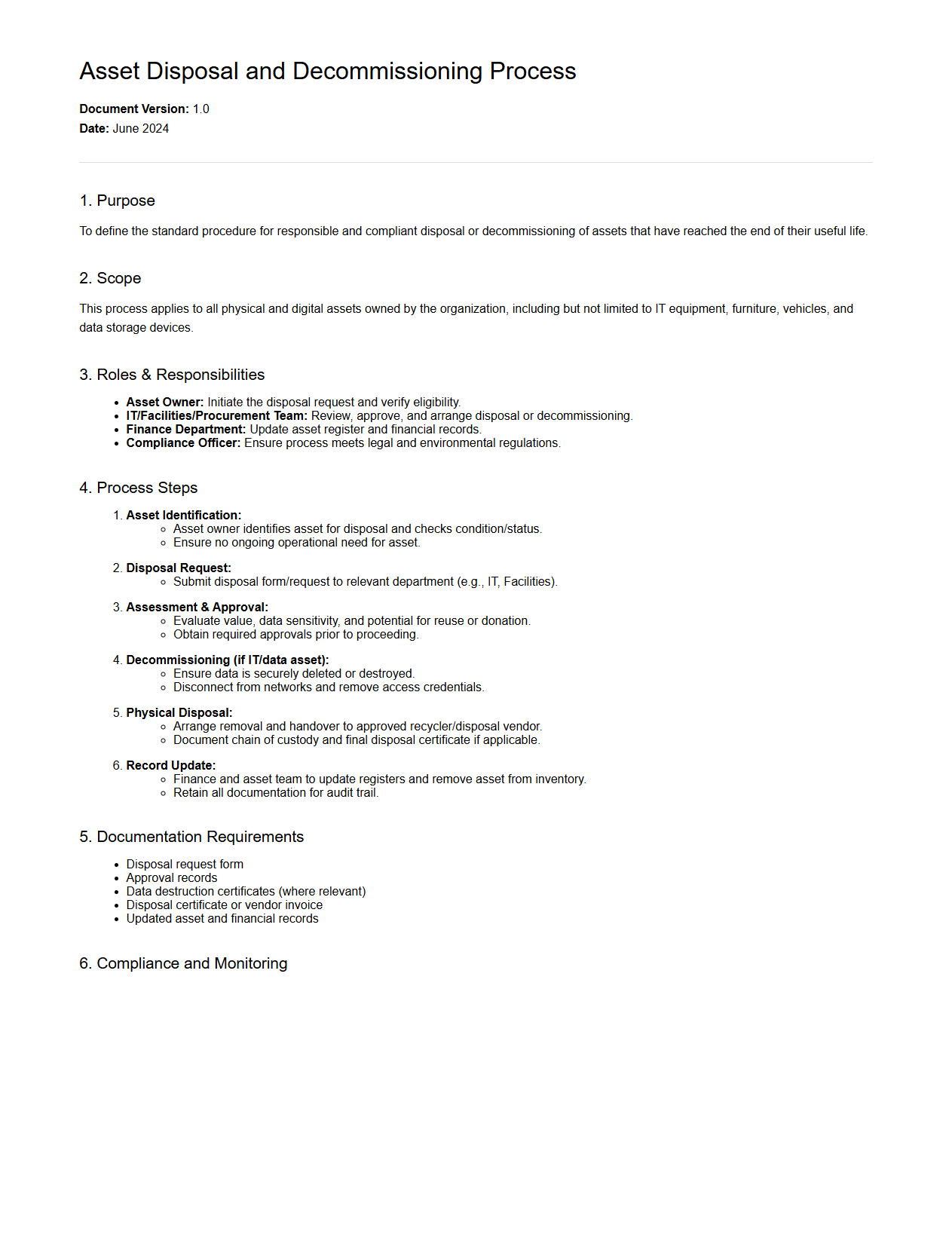
Asset Disposal and Decommissioning Process
The Asset Disposal and Decommissioning Process document outlines protocols for safely and efficiently removing assets from service, ensuring compliance with regulatory standards and environmental requirements. It details step-by-step procedures for asset valuation, risk assessment, removal, disposal methods, and documentation necessary to maintain accountability and minimize financial and operational impact. This document is crucial for managing the lifecycle of physical and digital assets, emphasizing the importance of
environmentally responsible disposal and secure data handling.
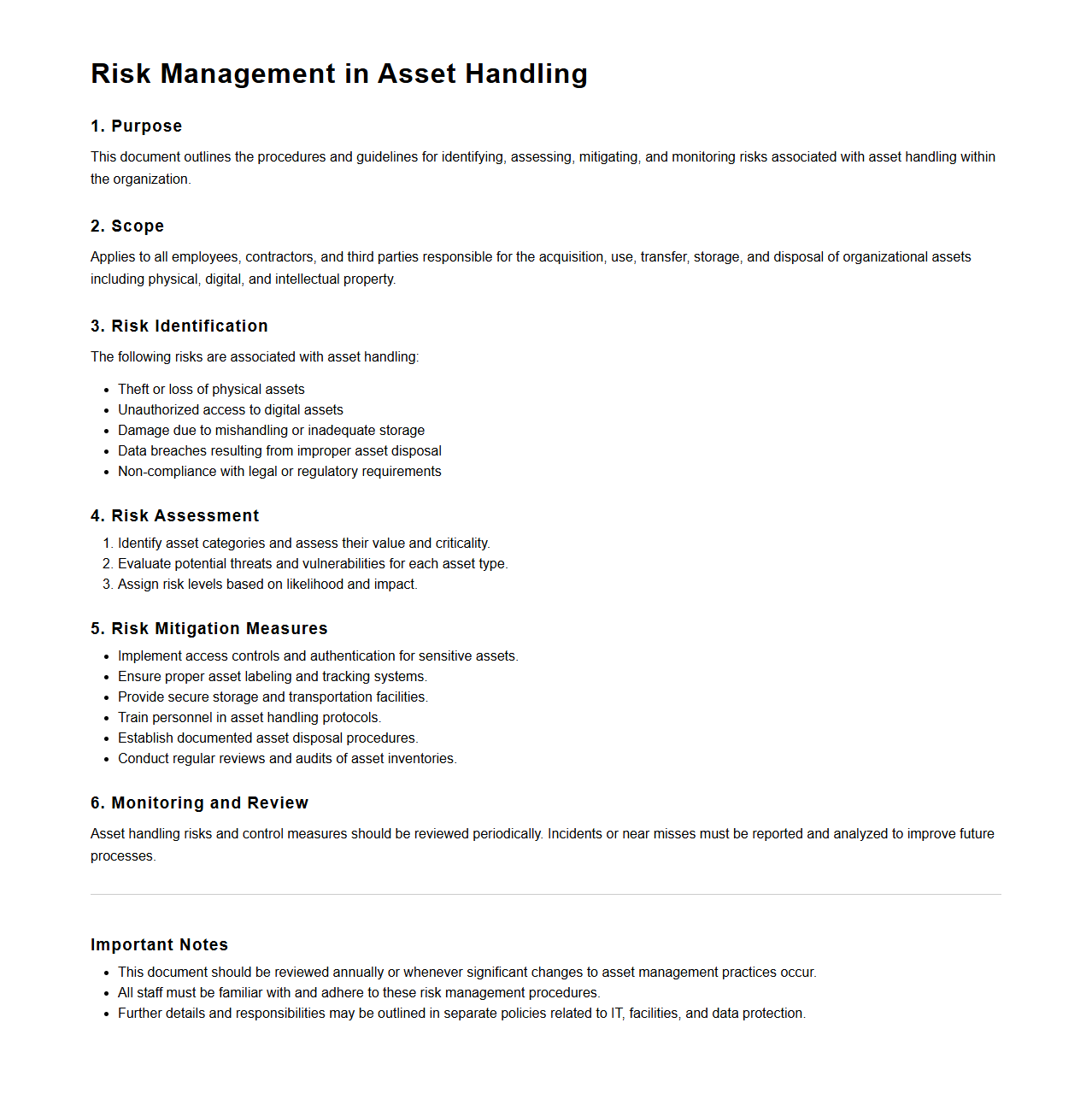
Risk Management in Asset Handling
Risk management in asset handling involves identifying, assessing, and mitigating potential threats to physical and digital assets to ensure their security and optimal utilization. This process includes evaluating risks such as theft, damage, loss, and operational failures, then implementing controls like insurance, security protocols, and regular audits. Effective
risk management minimizes financial losses and enhances the reliability and longevity of valuable assets.
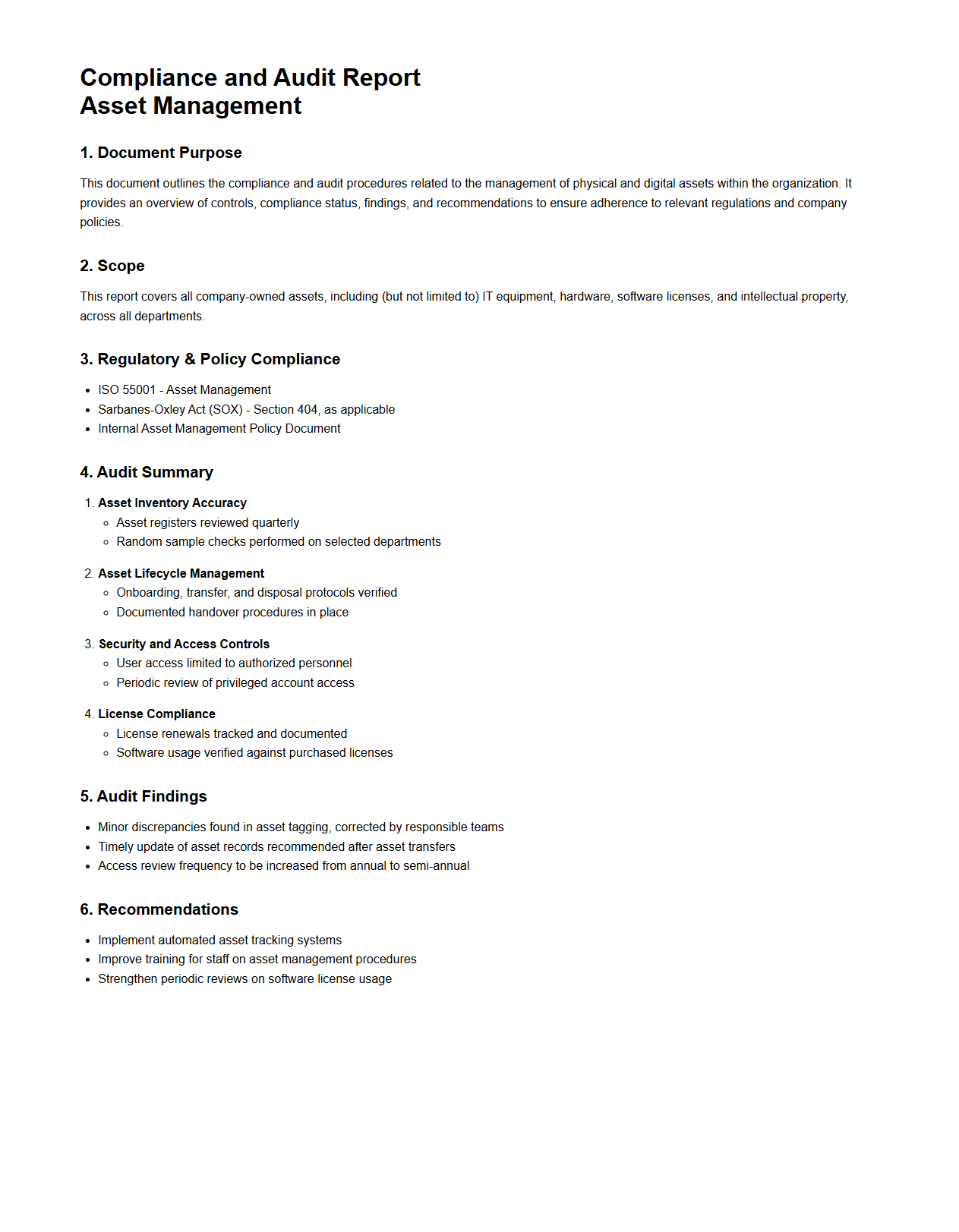
Compliance and Audit for Asset Management
A
Compliance and Audit for Asset Management document outlines the procedures and standards to ensure that asset management practices adhere to regulatory requirements and internal policies. It provides a framework for systematically reviewing asset records, verifying accuracy, and identifying discrepancies to mitigate risks and enhance accountability. This document serves as a critical tool for maintaining transparency and supporting organizational governance in managing physical and financial assets.
Key Sections in an Asset Management Policy Document
The Asset Management Policy should include sections like purpose, scope, and objectives to clearly define its intent. It must also outline asset classification, lifecycle management, roles and responsibilities, and compliance requirements. Including a section on monitoring, review, and continuous improvement ensures the policy remains effective over time.
Structuring Roles and Responsibilities within the Policy Document
The policy should clearly define roles and responsibilities at every organizational level to ensure accountability. Responsibilities for asset owners, managers, and custodians must be specified to facilitate proper asset handling. This structured approach promotes clarity and supports compliance with the asset management framework.
Essential Compliance and Governance Elements
Compliance with legal, regulatory, and internal requirements is a critical part of the policy. Governance elements must include procedures for audits, risk management, and reporting to uphold integrity. Defining these elements helps the organization manage assets responsibly and maintain regulatory adherence.
Defining Asset Classification and Lifecycle Management
The policy should provide a framework for asset classification based on type, value, and risk to streamline management. It must also outline the entire asset lifecycle, including acquisition, usage, maintenance, and disposal. This comprehensive management ensures assets are efficiently utilized and safeguarded throughout their lifecycle.
Procedures for Policy Review, Approval, and Updates
The document must establish a formal process for policy review and approval to keep it current and relevant. Scheduled updates and revision responsibilities should be clearly detailed to incorporate organizational or regulatory changes. This process guarantees that the policy evolves with the business environment and maintains compliance.