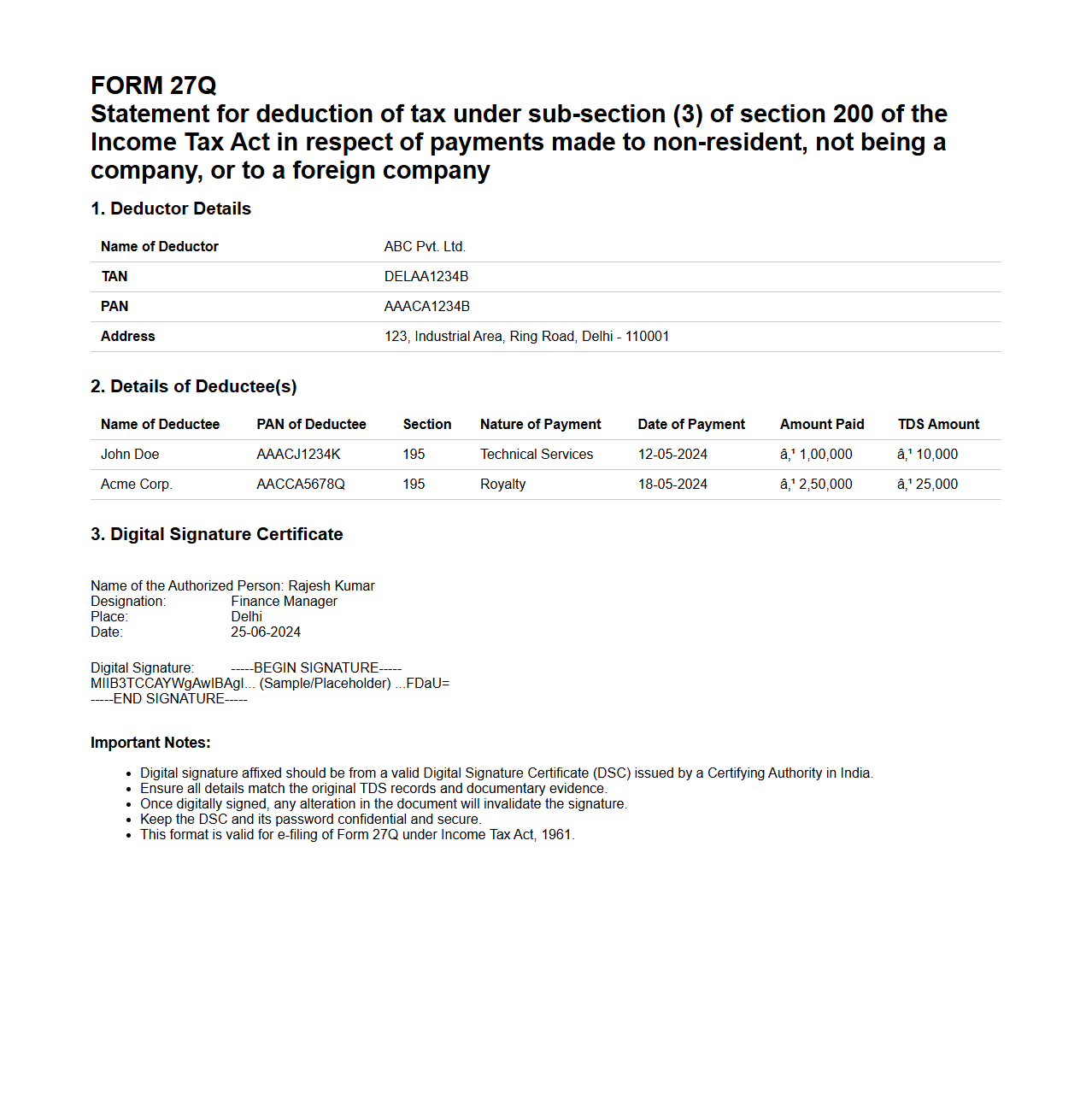
Overview of Form 27Q Document Format
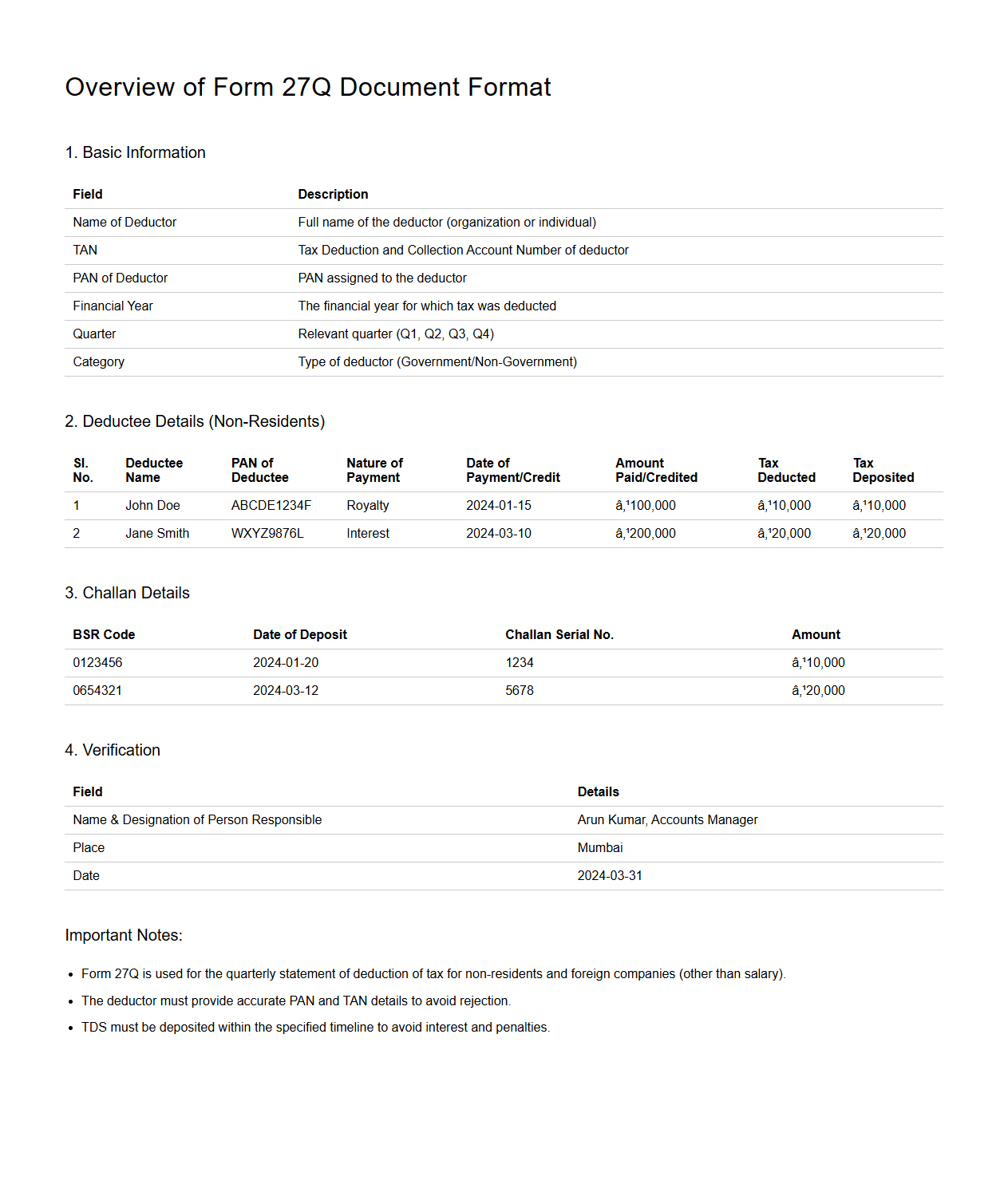
Form 27Q is a
document format used for tax deduction at source (TDS) compliance in India, specifically for payments made to non-resident individuals and foreign entities. It captures detailed information on tax withheld on these payments, including remitter details, deductee data, and transaction specifics, facilitating accurate reporting to the Income Tax Department. The format ensures standardized data submission, helping both deductors and tax authorities maintain transparency and compliance in cross-border financial transactions.
Mandatory Fields in Form 27Q
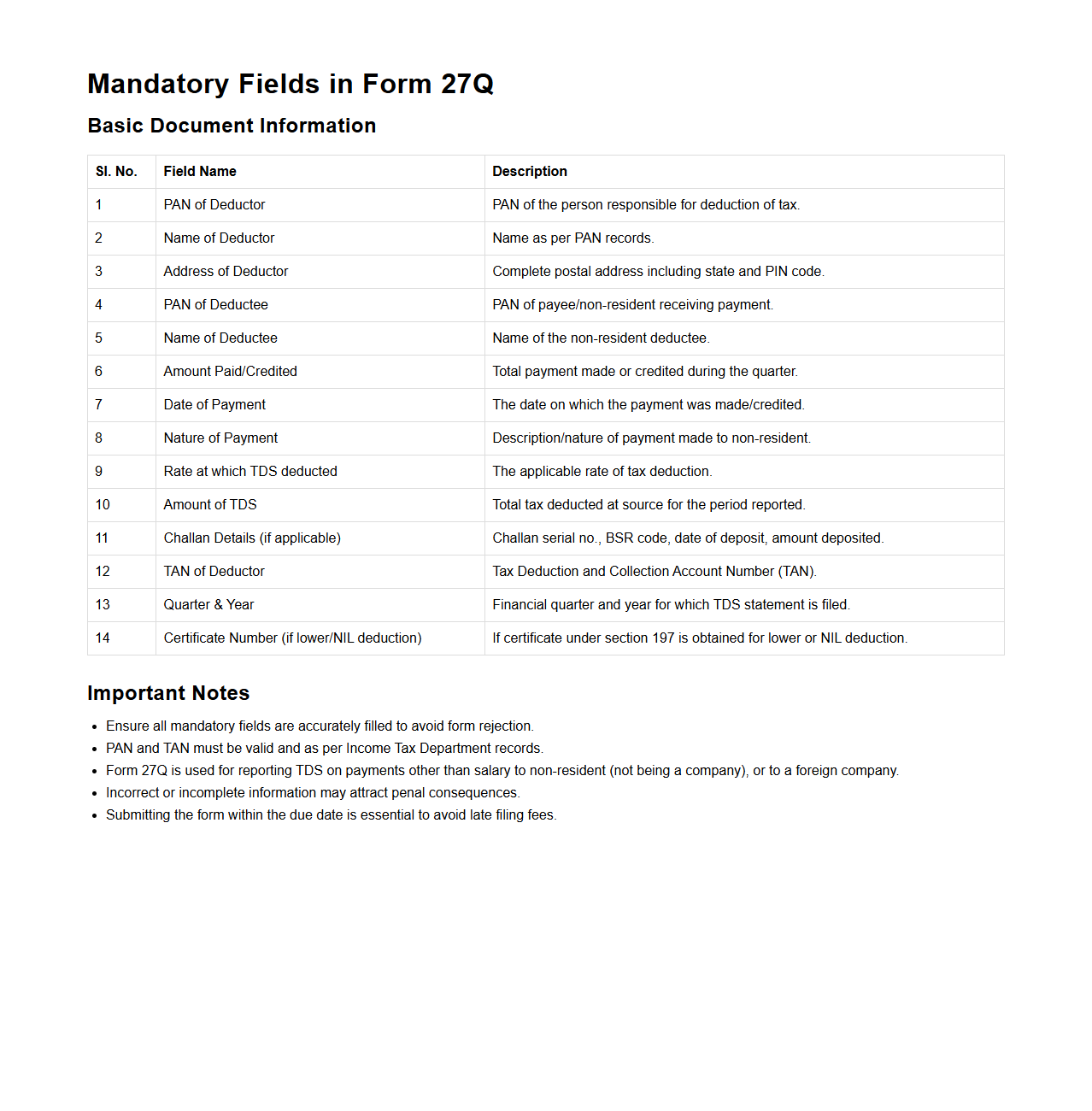
Mandatory fields in the
Form 27Q document are essential data points that must be accurately completed to ensure compliance with Indian tax regulations related to TDS (Tax Deducted at Source). These fields typically include details such as the deductor's and deductee's PAN, financial year, amount paid or credited, and TDS amount deducted. Properly filling these mandatory fields helps avoid processing delays, penalties, and ensures the correct reporting of TDS transactions to the Income Tax Department.
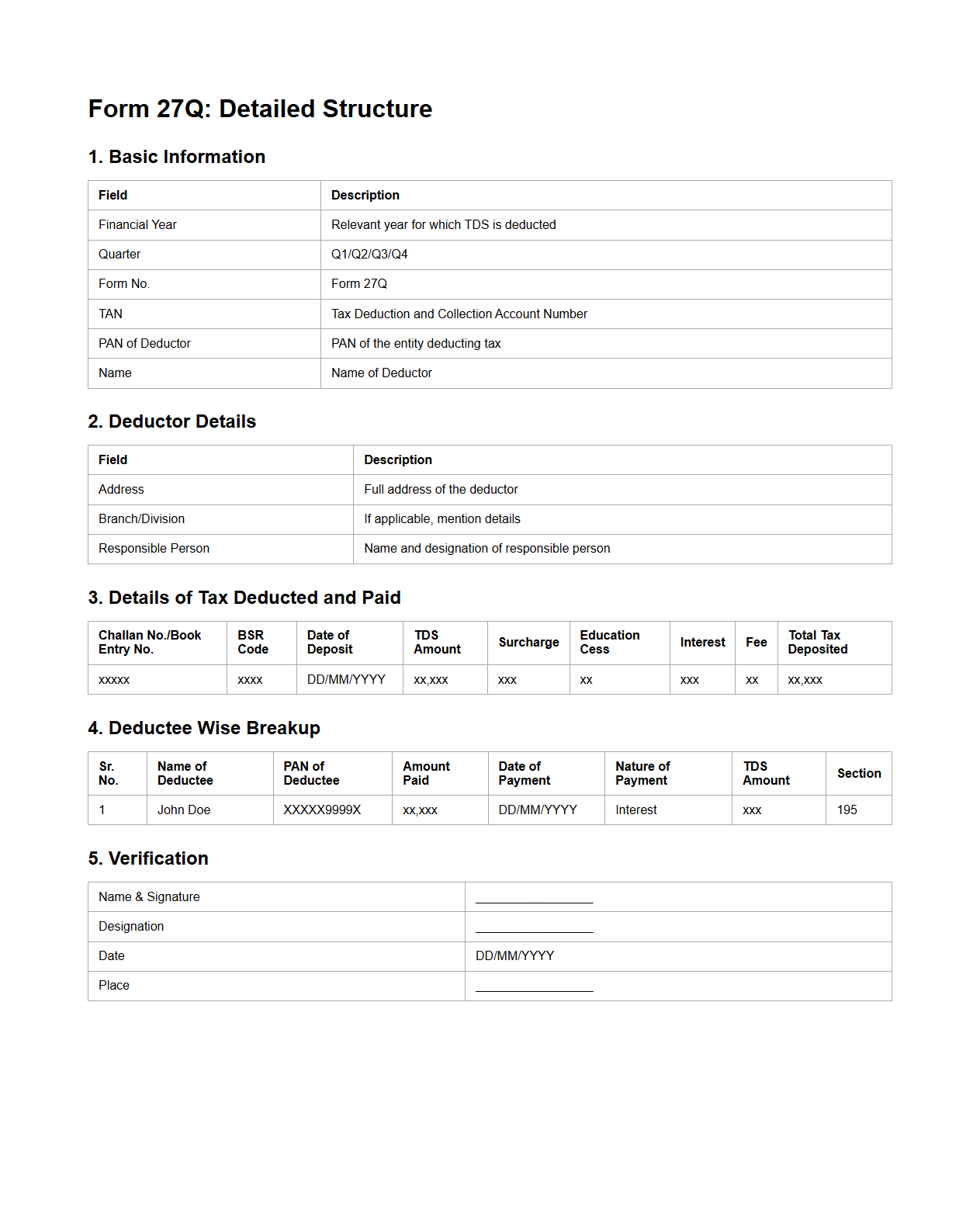
Detailed Structure of Form 27Q
Form 27Q is a crucial document for tax deduction at source (TDS) compliance, containing detailed information about payments made to non-resident individuals or entities. The detailed structure includes sections such as deductor's information, deductee's details, payment type, TDS rates applied, and challan details for tax deposited.
Accurate reporting in Form 27Q ensures proper credit of TDS and compliance with Income Tax Department regulations.
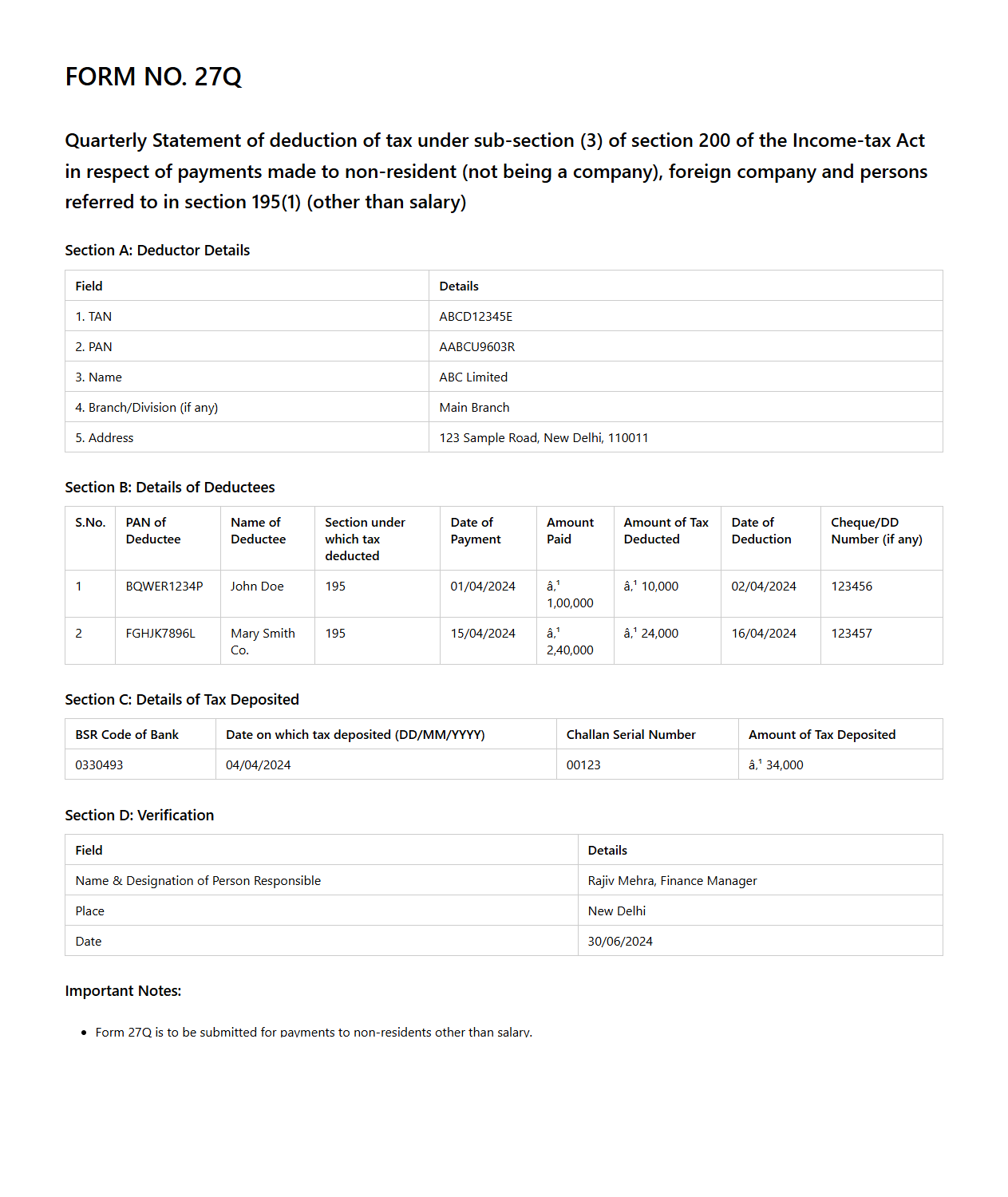
Form 27Q: Section-wise Table Format
Form 27Q: Section-wise Table Format document provides a structured summary of tax deduction details under the Income Tax Act, specifically focusing on deduction of tax at source (TDS) from payments made to non-resident individuals or entities. Each section in the table corresponds to distinct categories such as interest, dividends, or royalties, detailing the deductor, deductee, amount paid, and the tax deducted. This
document aids in compliance and accurate reporting of TDS, facilitating effective tax administration and record-keeping.
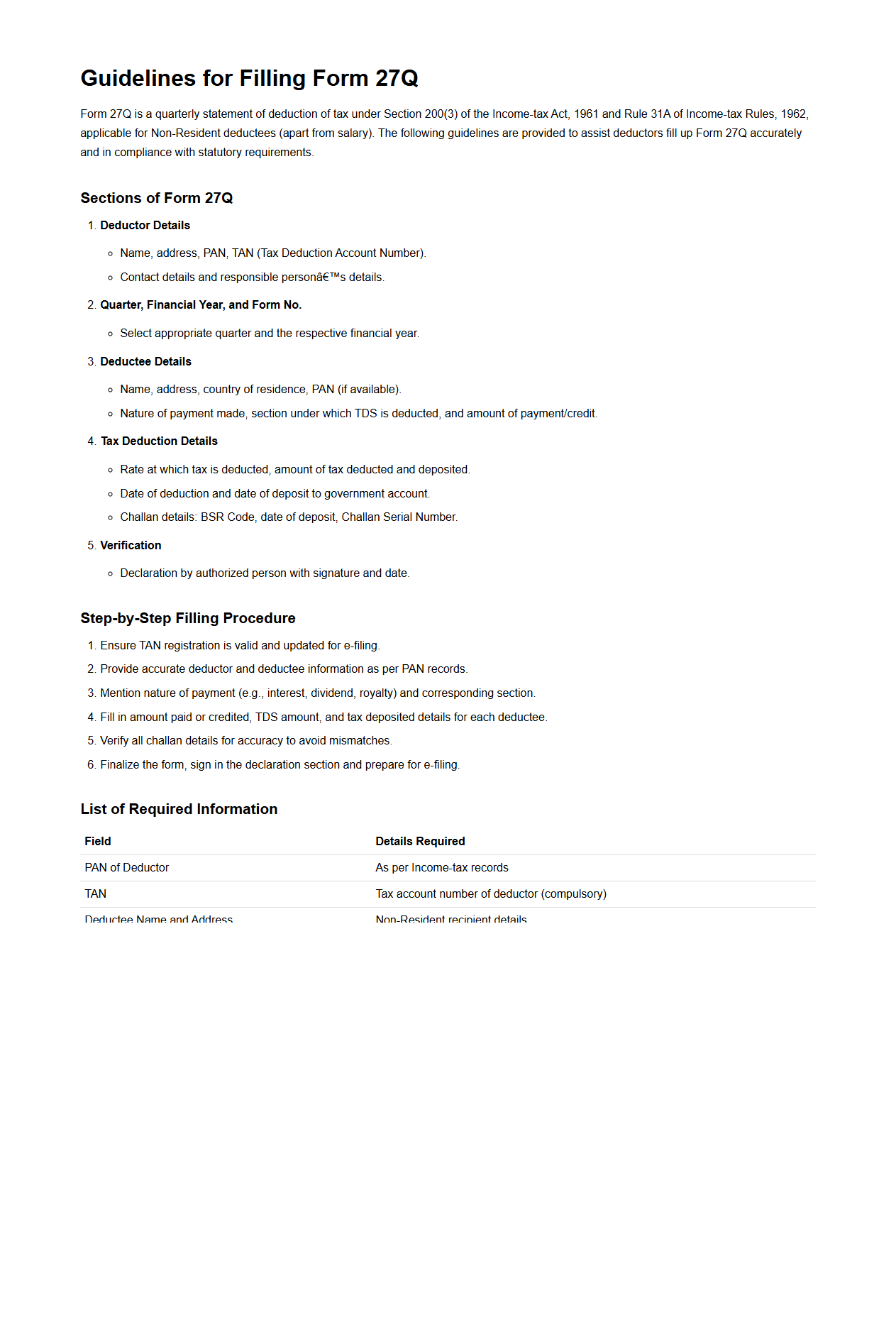
Guidelines for Filling Form 27Q
Guidelines for filling
Form 27Q ensure accurate reporting of tax deducted at source (TDS) on payments made to non-resident individuals or foreign companies. The form requires detailed information such as deductor and deductee details, TDS amount, nature of payment, and applicable rates according to Indian tax laws. Adhering to these guidelines prevents penalties and facilitates compliance with Income Tax Department requirements.
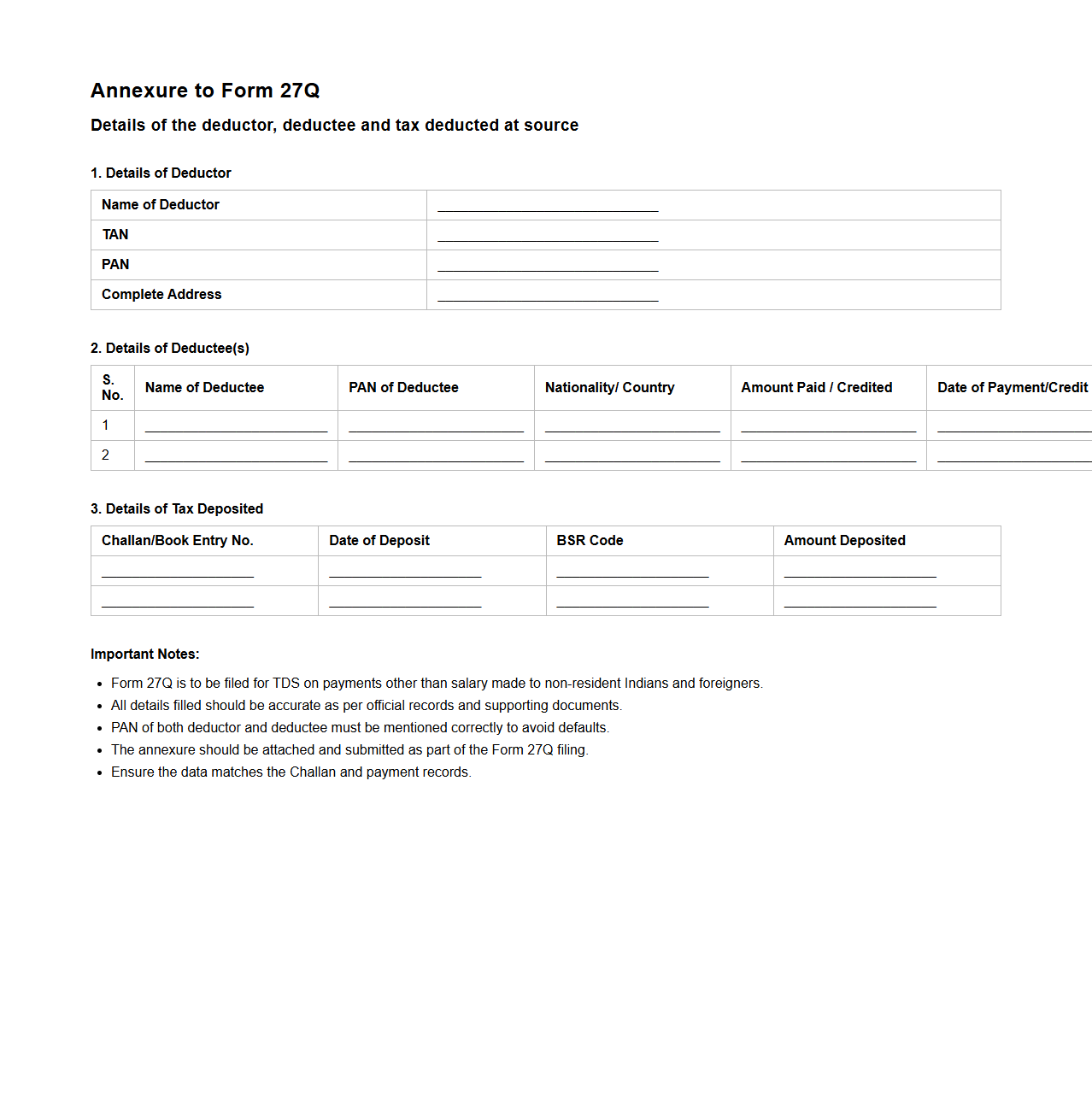
Annexure Format in Form 27Q
The
Annexure Format in Form 27Q is a structured template used to report details of tax deducted at source (TDS) on payments made to non-residents. It organizes critical information such as the deductor's and deductee's details, nature of payment, TDS rates, and amounts deducted and deposited, ensuring compliance with Indian tax regulations. Accurate use of this format facilitates effective tax credit claim and smooth processing by the Income Tax Department.
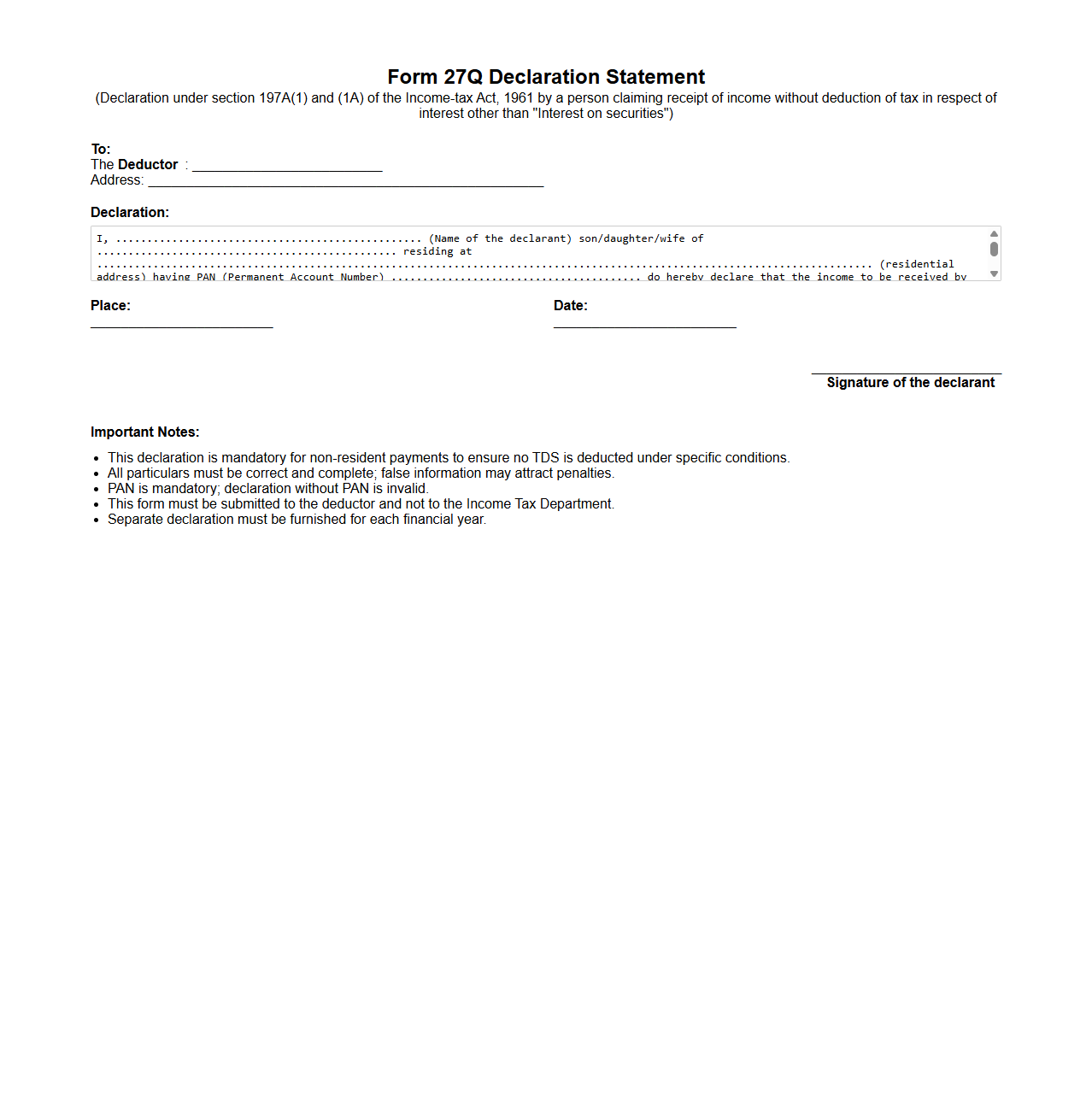
Form 27Q Declaration Statement Format
Form 27Q Declaration Statement Format is a
compliance document used under the Income Tax Act of India to report and declare tax deduction at source (TDS) on payments made to non-resident individuals or entities. This format ensures accurate submission of tax details by deductors to the Income Tax Department, facilitating proper tax credit to the deductee. The document captures essential information including deductor and deductee details, TDS rates, and amounts withheld, maintaining transparency and regulatory adherence.
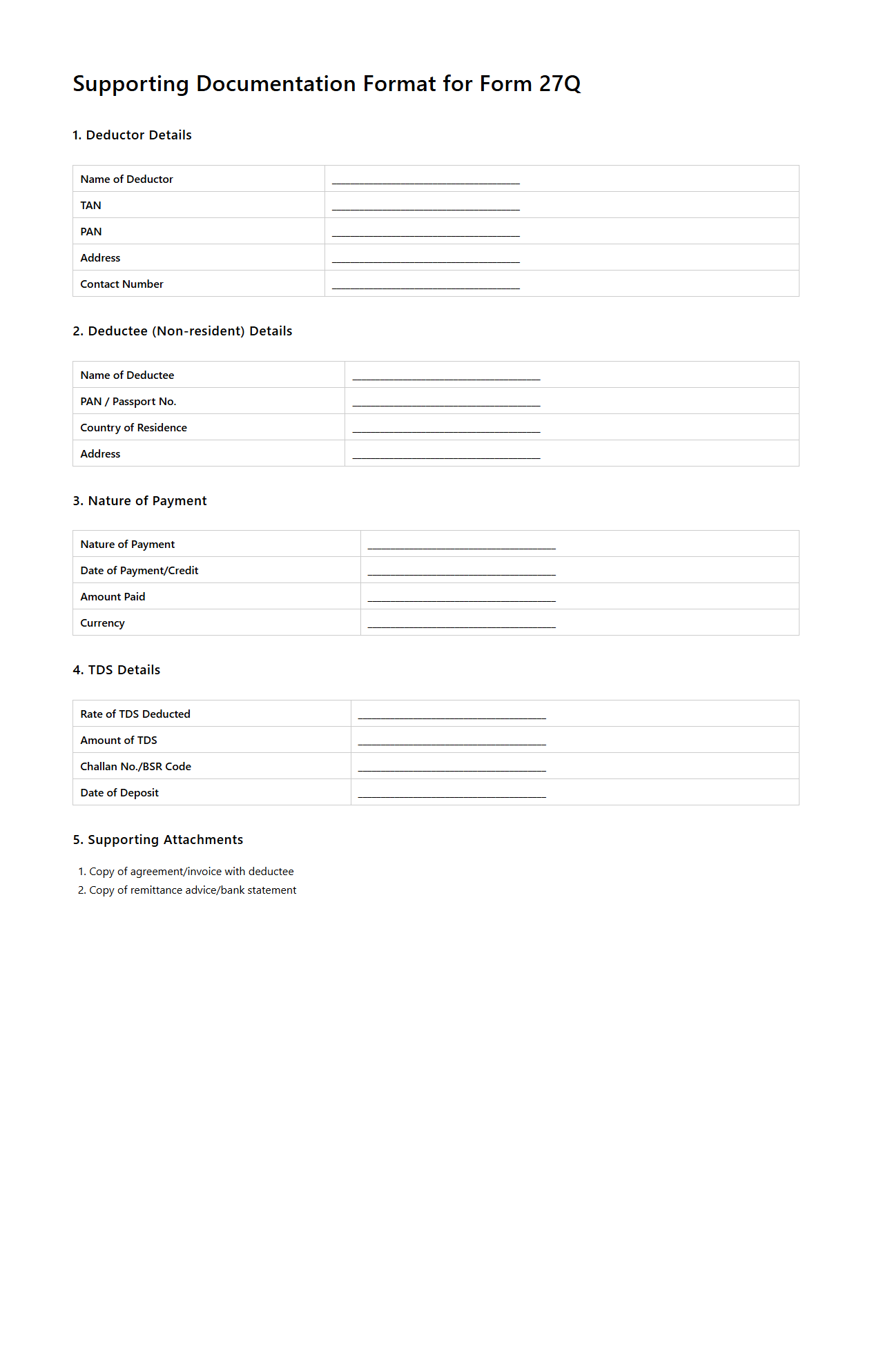
Supporting Documentation Format for Form 27Q
Supporting Documentation Format for
Form 27Q is a structured arrangement of documents submitted to the Income Tax Department in India to verify and validate the details of tax deducted at source (TDS) on payments made to non-resident individuals or entities. These documents typically include certificates, declarations, and proofs related to the transaction, ensuring compliance with tax regulations under Section 195 of the Income Tax Act. Properly formatted supporting documentation helps avoid discrepancies and facilitates smooth processing of TDS returns.
Digital Signature Format in Form 27Q
The
Digital Signature Format in Form 27Q is a secure method used to authenticate the identity of the person submitting the document electronically. It ensures data integrity and non-repudiation by encrypting the signer's credentials, making the submission legally valid under Indian tax regulations. This format complies with the guidelines prescribed by the Income Tax Department for electronic filing and verification of TDS statements.
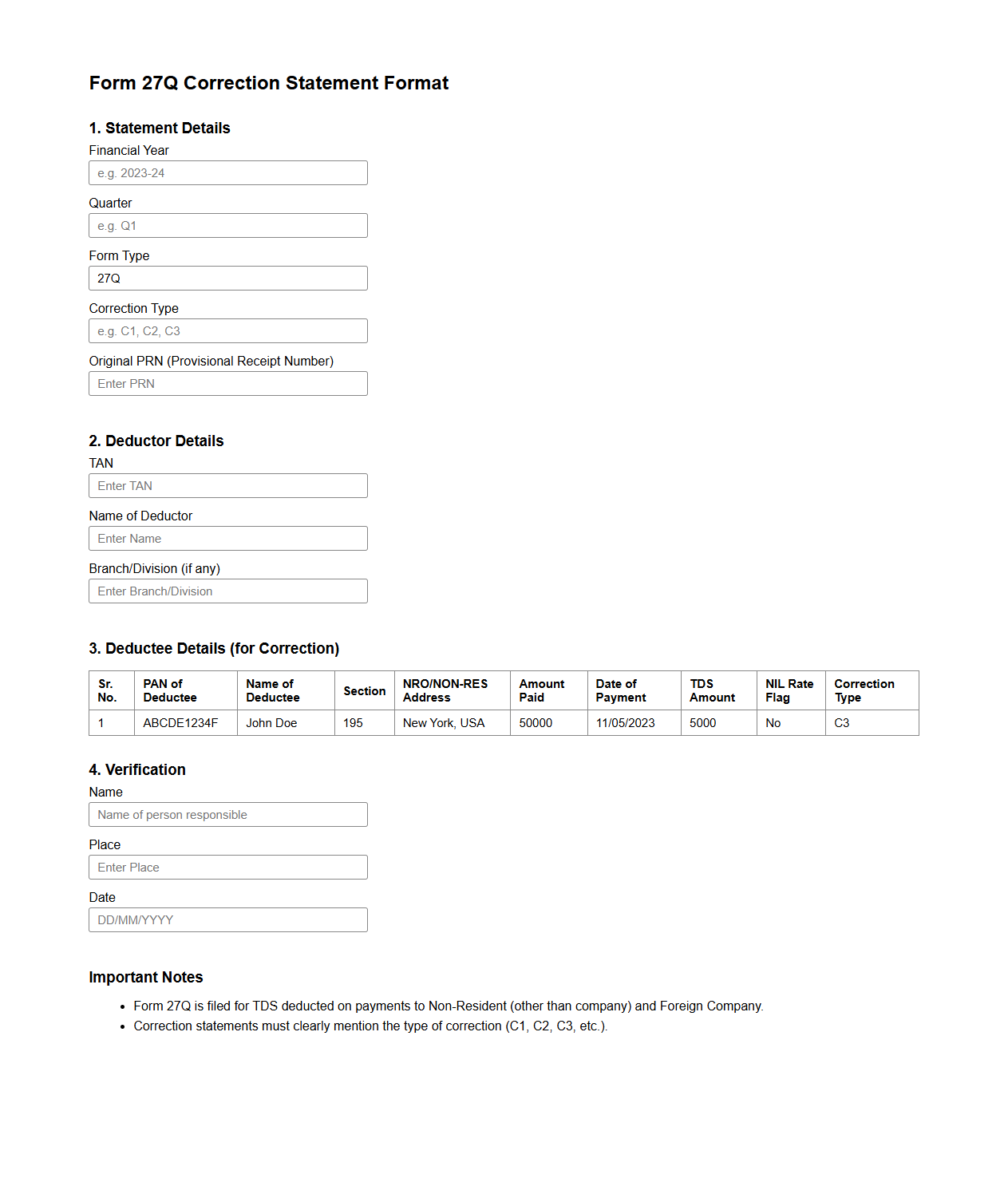
Form 27Q Correction Statement Format
Form 27Q Correction Statement Format is a document used for rectifying errors in the original Form 27Q filed for withholding tax returns on payments made to non-residents. It ensures compliance with the Income Tax Department's requirements by providing corrected details of income, tax deducted, and remitted, thereby maintaining accurate tax records. The
Form 27Q Correction Statement is crucial for avoiding discrepancies and penalties related to improper tax reporting.
What are the mandatory fields in the Form 27Q challan details section?
The mandatory fields in the Form 27Q challan details section include the BSR code, challan serial number, and the date of deposit. These details are crucial for linking the tax payment to the deductor's account accurately. Ensuring these fields are correctly filled helps prevent processing errors and delays.
How should country code be entered for non-resident deductees in Form 27Q?
The country code for non-resident deductees in Form 27Q must be entered as per the ISO 3166 standard. This ensures uniform identification of the country of residence for the deductee. Using the correct country code is essential for accurate tax treaty benefits and compliance.
Which annexure is to be filled for multiple deductees in Form 27Q?
The Annexure II is to be filled when reporting details for multiple deductees in Form 27Q. This annexure helps consolidate information, making the filing process streamlined and organized. Properly completing Annexure II ensures all deductees are accounted for without errors.
What is the correct format for furnishing PAN details in Form 27Q?
The PAN details in Form 27Q must be furnished in the exact 10-character alphanumeric format without any spaces or special characters. Accuracy in entering PAN is critical for validating the deductee's tax records. Incorrect PAN format can lead to rejection of the statement or processing issues.
How is the nature of remittance specified in the Form 27Q statement?
The nature of remittance in the Form 27Q statement should be specified using the prescribed codes provided by the Income Tax Department. These codes categorize the type of payment made, such as interest, dividend, or royalties. Correct specification helps in proper tax deduction and reporting under the applicable sections.