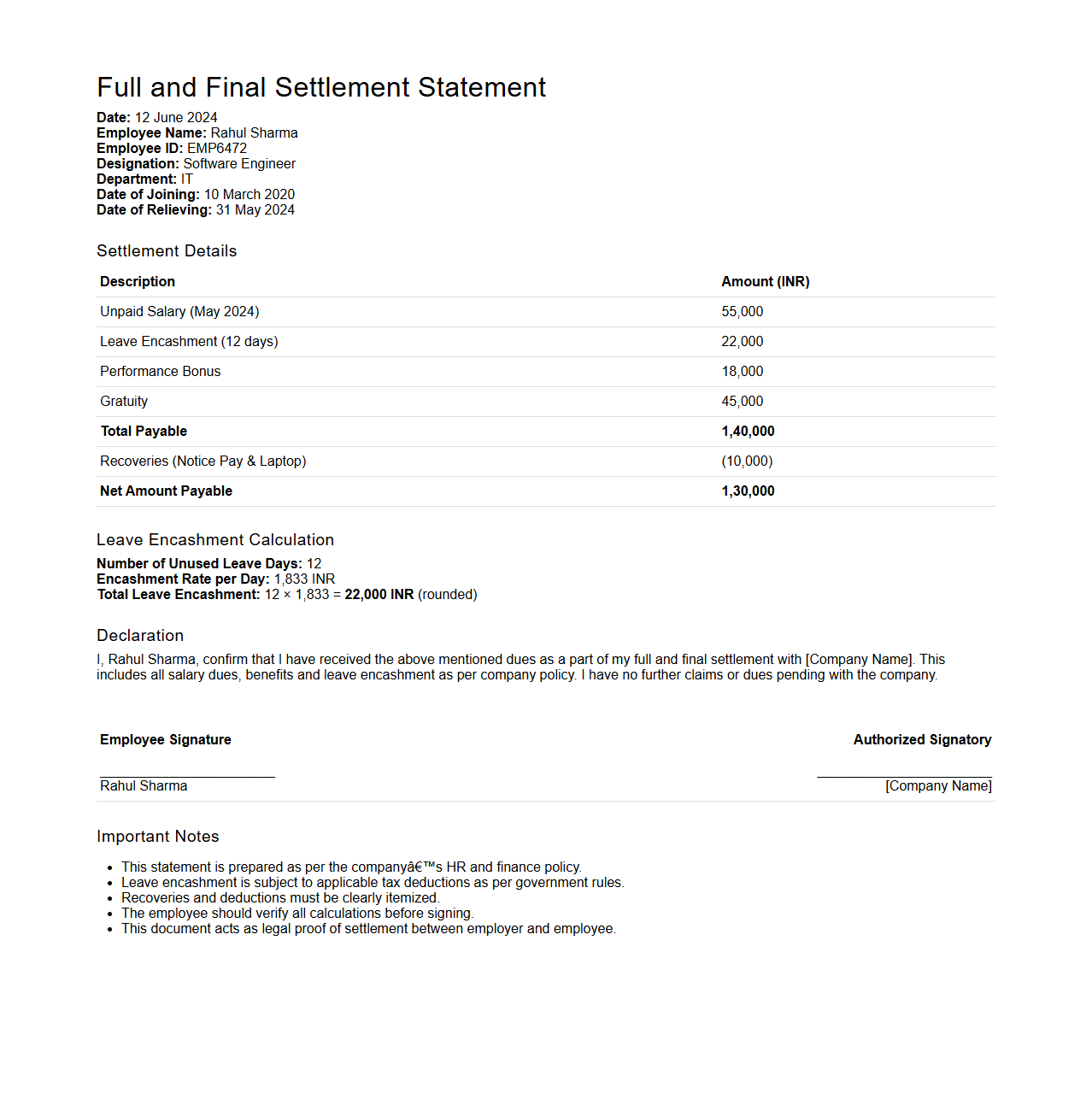
The Format of Full and Final Settlement Statement for Employees typically includes crucial details such as the employee's name, designation, and employment period. It outlines all dues and deductions, including salary, leave encashment, bonuses, and statutory payments, culminating in the net settlement amount. This structured format ensures transparency and clarity in finalizing employee accounts after resignation or termination.
Standard Employee Full and Final Settlement Statement
The
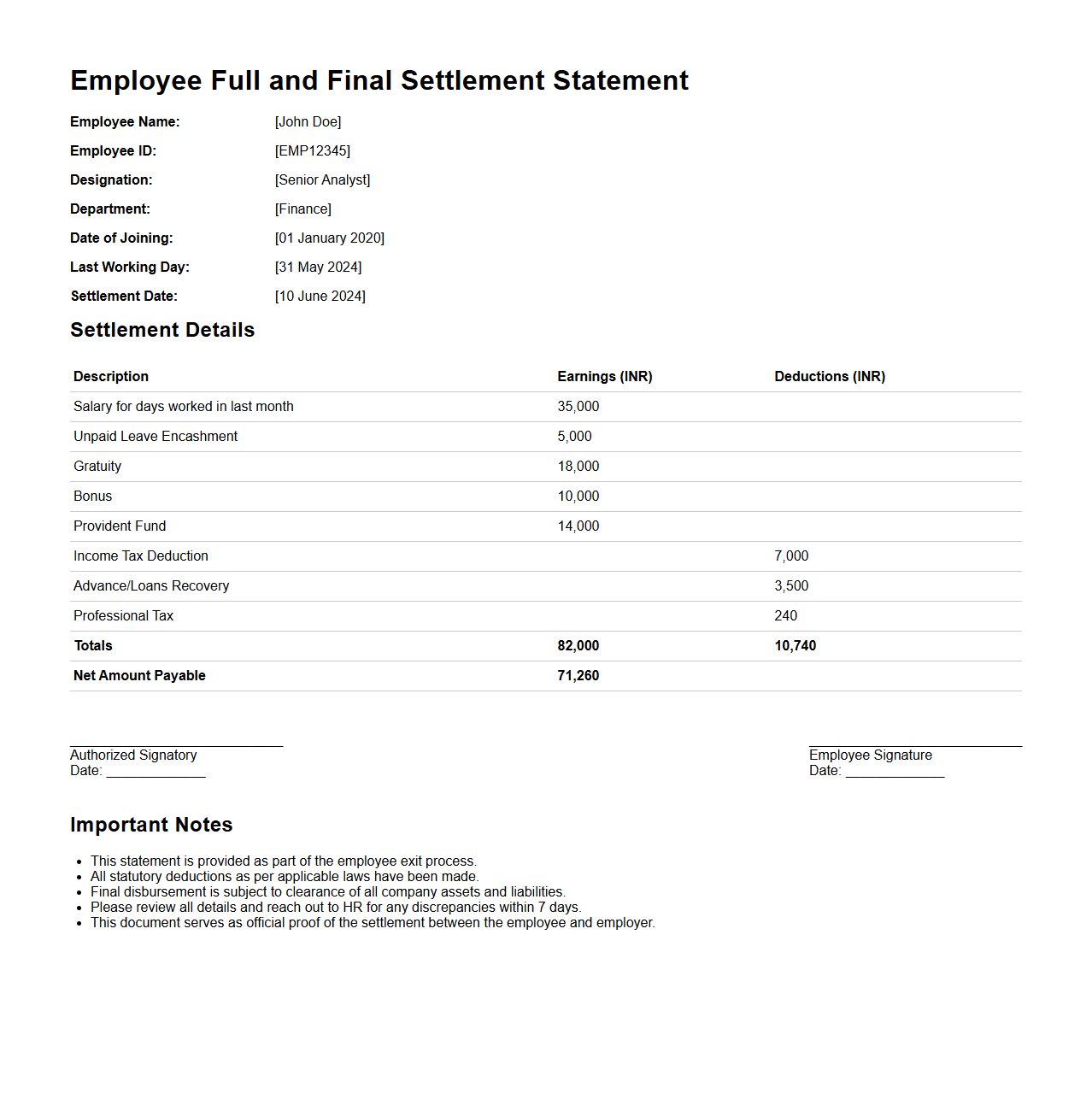
Standard Employee Full and Final Settlement Statement document details the comprehensive financial summary provided to an employee upon termination or resignation. It includes all dues such as salary, bonuses, leave encashment, deductions for loans or advances, and any statutory payments like provident fund or gratuity. This statement ensures transparency and closure by clearly outlining the final amounts payable to the employee.
Simplified Full and Final Settlement Form
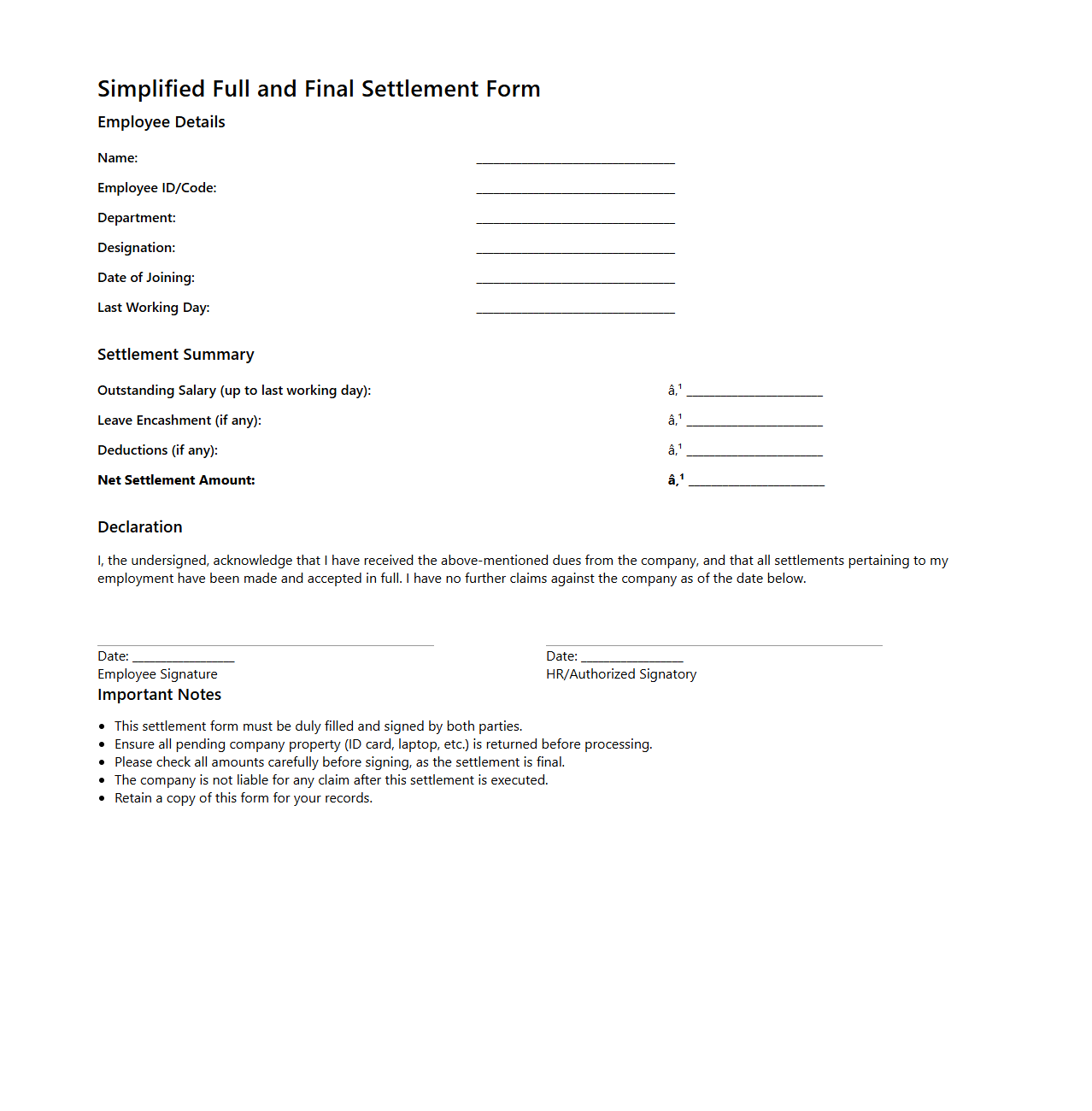
A
Simplified Full and Final Settlement Form is a legal document used to confirm the completion of financial transactions between two parties, ensuring all dues have been cleared. It typically outlines the agreed-upon amount, payment details, and serves as proof that no further claims will be made. This form minimizes dispute risks by providing clear, mutual acknowledgment of final settlement terms.
Consolidated Employee Settlement Statement Template
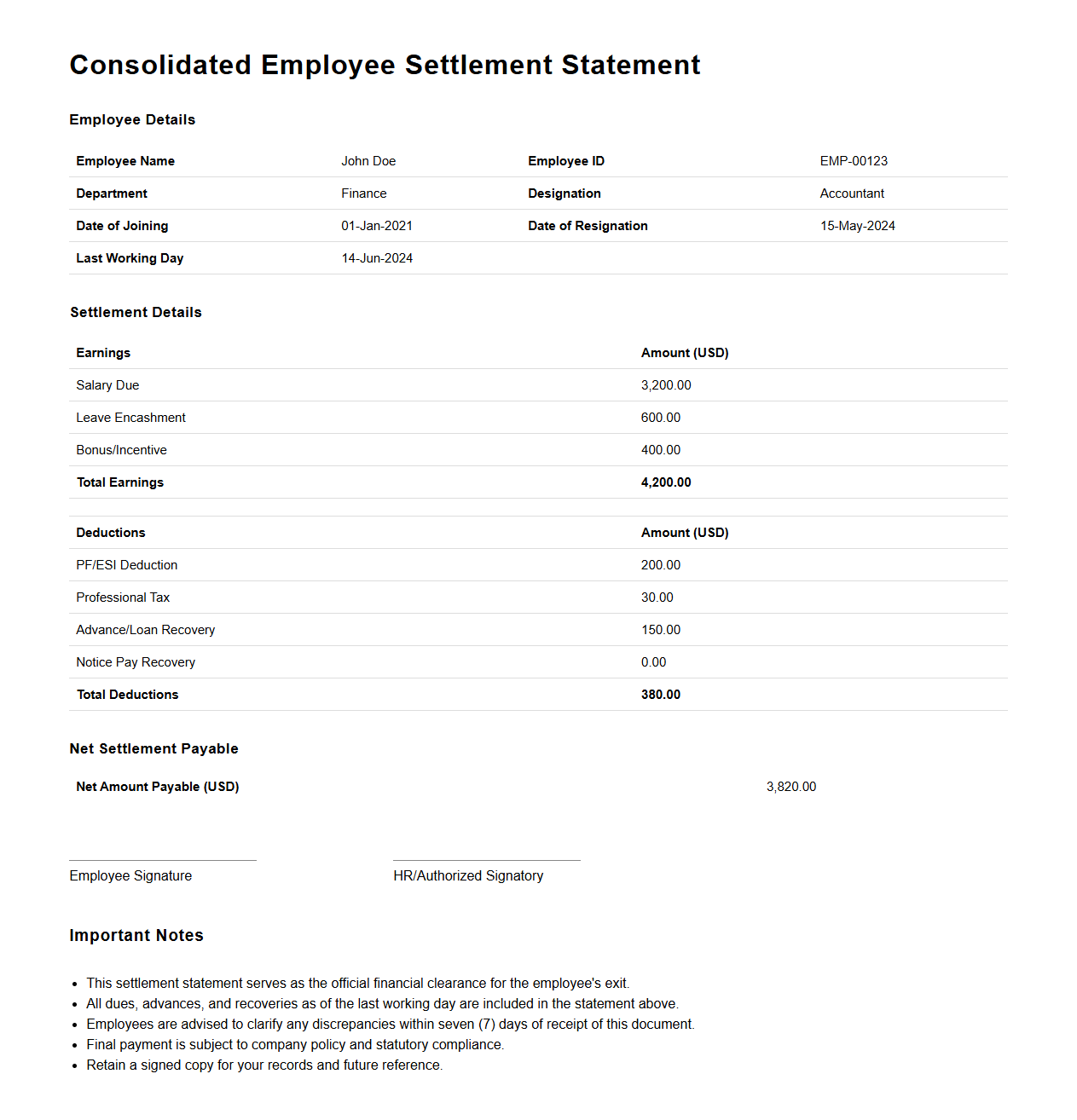
A
Consolidated Employee Settlement Statement Template document provides a comprehensive overview of all final payments and deductions made to an employee upon exit from an organization. It consolidates information such as salary arrears, bonuses, leave encashments, tax deductions, and other financial settlements into a clear, organized format. This template ensures transparency and accuracy in employee exit settlements, facilitating smooth payroll processing and record-keeping.
Detailed Salary and Dues Clearance Format
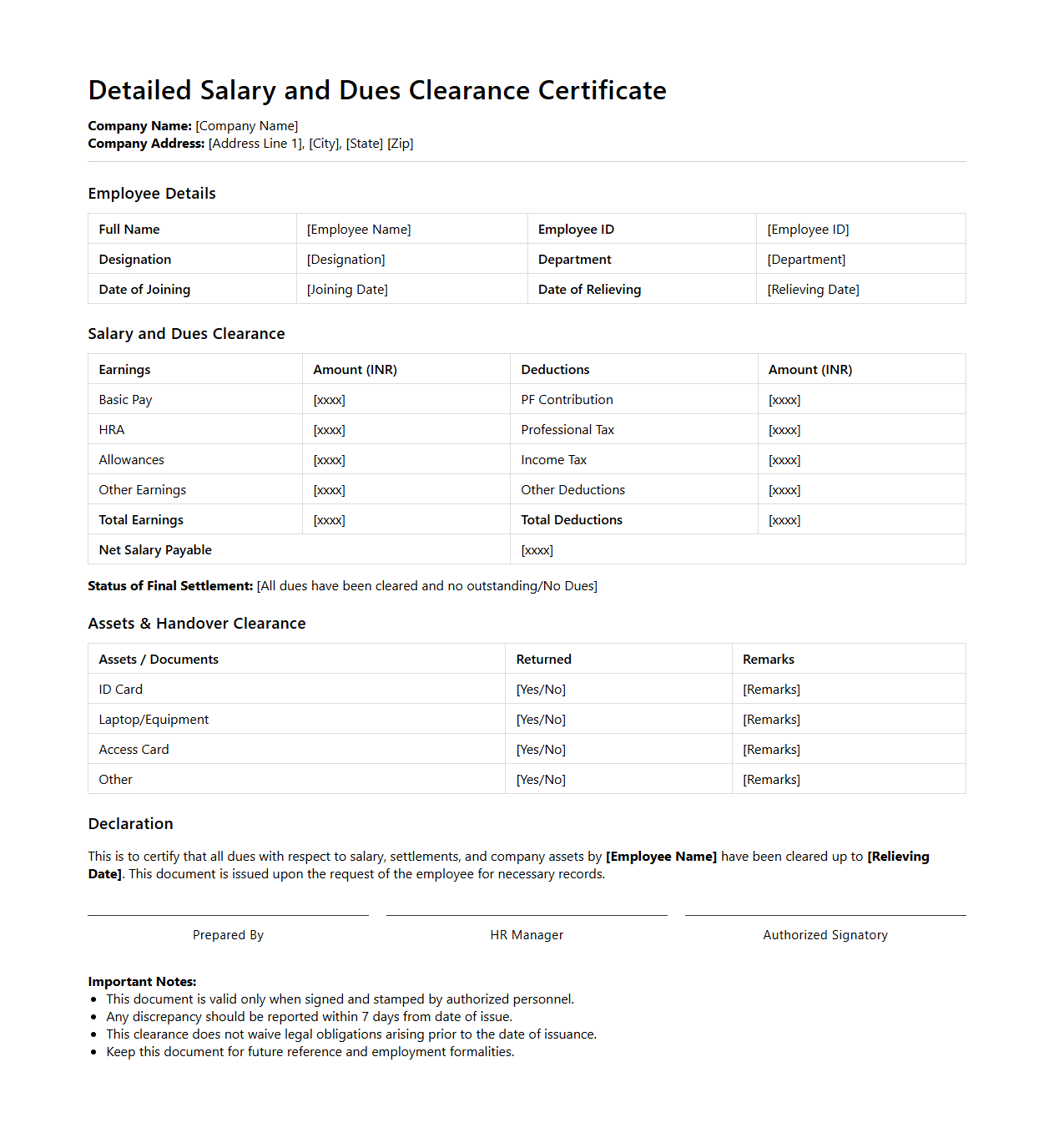
A
Detailed Salary and Dues Clearance Format document serves as a comprehensive record outlining an employee's final salary calculations, including earnings, deductions, and any pending dues during the exit process. This format ensures transparency by itemizing components such as unpaid leaves, bonuses, tax deductions, and reimbursements, facilitating smooth financial settlement. Employers use this document to confirm all monetary obligations are settled before releasing clearance certificates or relieving letters.
Final Payment and Deduction Record Sheet
The
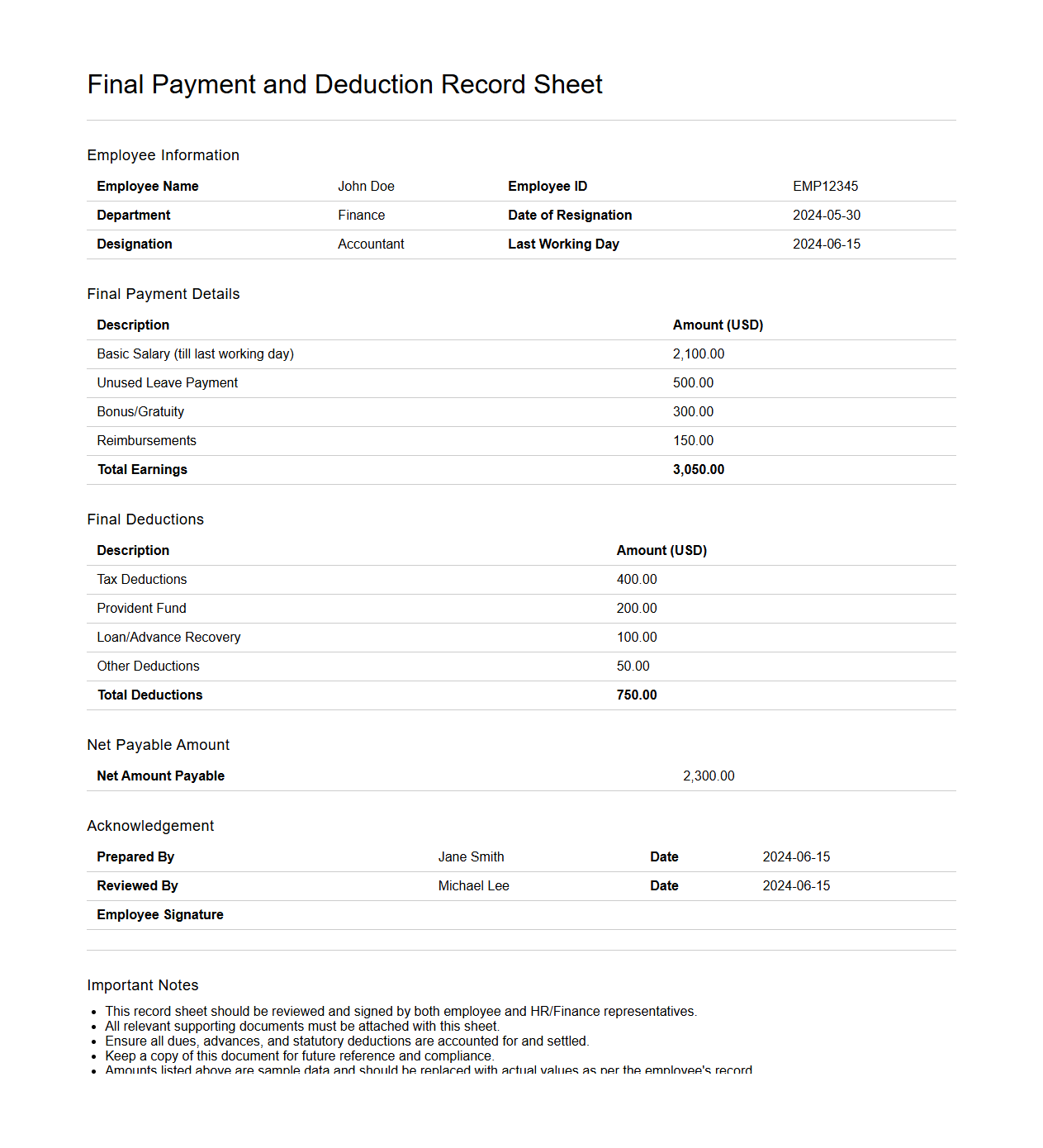
Final Payment and Deduction Record Sheet is a crucial document used to detail the complete summary of payments made and deductions applied to an employee's salary. It ensures transparency by itemizing all earnings, taxes, benefits, and any other withholdings during the final settlement process. Employers and employees rely on this sheet to verify accurate financial transactions and resolve any payment discrepancies before closing the employment account.
Exit Clearance and Settlement Acknowledgement Form
The
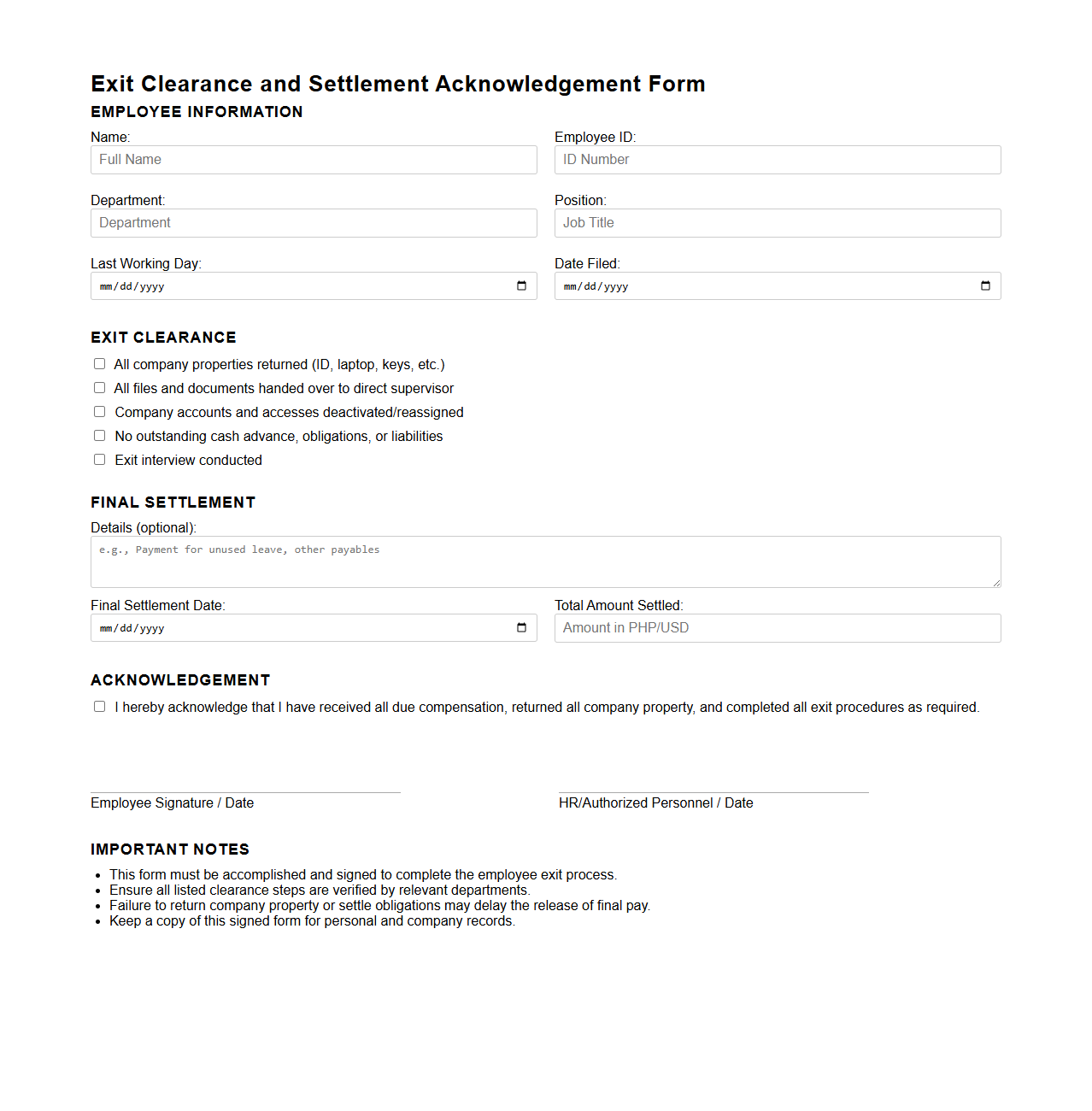
Exit Clearance and Settlement Acknowledgement Form is a critical document used in employee offboarding processes to ensure all company assets are returned and outstanding dues are settled before departure. It provides a formal record that both the employer and employee have agreed on the settlement of any financial obligations, such as unpaid salaries, loans, or advances. This form helps prevent future disputes by clearly documenting the clearance of responsibilities and final settlement.
Full and Final Settlement with Reason for Exit
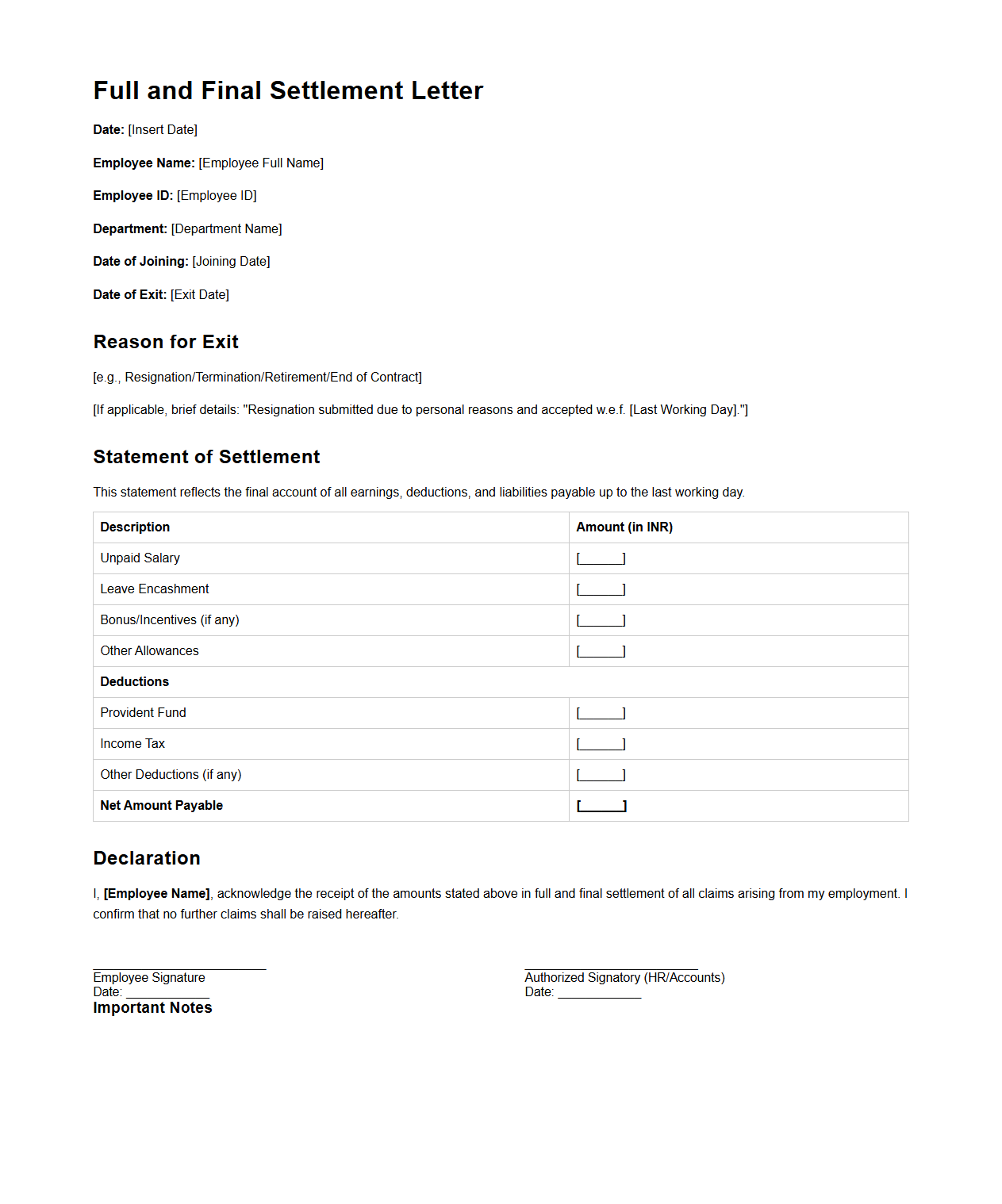
Full and Final Settlement is a
complete closure of all financial transactions between an employer and an employee upon termination of employment, ensuring no outstanding dues remain. The Reason for Exit document serves as an official record stating the cause of separation, facilitating transparency and compliance for both parties. This document is crucial for accurate settlement processing, legal validation, and future reference for employment verification.
Customized Final Settlement and Waiver Document
The
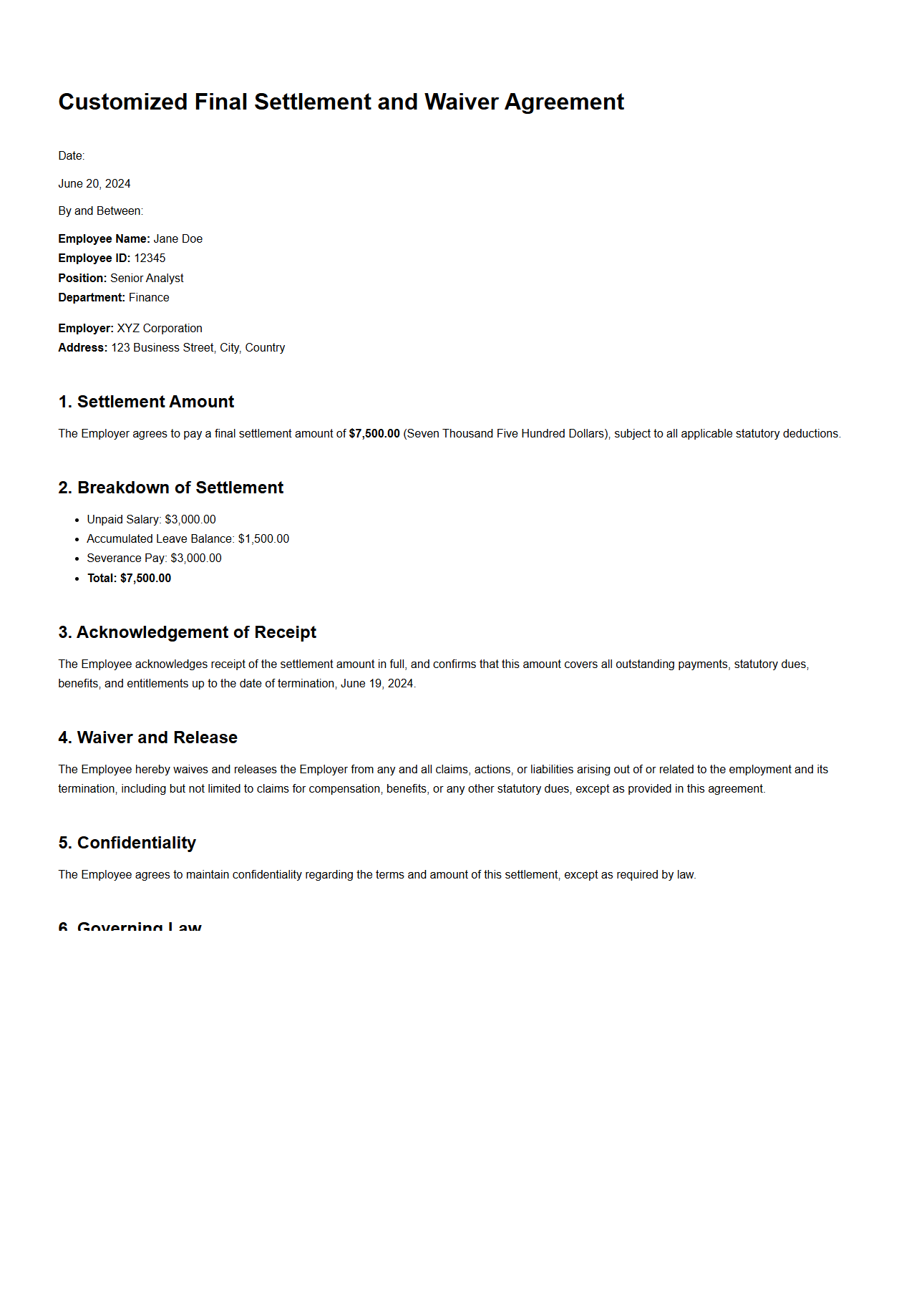
Customized Final Settlement and Waiver Document is a legally binding agreement tailored to finalize all financial transactions and obligations between parties, ensuring clear resolution of disputes or claims. It outlines specific terms for settlement amounts, release of liabilities, and waiver of future claims, providing protection against potential legal actions. This document is crucial for businesses and individuals seeking a definitive closure in financial or contractual disputes.
Departmental Clearance-based Settlement Format
The
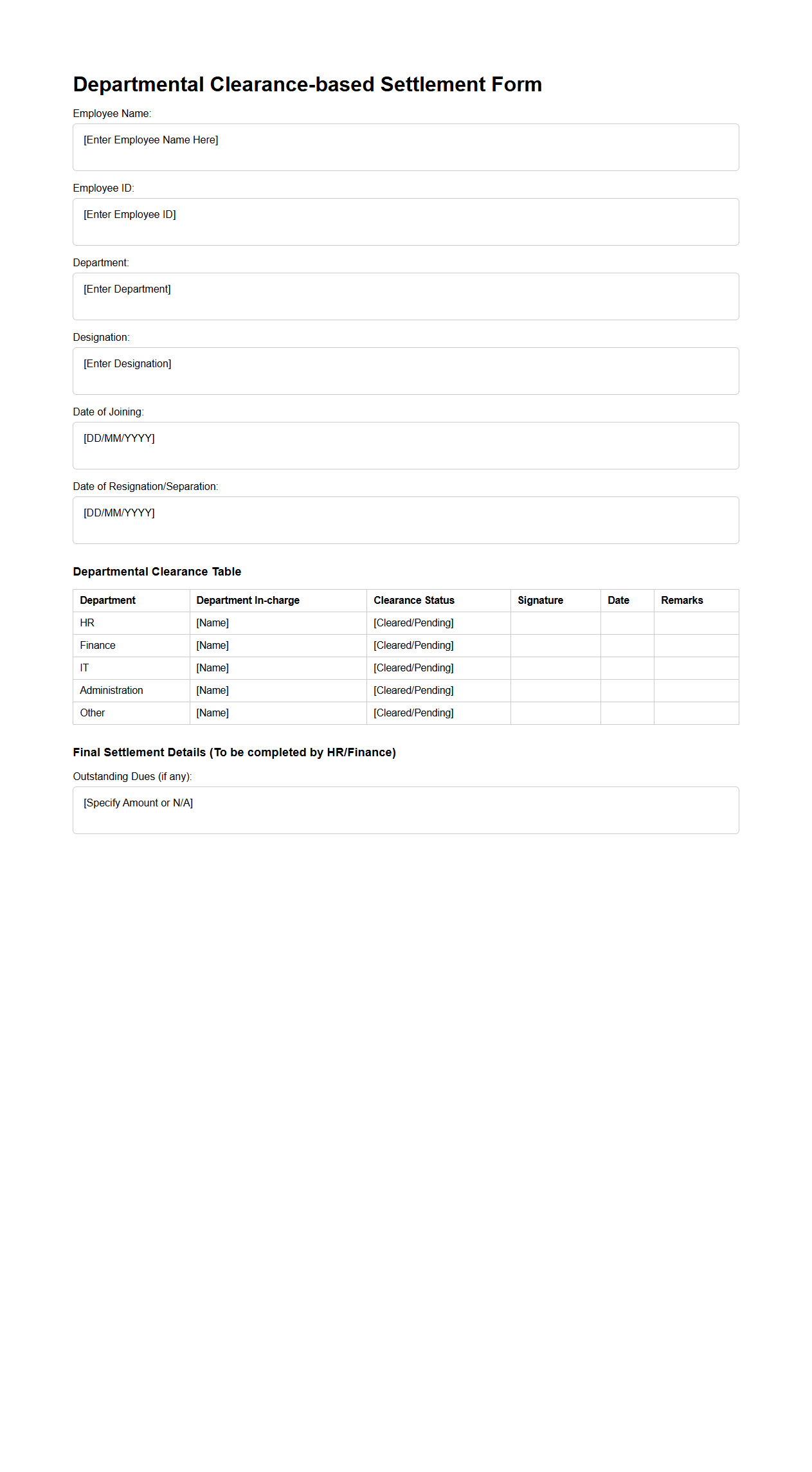
Departmental Clearance-based Settlement Format document serves as an official record used to ensure all pending dues, assets, and responsibilities are cleared before an employee's separation from an organization. This document facilitates a systematic review and approval process involving various departments, guaranteeing that salary settlements, loan recoveries, and asset returns are accurately accounted for. It is critical in preventing financial discrepancies and maintaining transparent human resource and financial management practices.
Full and Final Settlement with Leave Encashment Section
The
Full and Final Settlement with Leave Encashment Section document outlines the comprehensive process of settling all dues between an employer and employee upon the termination of employment. This document details the calculation and payment of pending salaries, bonuses, gratuity, and the monetary value of accumulated but unused leave, ensuring transparent and timely closure of financial obligations. It serves as a critical record to prevent future disputes and confirms that both parties have mutually agreed to the final financial settlement.
Mandatory Components in a Full and Final Settlement Statement for Employees
The Full and Final Settlement statement must include the employee's detailed salary calculations up to the last working day. It should mention all dues, including unpaid salaries, leave encashment, bonuses, and any other applicable payments. Additionally, it must clearly state any deductions applied and the net payable amount.
Legal References to Cite within the Settlement Letter Format
The settlement letter should cite relevant labor laws such as the Payment of Wages Act, Employment Contract clauses, and any state-specific labor regulations. It is essential to mention compliance with statutory provisions to avoid future disputes. Clear reference to the employee's rights under the Industrial Employment (Standing Orders) Act is also advised.
Calculation and Representation of Leave Encashment in the Settlement Document
Leave encashment is calculated based on the number of earned but unused leave days multiplied by the daily wage rate. The settlement document should represent this amount separately under earnings to maintain transparency. It must also specify the leave balance considered for encashment and the calculation formula.
Standard Deductions Listed on the Full and Final Settlement Statement
Common deductions include provident fund contributions, tax deductions at source (TDS), loan repayments, and any advances previously taken by the employee. The statement should itemize each deduction with corresponding amounts and justifications. This clarity helps in building trust and legal compliance.
Formatting Company Acceptance and Employee Acknowledgment in the Letter
The letter should conclude with a section for company acceptance including authorized signatory details and date. Following this, a clear employee acknowledgment block must be provided for signature, name, and date. Both sections affirm mutual agreement on the full and final settlement terms.