A Compliance Remediation Plan for Non-Conformance outlines the specific steps an organization will take to address and rectify identified compliance issues. The format typically includes a detailed description of the non-conformance, root cause analysis, corrective actions, responsible personnel, and timelines for implementation. Clear documentation ensures accountability and facilitates effective monitoring and verification of compliance restoration.
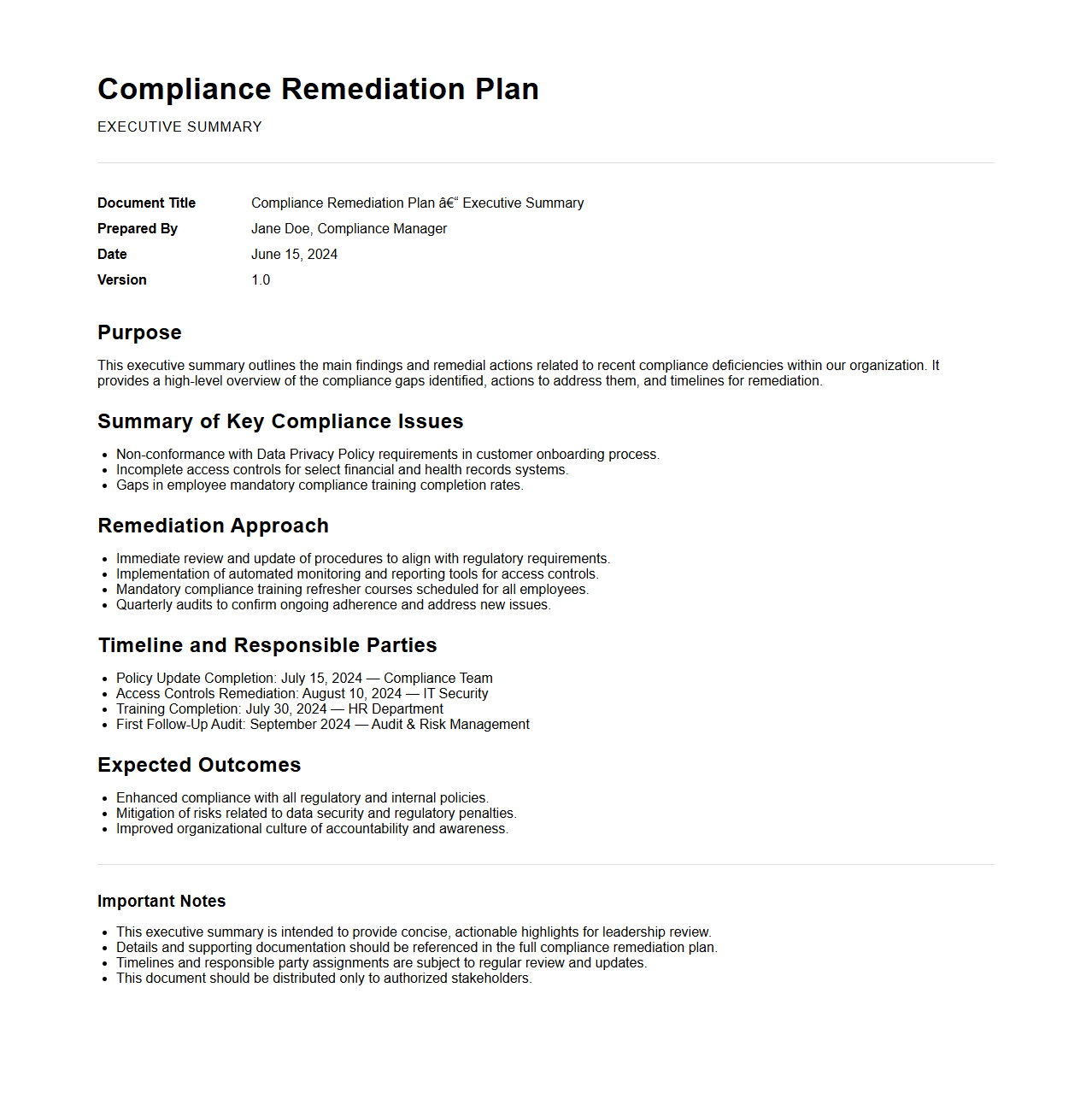
Compliance Remediation Plan: Executive Summary Format
A
Compliance Remediation Plan: Executive Summary Format document provides a concise overview of identified compliance gaps and the strategic actions planned to address them. It outlines key compliance issues, remediation objectives, timelines, responsible parties, and progress metrics in a streamlined format designed for executive review. This document ensures leadership is informed about compliance risks and the effectiveness of corrective measures to maintain regulatory adherence.
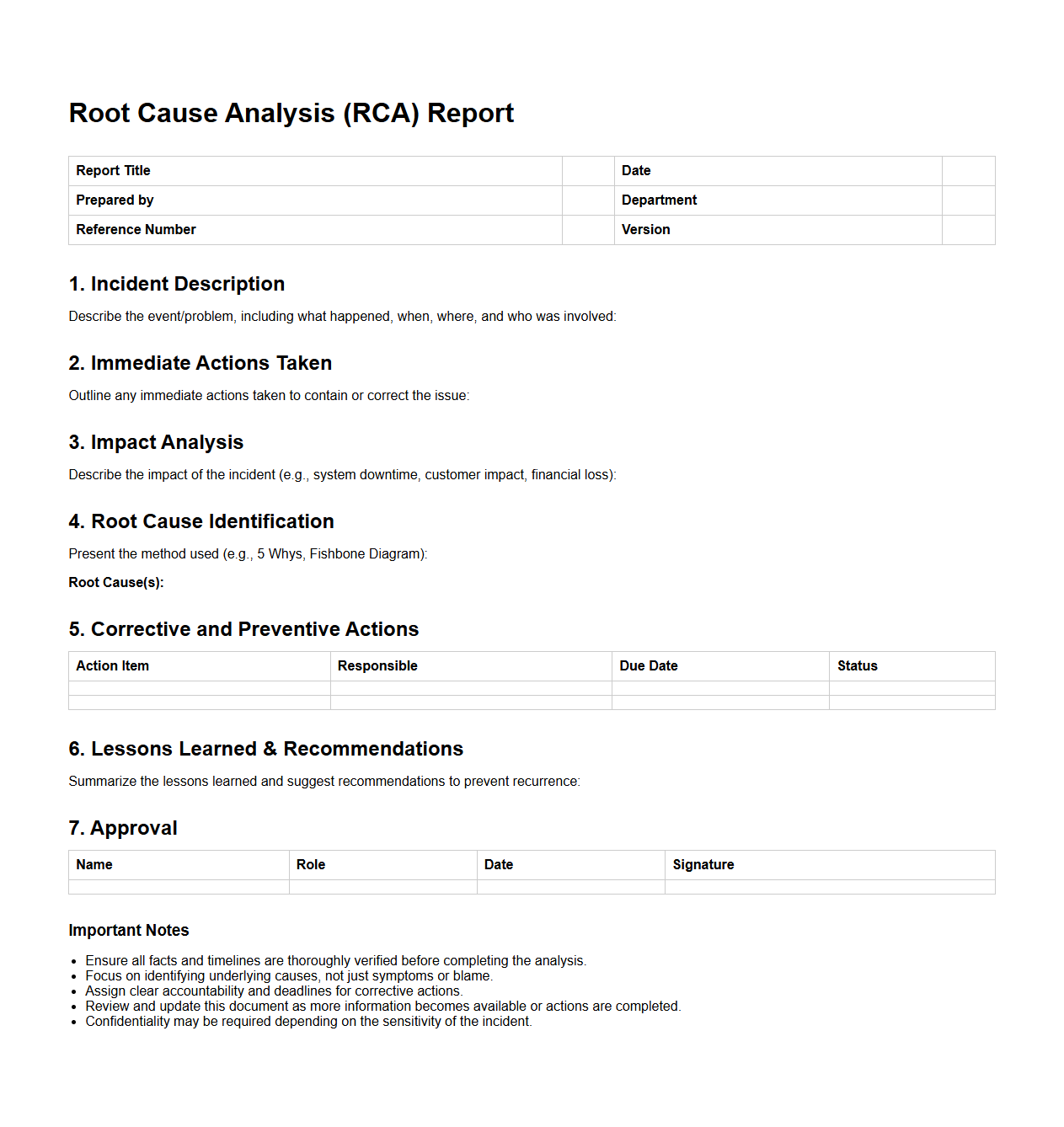
Root Cause Analysis Documentation Format
Root Cause Analysis Documentation Format is a structured template used to systematically record the investigation process of identifying the fundamental cause of a problem or incident. This document ensures consistent capture of critical information such as problem description, root cause identification, corrective actions, and verification steps. Using a
Root Cause Analysis Documentation Format enhances clarity, accountability, and effectiveness in problem-solving across organizations.
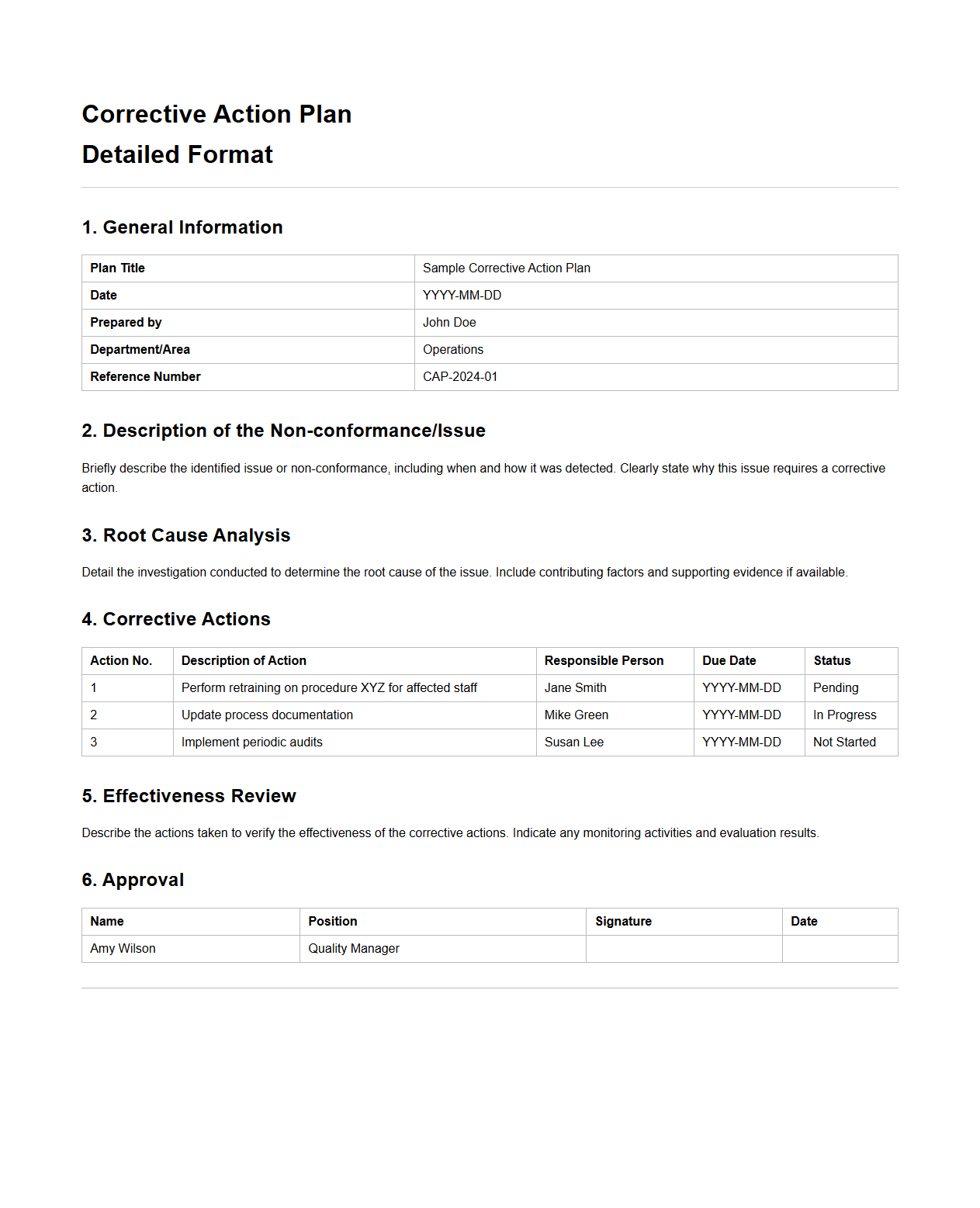
Corrective Action Plan Detailed Format
A
Corrective Action Plan Detailed Format document outlines a structured approach to identifying, addressing, and preventing non-conformities or issues within an organization. It includes sections for problem description, root cause analysis, specific corrective actions, responsible personnel, timelines, and verification methods to ensure effective resolution. This format enhances accountability and continuous improvement by providing clear guidance for implementing and tracking corrective measures.
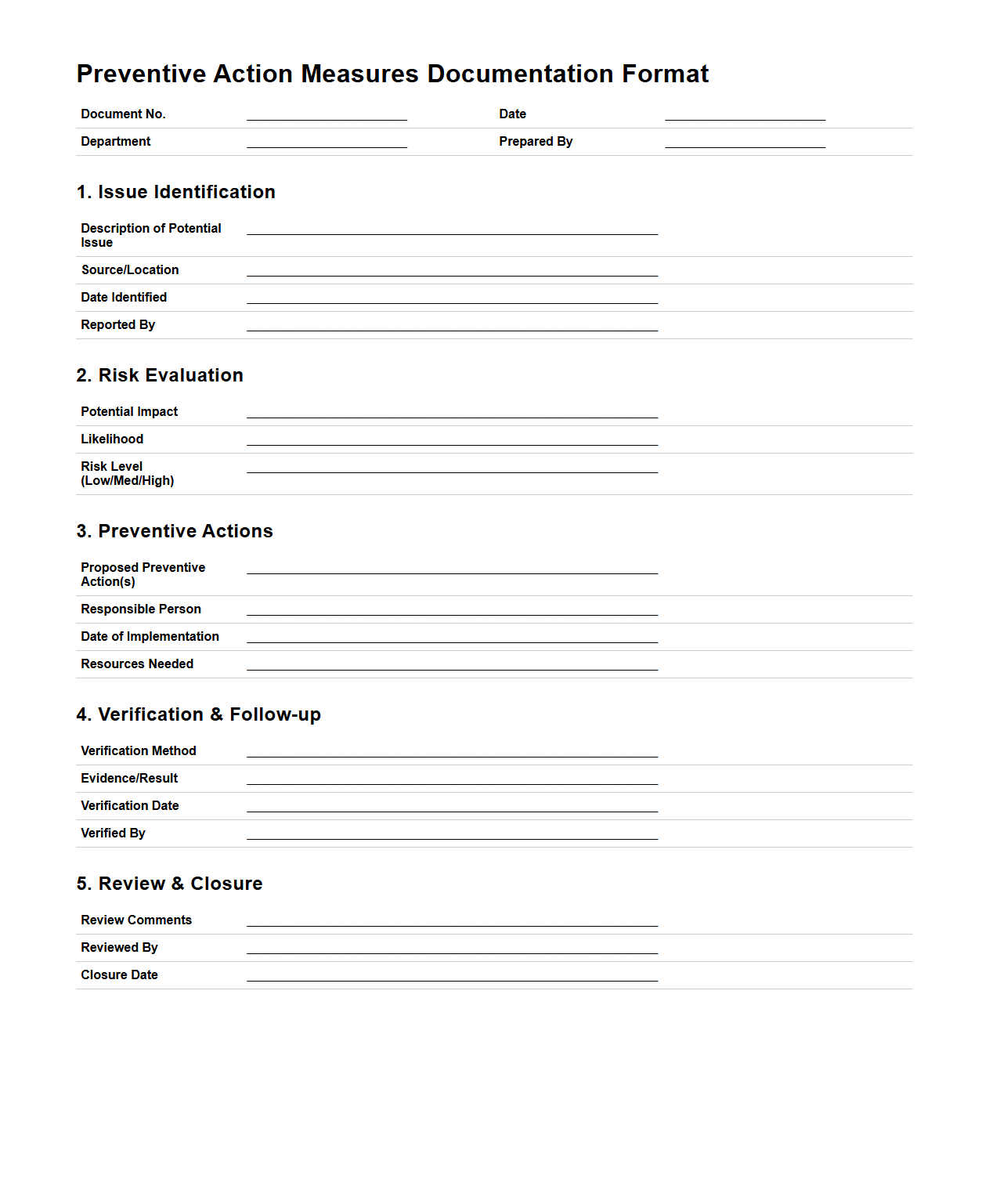
Preventive Action Measures Documentation Format
Preventive Action Measures Documentation Format is a structured template designed to systematically record
preventive actions taken to identify and eliminate potential causes of non-conformities or defects. It ensures consistency in documenting risk assessments, planned interventions, responsible parties, and timelines, facilitating effective monitoring and continual improvement. This format is essential for organizations aiming to enhance quality management systems and comply with industry standards such as ISO 9001.
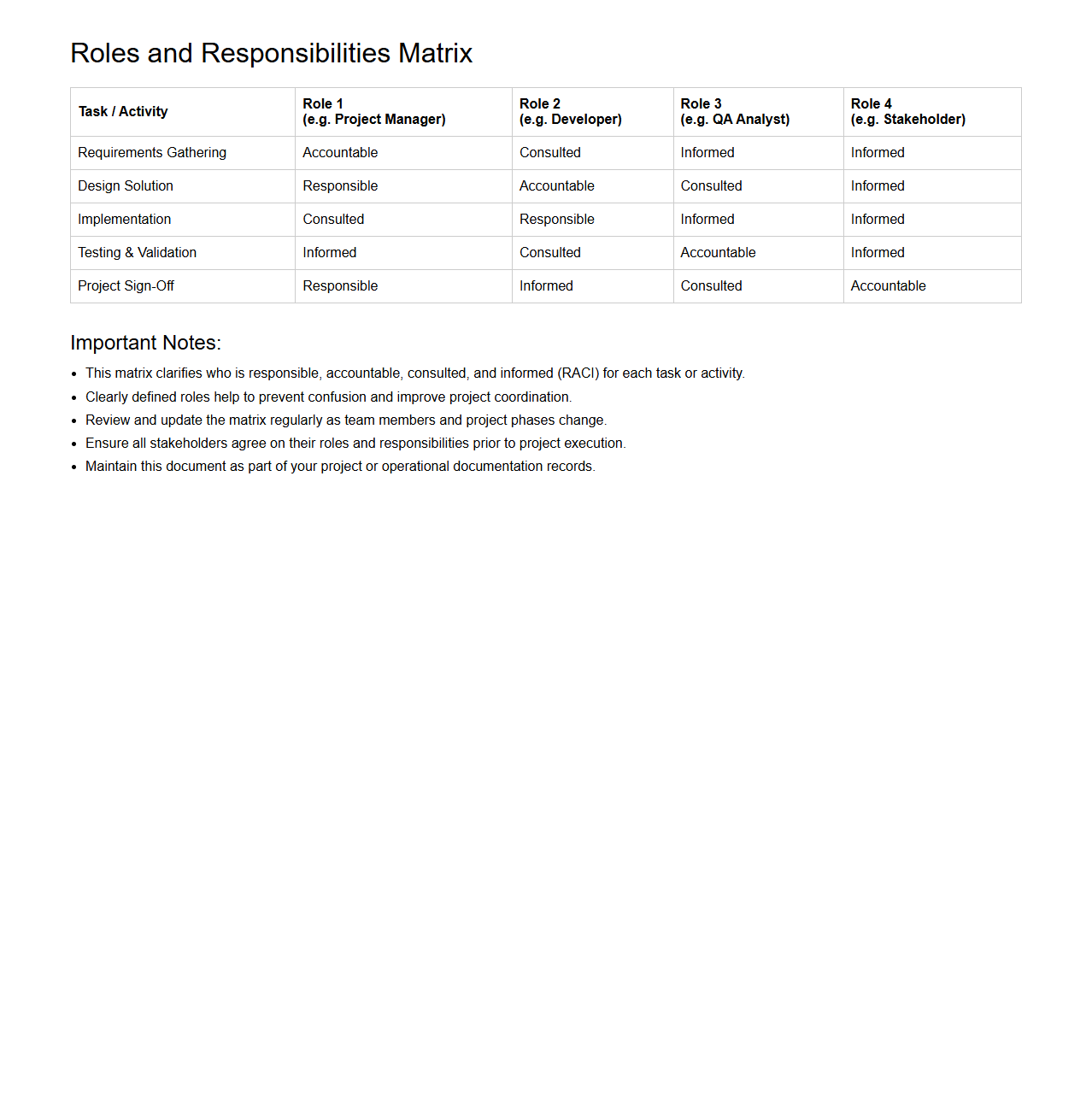
Roles and Responsibilities Matrix Format
A
Roles and Responsibilities Matrix Format document clearly defines and organizes the specific duties, accountability, and involvement of team members or stakeholders within a project or business process. It typically uses a tabular structure that maps roles against tasks, ensuring clarity in task ownership and facilitating effective communication and workflow management. This matrix helps prevent overlap, reduces confusion, and enhances project efficiency by outlining who is responsible, accountable, consulted, and informed for each activity.
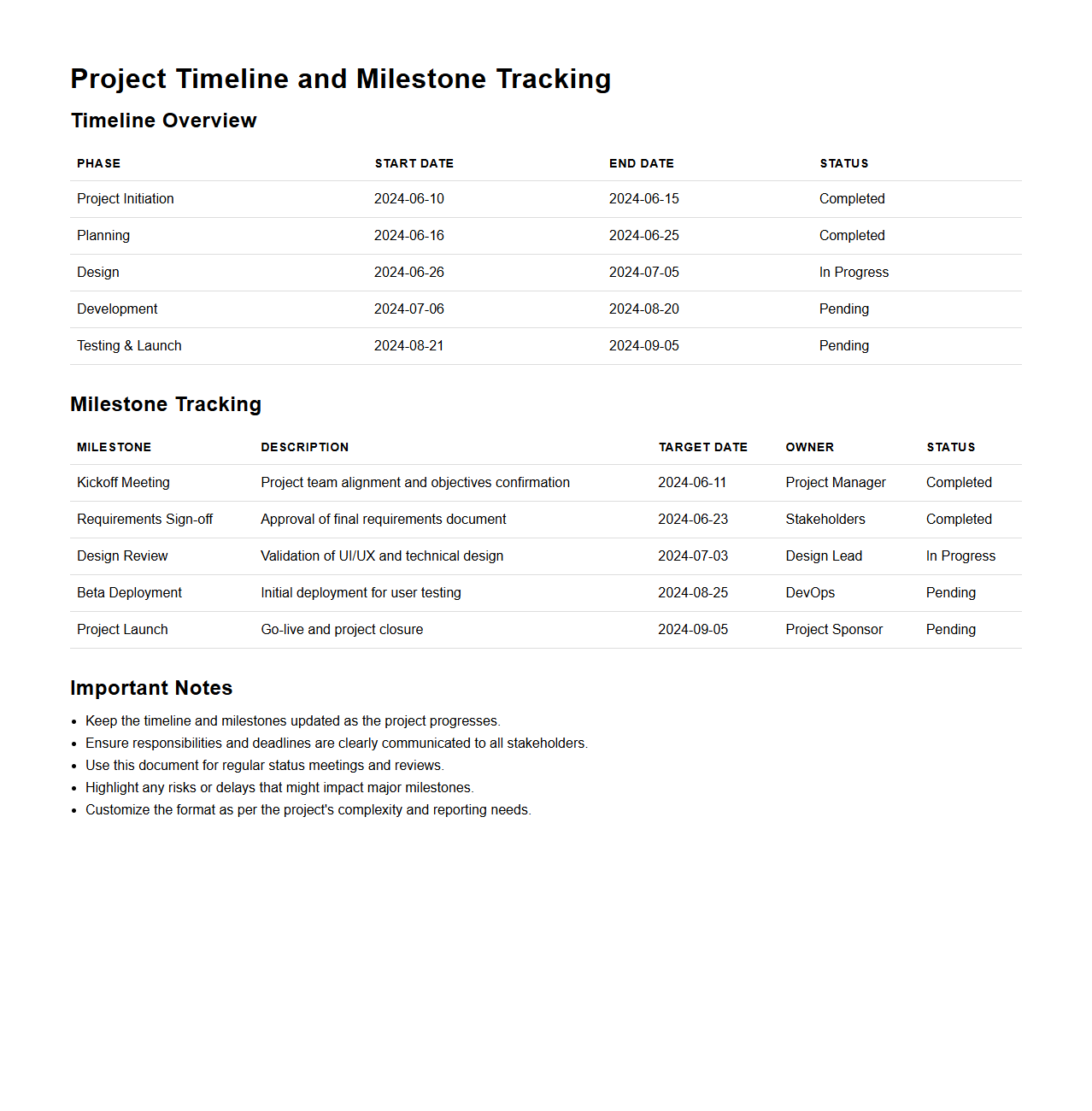
Timeline and Milestone Tracking Format
A
Timeline and Milestone Tracking Format document is a structured tool used to outline and monitor key project phases and deadlines. It helps project managers and teams visualize progress by breaking down tasks into specific milestones with target dates. This format enhances accountability and ensures timely delivery by providing a clear roadmap from project initiation to completion.
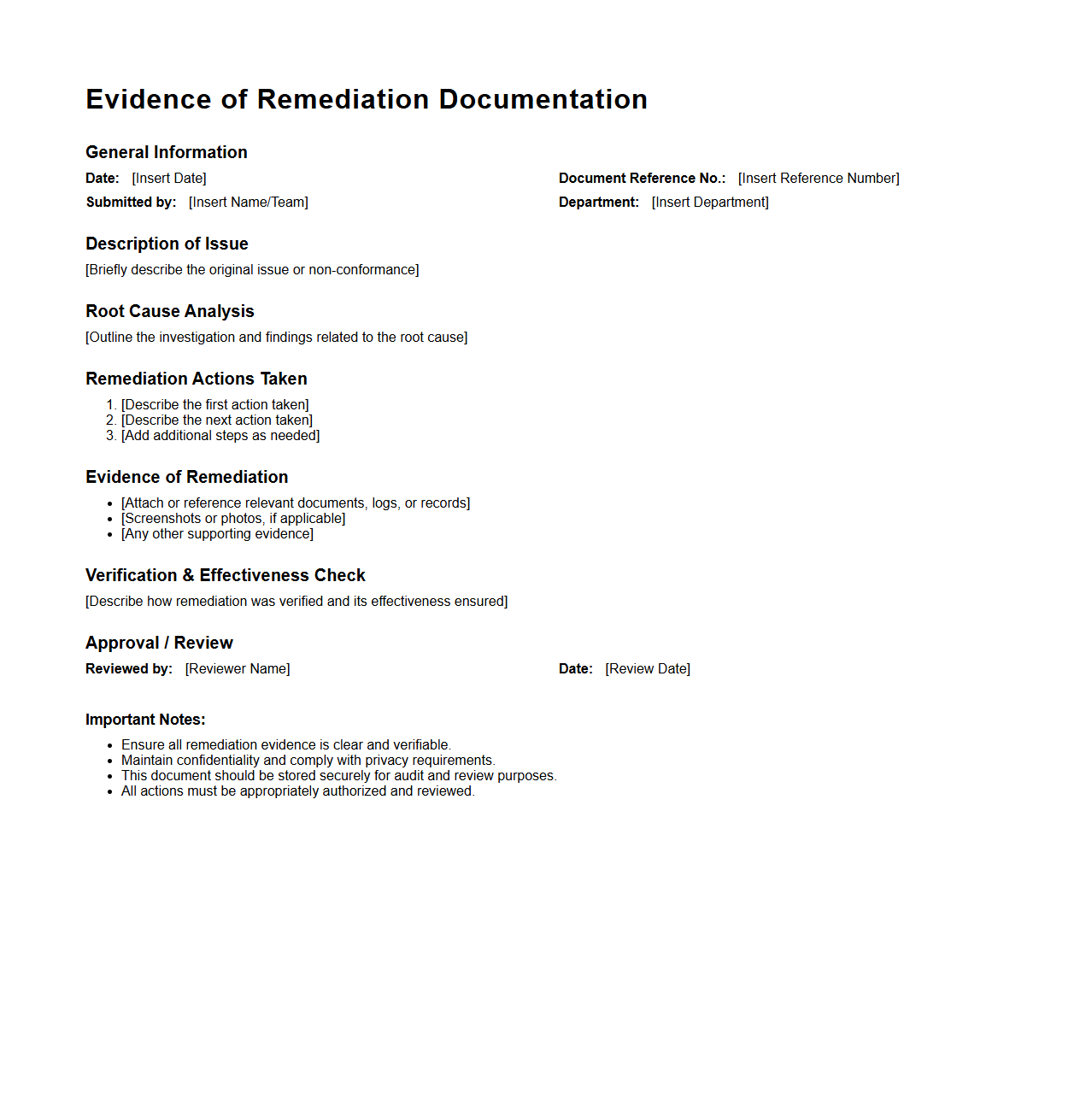
Evidence of Remediation Documentation Format
Evidence of Remediation Documentation Format is a structured template used to systematically capture and present proof that identified cybersecurity vulnerabilities or compliance issues have been addressed and resolved. This document typically includes detailed descriptions of the remediation actions taken, dates of completion, responsible personnel, and any relevant supporting artifacts such as screenshots or logs. Ensuring an organized
Evidence of Remediation Documentation Format helps verify adherence to security policies and facilitates audits or regulatory reviews.
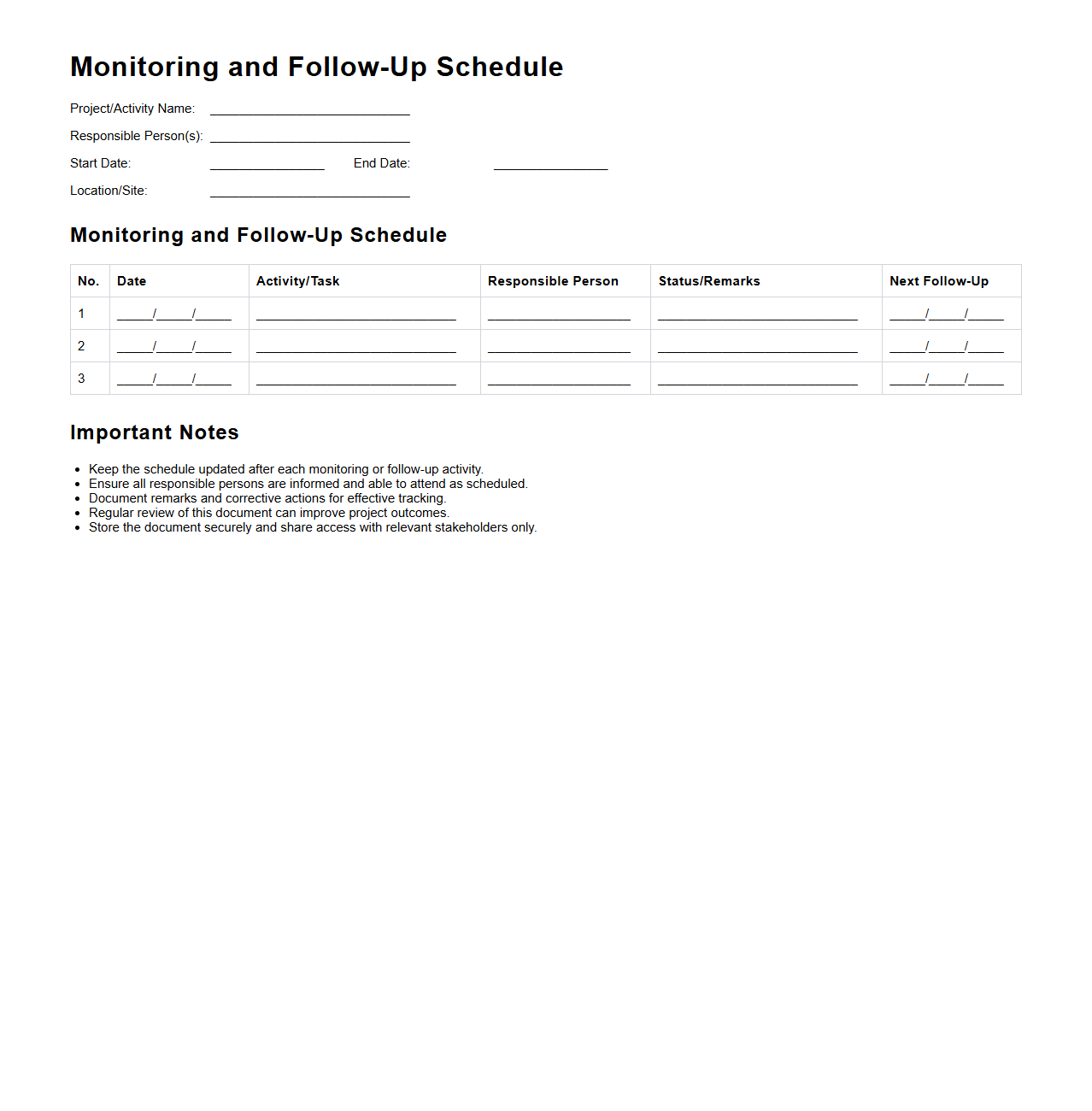
Monitoring and Follow-Up Schedule Format
A
Monitoring and Follow-Up Schedule Format document is a structured tool used to plan, track, and evaluate ongoing activities or projects systematically. It details timelines, responsible personnel, and key milestones to ensure continuous assessment and timely interventions. This format enhances accountability and improves project outcomes by providing clear deadlines and regular progress reviews.
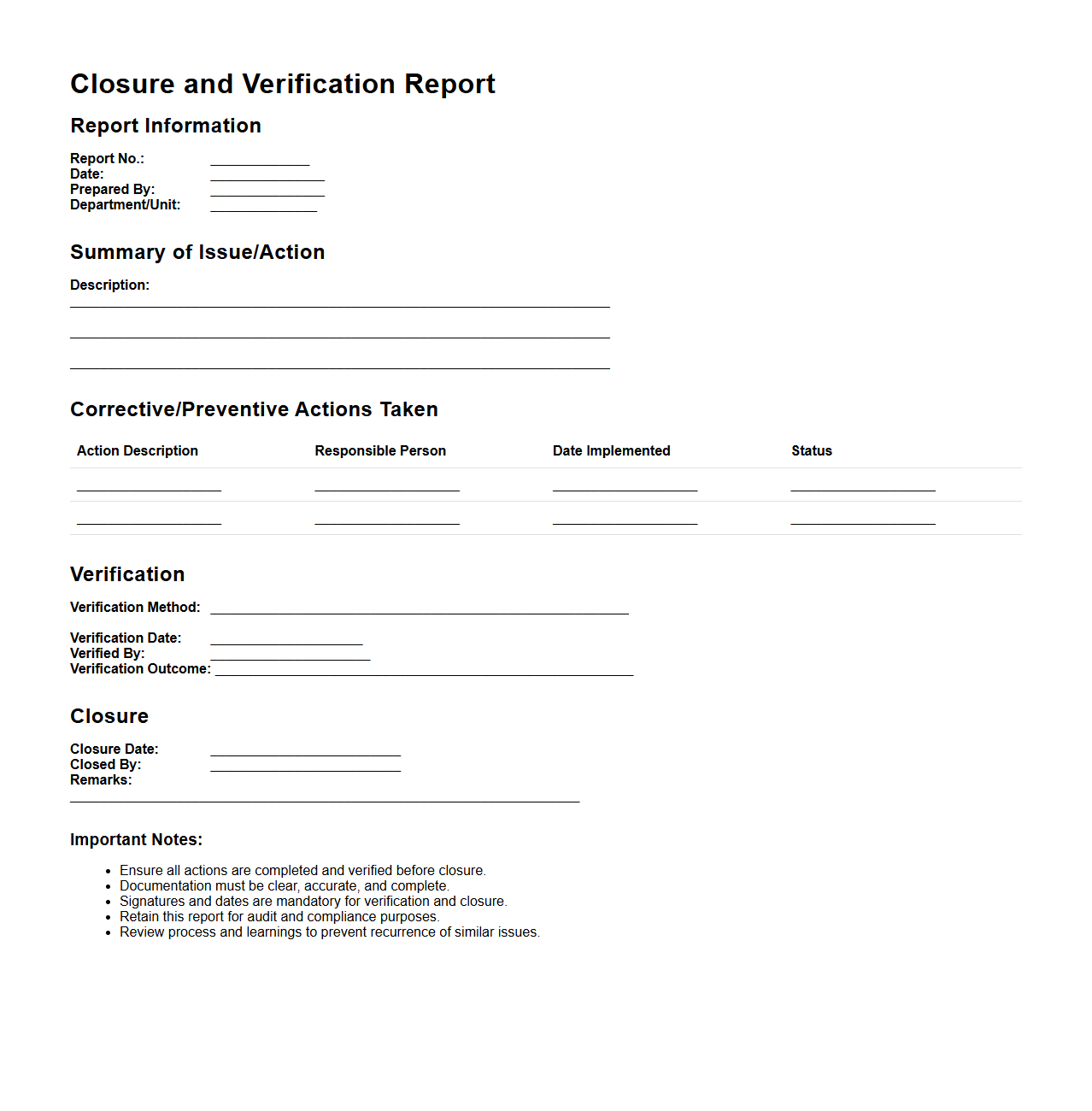
Closure and Verification Report Format
A
Closure and Verification Report Format document systematically records the completion and validation of project tasks, ensuring all project objectives are met according to predefined criteria. It includes sections for documenting deliverables, verification results, and sign-offs from relevant stakeholders to confirm compliance and quality standards. This report acts as a formal record that facilitates project closure and accountability in project management processes.
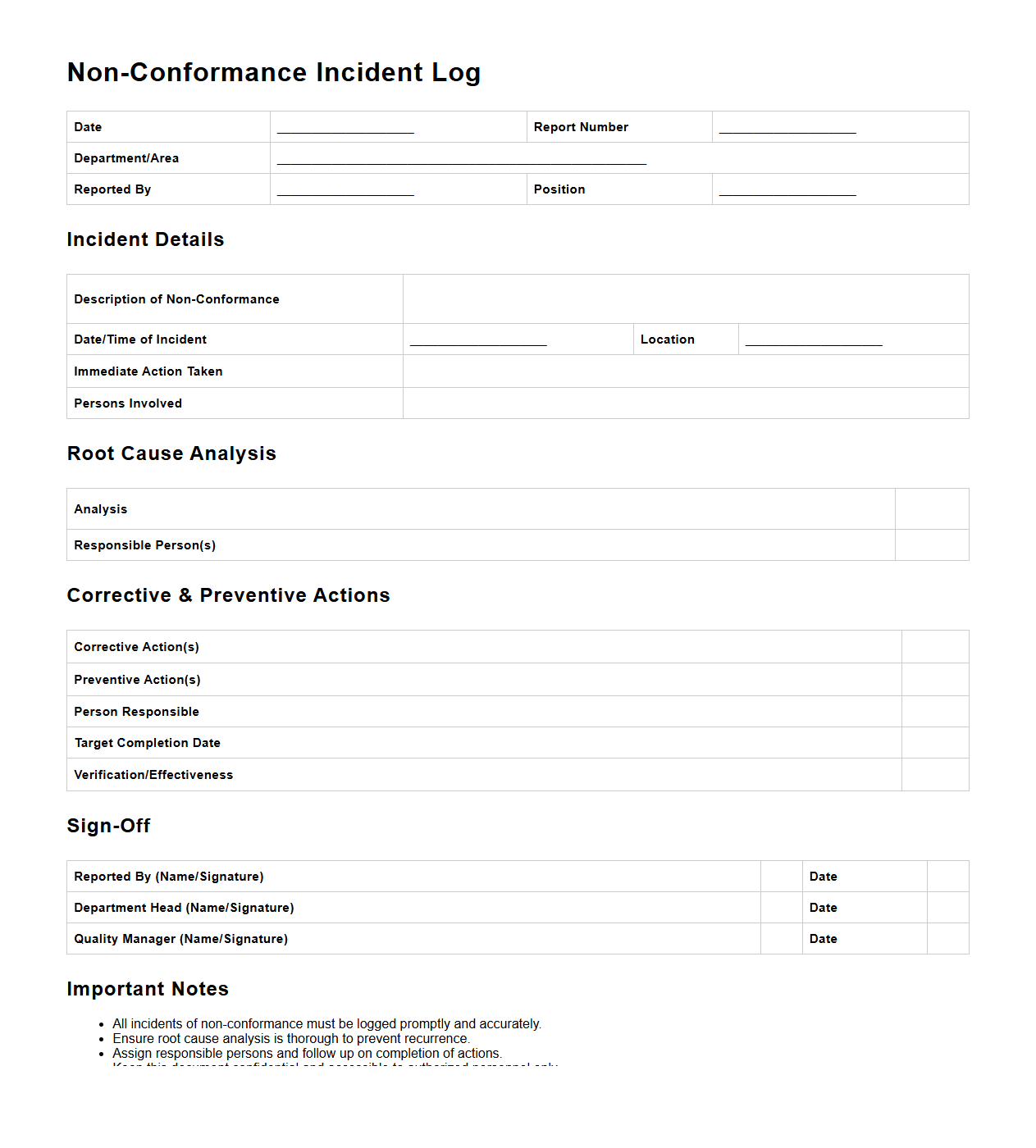
Non-Conformance Incident Log Format
The
Non-Conformance Incident Log Format document is a structured template used to record and track instances where processes, products, or services fail to meet specified standards or requirements. This log format ensures systematic documentation of details such as incident description, date, responsible party, corrective actions, and resolution status, enabling effective quality control and compliance management. Maintaining this document aids organizations in identifying patterns, preventing recurrence, and improving overall operational efficiency.
What specific format elements must be included in a Compliance Remediation Plan for non-conformance documentation?
A Compliance Remediation Plan must include clear identification of the non-conformance issue, detailed corrective actions, and assigned responsibilities. The document should also incorporate a timeline for each action step, ensuring measurable progress. Additionally, it must provide a section for monitoring and follow-up activities to verify remediation effectiveness.
How should root causes of non-conformance be structured and presented in the remediation document?
The root causes must be thoroughly analyzed and presented using a structured approach like the 5 Whys or Fishbone Diagram. Each root cause should be clearly linked to corresponding corrective actions to address the underlying issues. The presentation should be concise, factual, and supported by evidence to ensure transparency and accountability.
What standardized timelines and milestones are required in the remediation plan format?
The remediation plan must specify standardized deadlines for each corrective action, including start and completion dates. Milestones should be clearly defined to track interim progress and ensure accountability. These timelines must be realistic and compliant with any regulatory or internal policy requirements.
Which roles and responsibilities must be clearly defined and documented in the plan?
The remediation plan should explicitly define the roles of responsible individuals, reviewers, and approvers involved in the corrective process. Responsibilities must include accountability for executing actions, monitoring progress, and documenting outcomes. Clear role allocation ensures effective communication and adherence to the remediation schedule.
What methods of verification and evidence documentation are mandated within the remediation plan format?
Verification methods typically include audits, inspections, and testing to confirm that corrective actions have been successfully implemented. The plan must mandate documentation of evidence such as photographs, reports, and records that demonstrate compliance restoration. Consistent and thorough evidence collection is essential for validating the effectiveness of the remediation efforts.
More Compliance Templates